Trump Offered ‘Off-Ramps’ Daily to End Iran War
President Trump is reportedly presented daily with options to end the conflict with Iran, yet continues to pursue military objectives. The Strait of Hormuz remains a critical chokepoint, impacting global oil prices, while international efforts to form a security coalition have yielded mixed results.

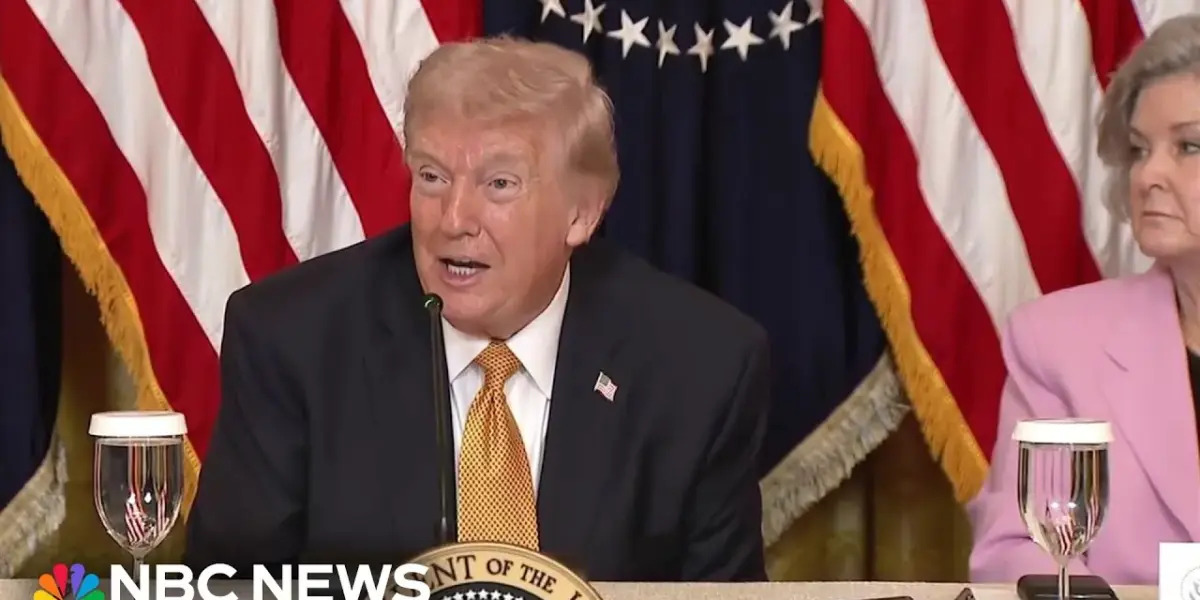
Trump Regularly Presented with ‘Off-Ramps’ to End Iran War
Sources familiar with the President’s daily intelligence briefings reveal that he has been consistently presented with options to de-escalate and end the ongoing conflict with Iran. Despite these daily “off-ramps,” President Trump has continued to pursue military objectives, choosing to advance rather than retreat from the conflict.
Strait of Hormuz Remains Critical Chokepoint Amidst Global Concerns
The vital Strait of Hormuz, a critical chokepoint for global oil supplies, remains significantly impacted by the conflict. While President Trump asserts the U.S. can secure the strait independently and claims a reduced reliance on Middle Eastern oil, the disruption has sent crude oil prices soaring. Yesterday, oil hit $100 a barrel, though prices have since receded to around $93, still a substantial 40% increase since the war began. This volatility has also driven average gasoline prices closer to the $4 per gallon mark.
Energy Secretary Chris Wright acknowledged the immediate impact on consumers, stating on “Meet the Press” that relief at the pump could take “a few more weeks” after the conflict concludes. He characterized the situation as a “short-term disruption” that, once resolved, would remove the “greatest risk to global energy supplies.”
International Coalition Efforts Meet Mixed Reactions
President Trump has publicly urged nations including the United Kingdom, France, South Korea, Japan, and China to join the U.S. in forming a coalition to secure the Strait of Hormuz. However, these calls have been met with mixed reactions, and notably, none of the invited nations have publicly committed to deploying assets to the region. Many countries were reportedly not consulted prior to the initiation of the conflict, leading to a reluctance to become militarily involved in what they perceive as not their war, despite a vested interest in the strait’s security.
White House correspondent Monica Alba noted the challenge of forming a coalition retroactively, stating, “He’s trying to kind of bring this coalition together to countries, asking them for help when they weren’t really consulted in the first place.” This approach highlights a difference in leadership style, with President Trump expressing impatience with allies who need to consult their teams before committing, contrasting with a more traditional diplomatic approach.
Contradictory Messaging on Military Success and Escalation
A significant contradiction emerges from the administration’s messaging: the President claims Iran has been “literally obliterated” and its leadership dismantled, yet simultaneously calls for international military support to secure a vital shipping lane. This creates a complex picture where, despite claims of significant military success, the economic implications and the ongoing threat to global energy flow persist.
Adding to this complexity, reports indicate the deployment of additional U.S. Marines and a specialized unit to the region, a move that appears to contradict any notion of winding down military operations. National security correspondent Courtney Kube commented on this, stating, “It is very hard for the President to say, on one hand, we are ready to wind down, while on the other you’re seeing a ramp up in that sense.”
Diplomatic Impasse and Future Negotiations
Iran’s Foreign Minister has declared the Strait of Hormuz is open to allies but closed to enemies, further complicating the situation. President Trump himself expressed uncertainty about the readiness for negotiations, citing the perceived dismantling of Iran’s leadership. “I don’t know if they’re ready yet. They’re taking a pounding. I don’t know if they’re ready yet. And we don’t even know their leaders. Look, all of their leaders are dead. As far as we know,” he stated, highlighting a lack of clear interlocutors for potential peace talks.
Technological Advancements and Disinformation Concerns
The conflict has also underscored the increasing role of Artificial Intelligence (AI) in modern warfare. AI is being utilized for intelligence gathering and target identification, though the U.S. military maintains that human oversight remains crucial in the targeting process. However, concerns linger, particularly following reports of a school bombing in southern Iran, where AI’s role is under scrutiny. President Trump has also voiced frustration over the spread of AI-generated disinformation, even as the White House itself reportedly uses AI content.
Economic Outlook and Market Fluctuations
Business and data correspondent Brian Cheung provided insight into the oil markets, noting the sharp fluctuation in prices. While crude oil reached $100 a barrel, it has since settled, with analysts suggesting that a visible reopening of the Strait of Hormuz could lead to a significant drop in oil prices, potentially translating to substantial savings at the pump for consumers.
Treasury Secretary Scott Bessent expressed optimism about increased vessel traffic, suggesting that Iranian and Indian ships have already begun transiting, which could naturally ease supply concerns. However, data indicates that traffic through the Strait remains dramatically lower than pre-conflict levels, underscoring the ongoing fragility of the situation.
Regional Ground Situation and Return to Normality
International correspondent Matt Bradley reported from the region, noting that while missile alerts from Iran continue, the salvos are now smaller and causing fewer injuries. This has allowed for a gradual return to normalcy, with schools and offices beginning to reopen in areas like Tel Aviv, signaling a shift in the immediate threat perception on the ground, even as the broader conflict rages.
Looking Ahead
The coming weeks will be critical in observing whether President Trump will eventually take one of the offered “off-ramps” to de-escalate the conflict, or if international pressure and market realities will force a change in strategy. The response of key global players to the call for a coalition and the sustained efforts to reopen the Strait of Hormuz will be pivotal in shaping the future trajectory of this volatile situation and its impact on global energy security.
Source: Trump regularly presented with ‘off-ramps’ to end Iran war, sources say (YouTube)

Related Articles
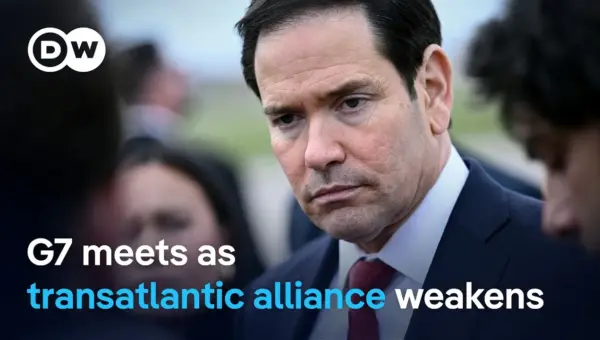
G7 Allies Clash Over Iran War Strategy, Urge Focus on Russia
G7 foreign ministers met in Paris, revealing deep divisions over the U.S. war with Iran. European allies urged the U.S. to pressure Russia, linking its actions to the conflict and fearing support for Ukraine will wane.

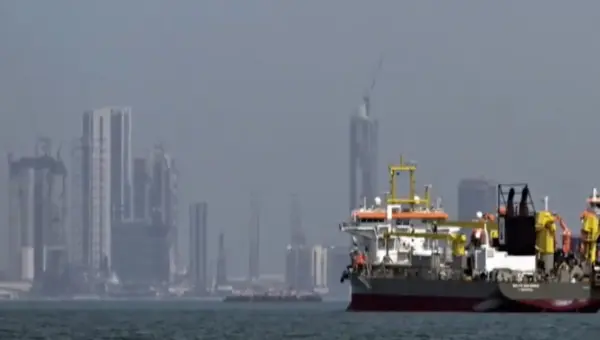
Iran Blocks China Ships, Exposing Beijing’s Weak Grip
Iran's recent decision to block Chinese ships at the Strait of Hormuz is exposing the limits of Beijing's influence in the Middle East. This action is causing delays and cancellations for Chinese manufacturers, turning a perceived geopolitical win into an economic strain.
Rubio: US Can Achieve Iran War Goals Without Troops
Senator Marco Rubio outlined a strategy to counter Iran without deploying U.S. ground troops, focusing on weakening the regime and enhancing maritime security. He also criticized Cuba's economic system and expressed concerns about West Bank violence.