California Billionaires Face Wealth Tax Push Amidst Dem Division
California is at the center of a fierce debate over a new wealth tax initiative targeting billionaires. While proponents argue it's a fair way to fund public services, Governor Newsom and others express concerns about economic flight. The proposal has exposed deep divisions within the Democratic party.

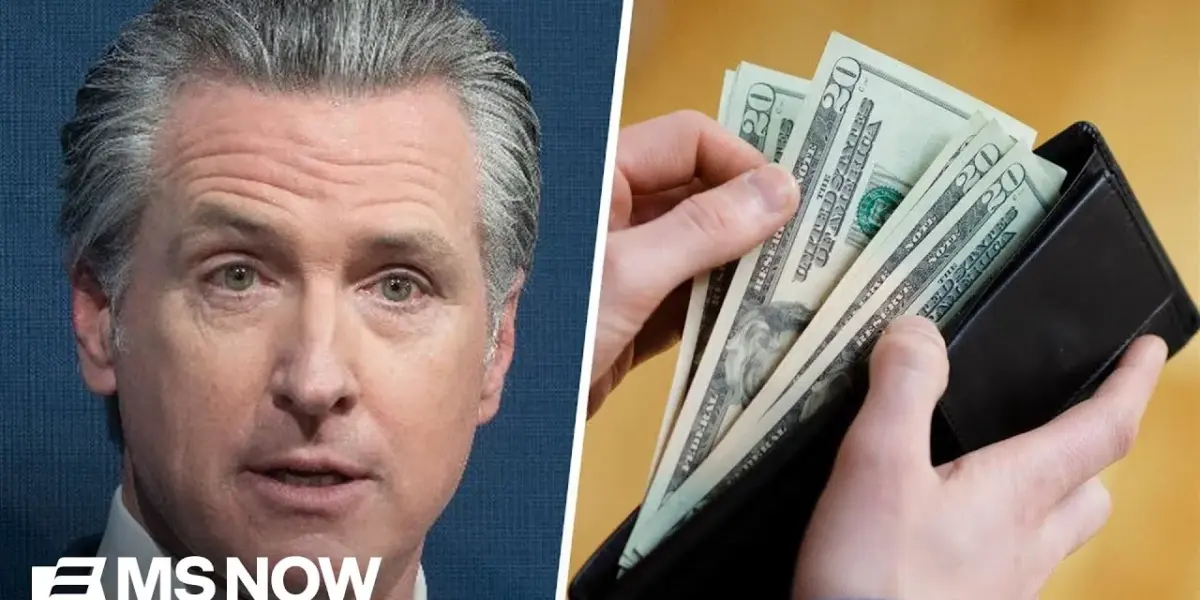
California Debates Radical Wealth Tax Initiative
A contentious ballot initiative is shaking up California’s political landscape, proposing a novel wealth tax targeting the state’s wealthiest residents. The initiative, aiming to generate revenue from the vast fortunes of billionaires, has ignited a fierce debate within the Democratic party, pitting progressive revenue-generating ideas against concerns over economic competitiveness and potential capital flight. This proposal marks a significant departure from traditional income taxes, focusing instead on the accumulated assets of the ultra-rich.
The Mechanics of a Wealth Tax
The core of the initiative is a tax on wealth, not income. This concept, championed by figures like Senator Elizabeth Warren during her 2020 presidential campaign, seeks to tap into the capital and assets held by billionaires. Proponents argue that a significant portion of billionaires’ wealth is tied up in stocks and equity, often structured in ways that allow them to borrow against it while reporting minimal income on paper. This allows them to accumulate vast fortunes without contributing proportionally to state revenue through traditional income tax channels.
Betsy Stevenson, a professor of public policy and economics at the University of Michigan’s Ford School of Public Policy, explained the structure of this wealth accumulation: “They have a very low income on paper when they’re actually accumulating quite a bit of money, you know, through stocks and equity, et cetera. … What they do is that income stays tied up in stocks. They’re getting wealthier, they go to banks, they structure financial deals so that they can borrow against that.”
The distinction between a millionaire tax and a billionaire tax is crucial. Stevenson highlighted this, stating, “If you’re a millionaire in wealth, you could spend $100,000 a year and you’d be out of money in 10 years. A billionaire can spend $100,000 a year for 10,000 years. So that is a long time that they get to spend a ton of money.”
Governor Newsom’s Opposition and Economic Concerns
Despite the progressive appeal of taxing the ultra-wealthy, California’s Democratic Governor Gavin Newsom has voiced strong opposition. His stance is rooted in concerns about the state’s economic competitiveness. Newsom argues that California, already a hub for innovation and wealth creation, risks losing its most affluent residents and the economic activity they generate if a wealth tax is implemented.
Former California Democratic Senator Barbara Boxer acknowledged Newsom’s perspective. “I know he sees, you know, where the taxes are coming from. We don’t want to lose high income people,” Boxer stated. She elaborated on the practical implications: “The argument being that the state benefits right now from having billionaires in its benefits from the IPOs they create, the taxes the state gets from those. You’d waste that all if you come up with any mechanism to take their wealth away because they can quit. And California, you’ve seen Gavin Newsom’s role in THEY DON’T LIKE THIS IDEA BECAUSE CALIFORNIA IS COMPETING WITH OTHER STATES THEY CAN PROMISE ZERO TAXATION OF THE RESOURCES AND ASSETS WE’RE TALKING ABOUT TO THESE BILLIONAIRES.”
This concern is not theoretical. Boxer pointed to instances of high-profile individuals relocating to states with more favorable tax environments. “Absolutely. And it’s happening right here, right now before the vote. A couple of the founders of Google. I mean, it makes me really sad that people are so interested in building so much wealth that they can’t even stay in the state that made them wealthy. But that is the fact.”
A Divided Democratic Party
The debate over the wealth tax has exposed deep divisions within the Democratic party itself. On one side are those who believe that taxing the wealthy is a moral imperative and a necessary step towards funding essential public services and addressing income inequality. On the other side are Democrats who worry about the practical economic consequences and the potential for such policies to alienate voters or hinder economic growth.
“It’s a very chaotic debate inside the party because I can’t even limit to two factions, but let’s say generally there’s one faction Democrats who say we need to get elected and prove the government works and that it’s worth paying taxes in order to get better health care, better transportation, better services, et cetera. And there’s the other faction Democrats that are worried that just doesn’t work. It’s too easy to The demagogue, their failures in big cities sometimes. Sometimes there are failures that people are paying a lot of money for,” the transcript noted.
This internal conflict is leading to alternative proposals within the party. Some Democrats are focusing on shrinking the tax base for middle and lower-income earners while increasing the burden on the wealthy. For example, Senators Chris Van Hollen and Cory Booker have introduced proposals that would eliminate income tax for individuals earning below certain thresholds.
Van Hollen’s proposal aims to exempt individuals making under $46,000 and married couples under $92,000. Senator Booker’s plan offers slightly different figures, exempting individuals under $37,500 and married couples under $75,000. These proposals, while not a direct wealth tax, reflect a broader Democratic effort to adjust tax burdens and potentially increase revenue from higher earners.
The Case for Federal Action
Both Boxer and Stevenson emphasized that the most effective solution to taxing the ultra-wealthy lies at the federal level. The ability of individuals to relocate across state lines makes state-level wealth taxes vulnerable to capital flight, undermining their intended impact.
Boxer stated, “This has to be done at the national level. I agree with Elizabeth Warren, and I agree with her bill, and I would be a co-sponsor of it. There’s only 75,000 individuals worth 50 million or more in this country, they are paying on average a lower effective rate than a teacher or a nurse or a truck driver.”
Stevenson echoed this sentiment, noting the systemic issues that allow billionaires to pay lower effective tax rates. “One of the reasons why they pay such a low tax rate is that they don’t have an income or they have a very low income on paper when they’re actually accumulating quite a bit of money, you know, through stocks and equity, et cetera.”
Broader Implications and Future Outlook
The debate in California is a microcosm of a larger national conversation about wealth inequality, taxation, and the role of government. The initiative, and the strong opposition it has generated, highlight the complex challenges of designing tax policies that are both equitable and economically viable.
The funding of opposition campaigns by billionaires themselves, reportedly in the tens of millions, underscores the high stakes involved. Critics of the wealth tax argue that it could stifle investment and innovation, while proponents contend that it is a necessary tool to ensure that the wealthiest individuals contribute their fair share to society.
As California voters grapple with this unprecedented proposal, the outcome could set a precedent for other states and influence the ongoing national dialogue on wealth taxation. The internal Democratic party divisions also suggest that any significant federal action on wealth taxes will likely face considerable political hurdles. The coming months will reveal whether California moves forward with this bold experiment in wealth taxation or if concerns about economic consequences prevail.
Source: Should billionaires be taxed based on their wealth? Dems in CA split over initiative (YouTube)

Related Articles


Florida Shockwave: Red State Flip Signals GOP’s Midterm Peril
Democrats have secured key victories in deep-red Florida districts, boosting their chances of winning both the House and Senate in the upcoming midterms. This surprising trend suggests a potential shift in voter sentiment, even in traditionally Republican strongholds.

Red States Face Tax Dilemma as Voters Demand Services
Voters in Republican-led states are signaling a change in priorities, indicating they'd rather pay higher taxes for essential services like roads and schools than continue with tax cuts. This marks a significant shift from decades of anti-tax rhetoric and presents a new challenge for politicians.

Democrats Surge Ahead: Midterm Sweep Looms Large
Recent Democratic victories, particularly in Florida, have dramatically shifted midterm election odds, suggesting a potential sweep of both House and Senate. This surge is attributed to voter weariness with Republican tactics and a perceived lack of governing competence. The outcome could reshape legislative priorities and force a strategic re-evaluation within the GOP.