Ukraine Drones Challenge Russian War Machine
Ukraine's growing drone warfare capabilities are bolstering its defense and inflicting higher casualties on Russian forces, while Russia faces intensifying economic strain. Moscow's strategies for sustaining the war are showing signs of fatigue, marked by tripled budget deficit projections and reliance on optimistic oil price assumptions. Meanwhile, strategic debates continue regarding U.S. support and the evolving nature of modern combat.

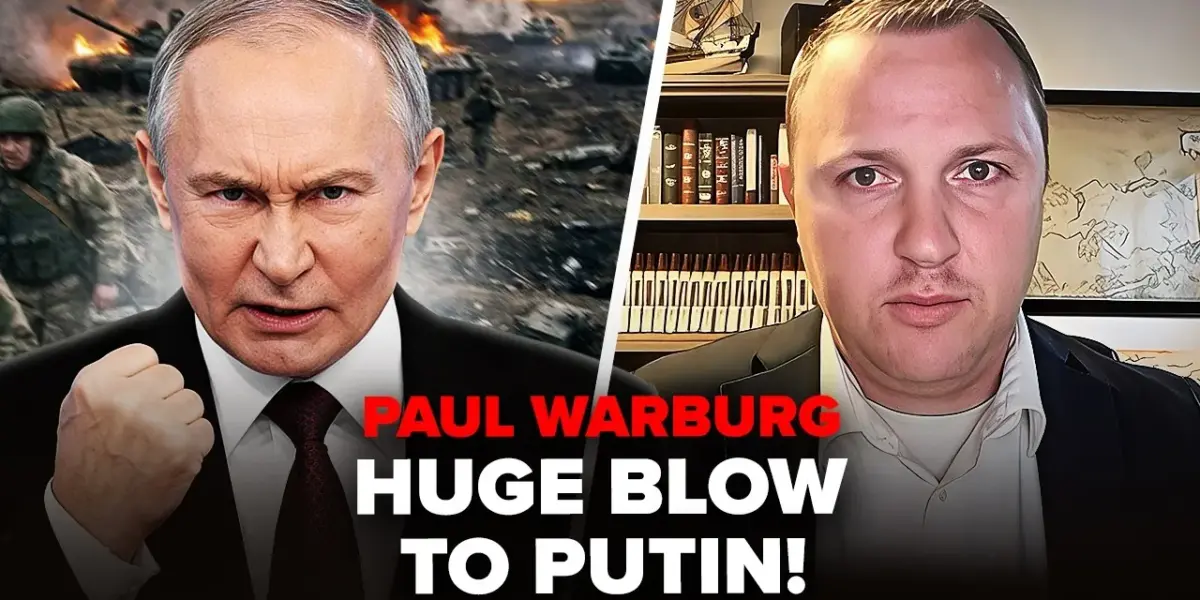
Ukraine’s Drone Warfare Evolves, Challenging Russian Capabilities
Kyiv’s proficiency in drone warfare has significantly bolstered its defensive capabilities, while Russia faces mounting economic pressures and strategic reevaluations, according to recent analysis. This shift marks a critical juncture in the conflict, underscoring Ukraine’s adaptive military advancements and Russia’s increasing wartime strains.
Advancements in Ukrainian Drone Warfare
Ukraine has demonstrated a remarkable evolution in its drone warfare capabilities, a development that has been years in the making. This surge in technological prowess allows Ukrainian forces to inflict greater casualties on Russian soldiers while simultaneously lowering their own casualty rates. This improved efficiency is crucial for the long-term sustainability of Ukraine’s defense efforts.
Beyond aerial drones, the increasing integration of ground robotics into the battlefield, though still in developmental stages, signals a future trend in modern warfare. These unmanned systems are gradually maturing, promising to further reshape tactical approaches.
Russia’s Economic Strain and Strategic Dilemmas
On the economic front, Russia’s strategies for sustaining its war effort are showing signs of significant strain. Historically, Moscow relied on a substantial war chest accumulated prior to the conflict and employed preemptive inflation tactics to extend financial resources. Preemptive inflation, unlike typical reactive inflation driven by deficits, was used to mask underlying fiscal issues and influence economic perceptions. However, these measures appear to be reaching their limits.
Recent projections indicate Russia has been forced to triple its budget deficit forecasts for 2026. Compounding this fiscal challenge is the assumption of an oil price of $66 per barrel for Russian oil, a figure significantly higher than historical pre-war prices of $35-$45. While regional conflicts might offer temporary price fluctuations, they do not guarantee long-term economic stability for Russia.
Internal Russian Dynamics and Endgame Speculation
Reports suggest that prior to a significant summit, Russian President Vladimir Putin convened a meeting with his inner circle to discuss the continuation of the war. Unconfirmed accounts indicate that all members voted in favor of ending the conflict, with a primary Russian condition being Ukraine’s surrender of the Donbas region.
“If Ukraine surrenders the whole Donbas to Russia, this is Russia’s main term.”
However, experts express skepticism regarding Russia’s genuine desire for peace under such terms. Ceding fortified positions in the Donbas would grant Russia strategic advantages it has struggled to achieve through direct assault. The historical pattern of Russian military actions, particularly its previous invasions of Ukraine upon sensing weakness, raises concerns about future intentions, even if territorial concessions were made.
The analysis suggests that for Putin, a cessation of hostilities without achieving specific objectives could jeopardize his political standing and personal safety. This dynamic may lead Russia to feign a willingness to end the war, potentially to undermine international support for Ukraine by portraying Kyiv as the party unwilling to compromise.
US Policy and Skepticism Towards Ukraine
Discussions have also touched upon the United States’ approach to supporting Ukraine, particularly regarding past requests for assistance in countering Iranian drones. Reports indicate that the U.S. rejected Ukraine’s proposals for help with anti-drone warfare, despite significant expenditures, reportedly around $6 billion in the initial week of a campaign, on expensive interceptor missiles like the Patriot system.
The reasons behind this skepticism, especially from figures like former President Donald Trump, are attributed to several factors. A strained personal relationship between Trump and Ukrainian President Volodymyr Zelensky, stemming from past political disputes, is cited as a potential influence. Furthermore, an “America First” worldview, characterized by a focus on national interests and a potential reluctance to acknowledge the successes of other nations, might contribute to a dismissive attitude towards Ukraine’s capabilities.
This perspective suggests that a desire to avoid admitting Ukraine’s proficiency, particularly in areas where the U.S. faces challenges, could be a significant underlying factor. This personal and ideological stance could hinder a more pragmatic and supportive U.S. policy towards Ukraine.
Broader Geopolitical and Economic Impacts
The conflict’s global ramifications extend to economic stability and international relations. The Strait of Hormuz, a critical chokepoint for global oil transport, remains a focal point of concern. While its closure for short periods might be mitigated by strategic oil reserves and rapid production increases from sources like shale oil, sustained disruption poses significant risks.
The U.S. Navy’s strategic priorities appear to include neutralizing Iranian offensive capabilities that threaten maritime security, rather than immediate intervention to fully reopen the Strait. This approach aims to secure the waterway in the long term by degrading Iran’s threat-projection capabilities.
Naval Operations and Emerging Tactics
Recent naval engagements have highlighted evolving combat scenarios. The sinking of an Iranian warship, the Iris Dana, by a U.S. Navy submarine using a torpedo in international waters off Sri Lanka, marks a significant event, potentially the first such use by a U.S. submarine against a warship since World War II. While the action is noted for its historical context, perspectives vary on its justification, with some labeling it a potential war crime if the vessel was unarmed. U.S. military assessments indicate preparedness in offensive operations, but acknowledge a significant vulnerability in intercepting Iranian drones. This oversight is seen as a failure to adapt to modern warfare tactics, particularly those demonstrated in the conflict in Ukraine, and reliance on costly interception methods depletes vital stockpiles.
Strategic Implications
Ukraine’s advancements in drone warfare and the integration of robotics represent a significant shift in the tactical landscape. This technological leap allows Ukraine to conduct operations with greater precision and reduced risk, enhancing its strategic endurance. For Russia, the increasing economic pressures and the potential for internal dissent complicate its war aims and suggest a growing unsustainability of its current military campaign. The international community’s response, particularly the U.S. approach to aid and strategic engagement, remains a critical factor in the conflict’s trajectory. The perceived reluctance to fully support Ukraine’s defensive needs, particularly in drone interdiction, raises questions about long-term strategic planning and the potential cost of underestimating evolving threats.
Source: 😱Putin faces new problem — Ukrainian drones dominate the battlefield @WorldatStake24 (YouTube)

Related Articles

G7 Allies Clash Over Iran War Strategy, Urge Focus on Russia
G7 foreign ministers met in Paris, revealing deep divisions over the U.S. war with Iran. European allies urged the U.S. to pressure Russia, linking its actions to the conflict and fearing support for Ukraine will wane.

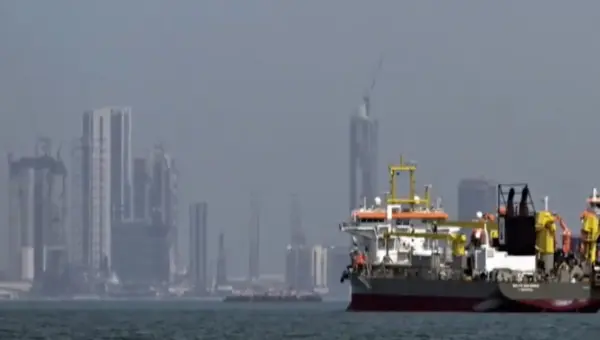
Iran Blocks China Ships, Exposing Beijing’s Weak Grip
Iran's recent decision to block Chinese ships at the Strait of Hormuz is exposing the limits of Beijing's influence in the Middle East. This action is causing delays and cancellations for Chinese manufacturers, turning a perceived geopolitical win into an economic strain.
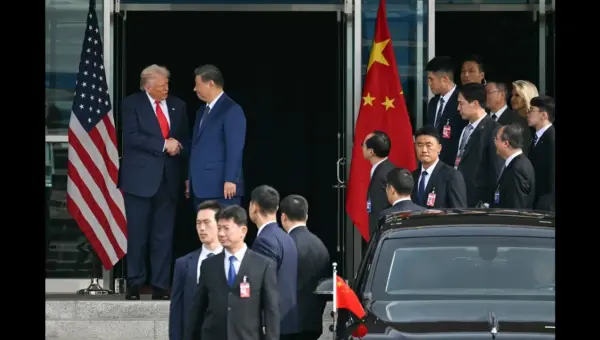
Trump’s “Walk Away” Tactic Signals Tougher Stance on China
Retired Air Force Brigadier General David Stillwell believes President Trump's strategy of being willing to walk away from negotiations puts pressure on China. This tactic, combined with US global actions and strengthened alliances, signals a more assertive American foreign policy.