General: US Faces “Strategic Disaster” in Hormuz
A retired four-star general warns the US is on the "edge of a strategic disaster" in the Strait of Hormuz due to Iran's asymmetric warfare capabilities and lack of international coalition. The general highlights the global economic impact of potential disruptions and dismisses ground invasion as unthinkable, suggesting a need for negotiation and focus on Iran's nuclear program.

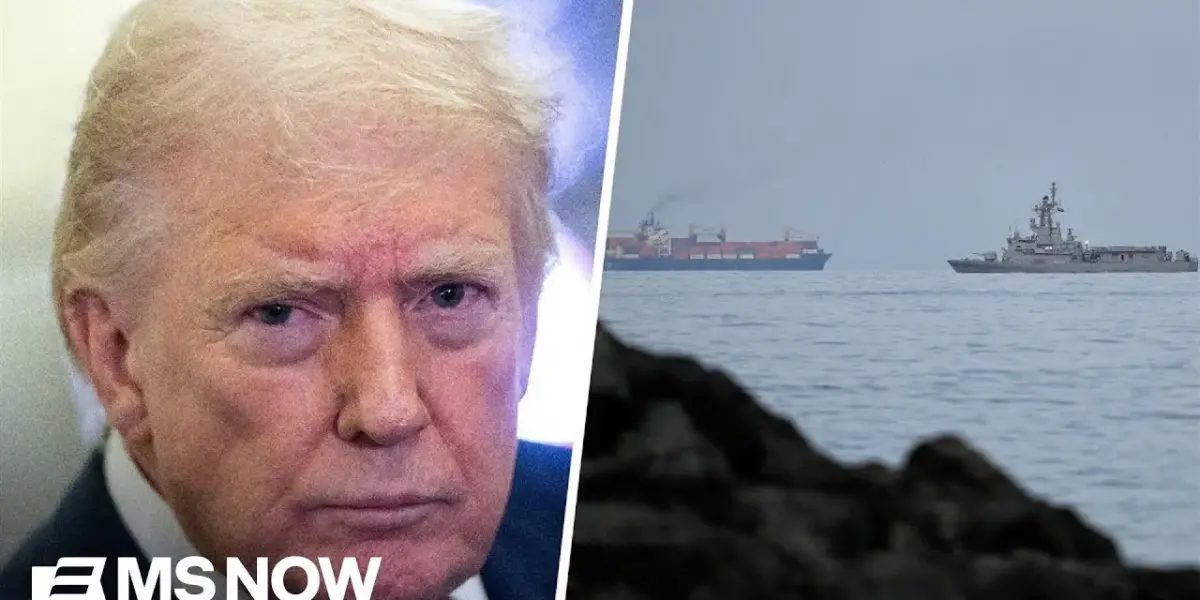
US Military on “Edge of Strategic Disaster” in Strait of Hormuz, Warns Retired General
A retired four-star general has warned that the United States is teetering on the “edge of a strategic disaster” regarding its approach to Iran and the critical Strait of Hormuz. The stark assessment comes amid heightened tensions and President Trump’s expressed confidence in having already “taken care of” Iran, a sentiment that clashes with the complex realities of the region, according to military analysts.
Iran’s Asymmetric Warfare Capabilities Highlighted
General Barry McCaffrey, a retired four-star general and military analyst, articulated the precarious situation in an interview, emphasizing Iran’s continued ability to disrupt global energy supplies despite significant conventional military setbacks inflicted by U.S. and Israeli forces. “From a tactical and operational point of view, the U.S. and Israeli air and naval forces have devastated Iran’s conventional military capability, struck 7,000 of my targets, with minimal losses comparatively,” McCaffrey stated. However, he cautioned that Iran has pivoted to other, more asymmetric tools.
“The problem is Iran now has only three tools. Number one is to influence energy supplies, primarily through the straits by turning them off… Then there’s terrorism, then there’s cyber warfare.”
The general elaborated on the ease with which even a single actor could pose a threat in the narrow, strategically vital waterway. “Even one Iranian soldier or militia member could easily attack a slow-moving super tanker,” he explained, echoing concerns voiced by President Trump himself. The close-range nature of potential attacks, facilitated by the strait’s geography, makes it a potent weapon in Iran’s arsenal, which has historically been used as an “economic weapon.”
Lack of Coalition Support and Limited Military Endurance
A significant point of concern raised by General McCaffrey is the absence of a broad international coalition to support U.S. efforts. “There’s no coalition there to support us. There’s no expectation that we could sustain this kind of military effort for much longer than a few months,” he stated. This lack of allied backing, coupled with a perceived “desperation” in the administration’s approach, is seen as a recipe for failure.
The general also questioned the potential implications of involving other global powers, such as Chinese carrier battle groups, in the Persian Gulf region, suggesting a potential escalation or complication of the geopolitical landscape. He characterized the Trump administration’s approach as “incoherent in their approach to these problems.”
Economic Repercussions of Strait Disruption
The potential economic fallout from any disruption in the Strait of Hormuz is global, McCaffrey explained, refuting the notion that the U.S. is insulated due to its reduced reliance on oil imports from the region. “The price of oil is global. It equalizes. So the fact that we’re independent does not help,” he noted. Even if the U.S. doesn’t import significant amounts of oil directly from the Persian Gulf, global oil prices would inevitably rise, impacting American consumers and producers alike.
“American oil producers are not going to lower their price just for domestic consumers when they see the price of oil around the world going up. It’s a global market,” he added. This interconnectedness means that any instability in the Strait of Hormuz would have far-reaching economic consequences, affecting major economies like China, Japan, and India, as well as Western nations.
Limited Options: Ground Invasion Unthinkable
When asked about potential U.S. responses to Iran’s ability to close the strait, General McCaffrey dismissed the idea of a ground invasion as unthinkable. “Take on a nation of 90 million people, a gigantic land area ruled ruthlessly by the IRGC and the dictatorship of the Ayatollah, who would in his right mind would take it on?” he questioned.
While acknowledging the U.S. military’s capacity to undertake such an operation, with “2.1 million men and women in the U.S. Armed Forces,” McCaffrey stressed the immense cost. “It would come at an enormous cost,” he warned, indicating that such an option is unlikely to be considered by the current administration.
Stuck in a Diplomatic Impasse
Faced with these limitations, General McCaffrey suggested that the administration is “stuck” and needs to pursue diplomatic solutions. “They’ve got to negotiate. They’ve got to lift economic sanctions. They’ve got to get inspectors back on the ground,” he advised. The primary objective, he reiterated, should remain focused on Iran’s nuclear program, which he believes “will remain untouched” by current strategies.
The general concluded by suggesting that President Trump may not have fully considered the long-term implications of his policies, particularly the failure to involve allies early on. “I think Trump didn’t think through this thing very clearly and now he’s stuck. Didn’t get the allies involved either until he’s demanding their help now.”
Looking Ahead
The ongoing standoff in the Strait of Hormuz presents a complex geopolitical challenge with significant economic and security implications. As the U.S. navigates this delicate situation, the lack of a clear strategy, dwindling international support, and Iran’s persistent asymmetric capabilities create a volatile environment. Future developments will likely hinge on whether the administration can forge a more coherent diplomatic approach or if regional tensions continue to escalate, potentially leading to unforeseen and costly consequences.
Source: 'On the edge of a strategic disaster' in the Strait of Hormuz: 4-star General (YouTube)

Related Articles

Stocks Ignore War Risks, Focus on “Taco Moments”
Stock markets appear to be overlooking the severe supply chain risks stemming from the Iran conflict, focusing instead on potential diplomatic de-escalations. While the S&P 500 shows resilience, bond and commodity markets signal deep concern over disruptions to critical resources like LNG, helium, and fertilizers.

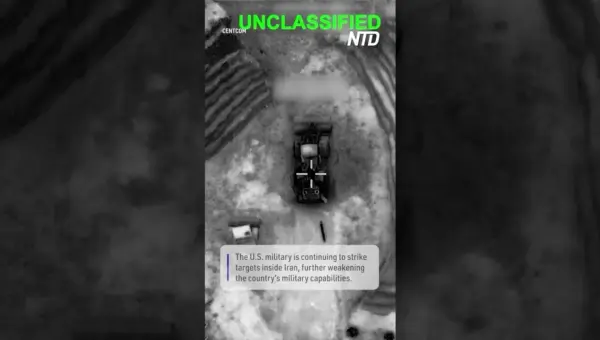
US Strikes Cripple Iran’s Military Might, CENTCOM Reports
U.S. Central Command reports ongoing strikes inside Iran are significantly weakening its military power. This direct action aims to reshape regional security dynamics, but carries risks of escalation. The long-term impact depends on Iran's response and ability to adapt.

U.S. Iran Tensions Rise Amid Shifting Alliances
Rising tensions between the U.S. and Iran are creating a volatile geopolitical situation. With conflicting signals on de-escalation and potential shifts in alliances like NATO and U.S.-Israel relations, the path forward remains uncertain. The global economy and regional stability hang in the balance.