Trump: Iran’s Leaders Are ‘Dead,’ Making Negotiations Impossible
Former President Donald Trump stated that the US cannot negotiate with Iran because successive leadership groups have been eliminated. He described a scenario where leaders are 'dead,' leaving the US unsure of who to engage with, thus hindering diplomatic possibilities.

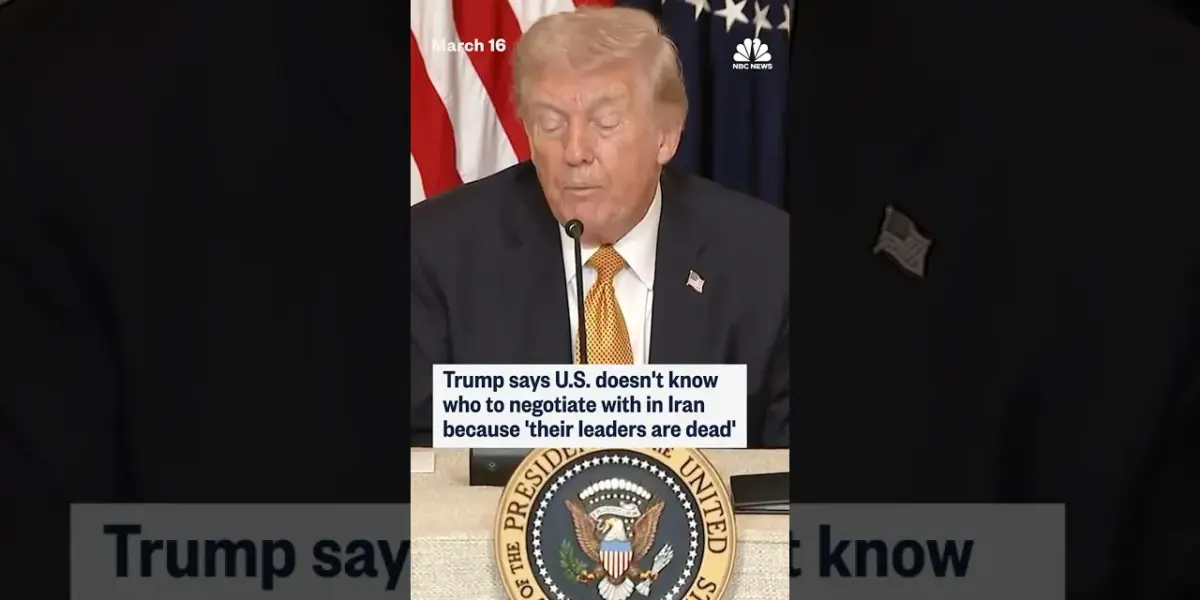
US Lacks Negotiating Partner in Iran, Says Trump
Former President Donald Trump has declared that the United States is currently unable to engage in meaningful negotiations with Iran because the country’s leadership is effectively nonexistent, with successive groups of leaders having been eliminated. Trump’s assertions, made in a recent statement, paint a picture of a deeply unstable Iranian regime, raising significant questions about the future of diplomatic engagement with the Islamic Republic.
Successive Leadership Eliminated, Trump Claims
According to Trump, the ongoing turmoil within Iran has led to a complete decapitation of its leadership structure. He described a scenario where initial groups of leaders were “knocked out,” followed by subsequent groups attempting to convene and select new leaders, only to suffer the same fate. “We knocked out the first group. Then the second group met 88 met to pick the leader because the first group was all dead. And the second group got knocked out. They’re all dead,” Trump stated, illustrating a relentless cycle of leadership elimination.
This alleged pattern suggests a profound internal crisis within Iran, where the very act of assuming leadership positions becomes perilous. Trump posited that any surviving factions would likely be apprehensive about convening to designate new leaders. “I would think they’re a little nervous about meeting. I don’t know if they’re nervous. Maybe they’re not. Maybe they’re crazy,” he remarked, implying that a lack of fear in such a situation would indicate a dangerous level of irrationality.
Uncertainty Over Who to Negotiate With
The core of Trump’s argument centers on the practical impossibility of conducting negotiations when the identity and even the existence of the negotiating counterparts are unknown. He emphasized the lack of clarity regarding who is in charge within Iran, stating, “We don’t even know their leaders. Look, all of their leaders are dead as far as we know. But they’re all dead. We don’t know who we’re dealing with.”
This uncertainty, Trump argued, creates a significant impediment to any diplomatic overtures. “We have people wanting to negotiate. We have no idea who they are,” he concluded, highlighting the fundamental disconnect between the desire for dialogue and the reality of an apparently leaderless or constantly changing leadership in Iran.
Broader Implications for Foreign Policy
Trump’s claims, if accurate, have far-reaching implications for international diplomacy and the geopolitical landscape. The ability to negotiate with foreign powers is a cornerstone of foreign policy, enabling the resolution of conflicts, the establishment of treaties, and the management of international relations. A situation where a nation’s leadership is in such a state of flux and vulnerability would fundamentally alter the dynamics of engagement.
Historically, diplomatic efforts rely on established channels and identifiable leaders with whom agreements can be made and upheld. The alleged elimination of successive leadership tiers in Iran challenges this paradigm. It raises questions about the effectiveness of sanctions, military actions, or diplomatic pressure if the intended targets are constantly shifting or unable to consolidate power. Furthermore, it could embolden adversaries or create vacuums that could be exploited by extremist groups.
The Concept of Talking to Adversaries
Trump also touched upon the broader principle of engaging in dialogue, even with adversaries. He stated, “I talk to everybody because sometimes good things come out of it.” This reflects a pragmatic approach to foreign relations, suggesting that communication channels should remain open regardless of the nature of the relationship. However, he tempered this by adding, “But uh uh I don’t know if they’re ready yet. They’re taking a pounding. I don’t know if they’re ready yet.” This indicates that while he believes in the utility of talks, the current circumstances in Iran might not be conducive to productive outcomes.
Future Outlook
The situation described by Trump underscores the volatile nature of the Middle East and the complexities involved in navigating international relations with nations undergoing significant internal strife. Whether these claims reflect the reality on the ground or are part of a broader political narrative, they highlight the challenges the international community faces in understanding and engaging with Iran. The coming months will likely reveal whether any semblance of stable leadership emerges in Iran and if the prospects for meaningful negotiation can be revived.
Source: Trump says U.S. doesn't know who to negotiate with in Iran because 'their leaders are dead' (YouTube)

Related Articles

Trump’s Iran Claims: Shocked or Deluded by War Games?
Donald Trump claimed surprise over Iran's actions in the Strait of Hormuz, but experts suggest retaliation was inevitable. Military war games likely predicted such a scenario, raising questions about the advice given to the President.
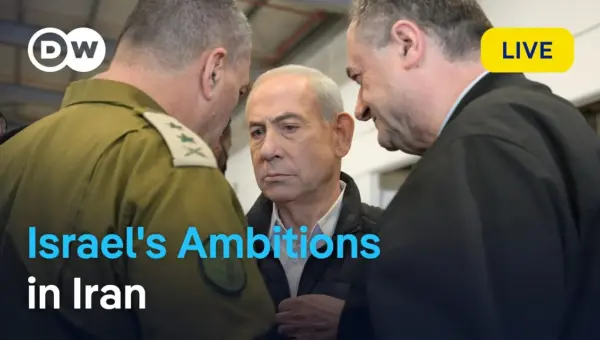
Israel’s Strategy Against Iran Revealed
Israel's strategy to counter Iran's nuclear ambitions and regional influence centers on containment, utilizing a mix of covert military actions, intelligence operations, and diplomatic pressure. Analysts highlight the growing urgency due to Iran's nuclear advancements, while also noting the persistent risk of escalation in the volatile Middle East.

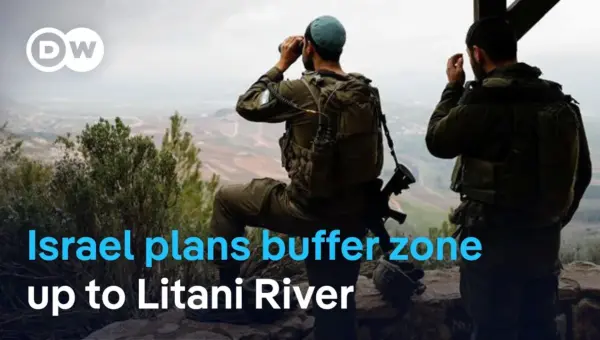
Israel Eyes Lebanon Buffer Zone: A Political Ploy?
Israel's military operations in southern Lebanon aim to create a buffer zone and pressure Hezbollah, according to expert Yazid Sayigh. He argues the strategy is more political than military, echoing historical tactics. The ongoing conflict could destabilize Lebanon further, while Hezbollah fights for survival.