Trump Seeks Exit Strategy from Iran Conflict, Allies Hesitate
President Trump is reportedly seeking an exit strategy from escalating tensions with Iran, as allies express significant hesitation to join a U.S.-led naval mission in the Strait of Hormuz. Experts discuss the military complexities and political motivations behind the U.S. request, while warning of potential quagmires and the risk of wider conflict.

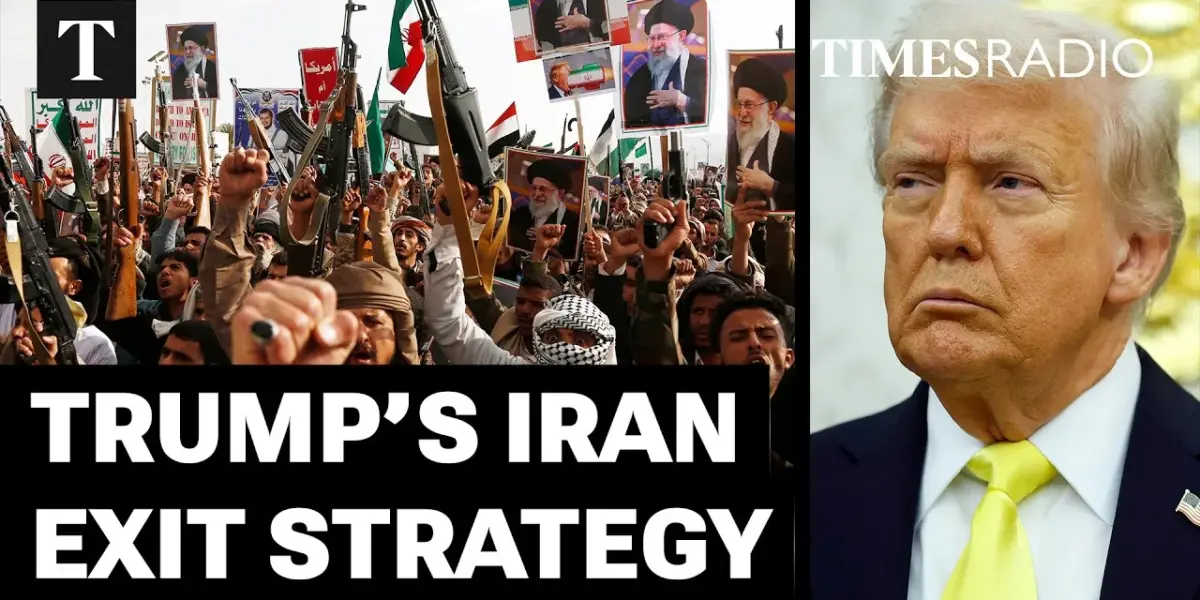
Trump Administration Weighs Iran Exit Amidst Allied Hesitation
Washington D.C. – The Trump administration is reportedly exploring pathways to withdraw from the escalating tensions with Iran, a move that comes as key allies express significant reservations about participating in a U.S.-led naval operation in the Strait of Hormuz. The complex military and political landscape surrounding the strategic waterway has highlighted deep-seated concerns among international partners regarding the risks and responsibilities involved in confronting Iran’s naval capabilities.
Military Complexities of Securing the Strait of Hormuz
General Sir Richard Barrons, former commander of Joint Forces Command, detailed the substantial military challenges inherent in securing the Strait of Hormuz for commercial shipping. He explained that the threat landscape includes a formidable array of anti-ship missiles, drones of various ranges, kamikaze speedboats laden with explosives, mines, and undersea drones. Barrons noted that Iran allegedly possesses approximately 2,500 of these weaponized speedboats in storage, designed to target merchant vessels.
“The challenge is you’ve got to find a way of dealing with all of that all of the time and be 100% successful because we’re not about securing the Strait of Hormuz for warships because they should be able to fight their way through. You would have thought but to a commercial vessel and their insurers. So, a vessel that’s not armed or protected in any way, that’s worth millions, carrying a load of oil or fertilizer worth millions, they they aren’t going to want to take the chance that they’re the one that’s unlucky enough to encounter a missile, a drone, or a mine.”
The narrowest point of the Strait is only 20 miles wide, amplifying the difficulty of ensuring the safe passage of millions of dollars worth of commercial cargo, primarily oil. Barrons emphasized that while warships might be able to fight their way through, unarmed commercial vessels and their insurers are unlikely to accept the inherent risks. President Trump has asserted that Iran’s naval power has been substantially destroyed, but acknowledged that a single attacker with a missile or launcher can still cause significant disruption, a point that weighs heavily on ship owners and their respective nations.
Allied Hesitation and Trump’s Pressure Tactics
Jerome Starkey, defense editor at The Sun, discussed President Trump’s demands for allies to provide warships for the Strait of Hormuz operation. Starkey highlighted a pattern of Trump threatening NATO allies, referencing past statements about encouraging Russia to attack members who do not meet defense spending targets and his attempt to purchase Greenland. This behavior, Starkey explained, causes significant unease within NATO, as the alliance was not designed to withstand internal verbal attacks.
The “serious consequences” Trump alluded to are presumed to involve a potential U.S. withdrawal from NATO commitments if allies do not comply with his demands to increase their contributions to American security interests. This approach marks a shift from his initial argument that NATO should do more for itself to a demand that it do more for the United States.
Logistical and Political Motivations Behind U.S. Naval Request
When questioned about why the U.S., possessing the world’s most powerful navy, is requesting assistance from seven allies, General Barrons suggested a combination of logistical and political factors. He pointed out that the U.S. Navy’s primary focus is the Indo-Pacific, meaning fewer assets are naturally stationed in the Persian Gulf. Furthermore, any naval vessel, whether American or European, would need to transit the Strait of Hormuz to reach the operational area, thus facing the same risks.
Barrons also posited a political motive: distributing responsibility for a highly complex and potentially dangerous situation. By asking allies to participate, Trump aims to prevent the crisis from being perceived as solely an American problem and to share the burden of dealing with Iran’s actions, which have predictably impacted global oil prices and created economic instability.
Democratic Strategist on Shared Responsibility and Exit Strategies
Jim Kennedy, a Democratic Party strategist and former adviser to President Bill Clinton, agreed that a key motivation for President Trump’s approach is to share responsibility. He suggested that the administration should have established a stronger coalition before the crisis escalated. Kennedy expressed hope that the current spike in oil prices might be short-term, but acknowledged Trump’s desire to build a broader coalition that includes European countries, Japan, and others who have economic and regional stability stakes in the outcome.
Avoiding a ‘Quagmire’ and Seeking an ‘Off-Ramp’
The possibility of the conflict devolving into a quagmire was a central concern discussed by Kennedy and Starkey. Kennedy stated that a goal of regime change in Iran could indeed lead to a protracted and costly engagement, taking years to achieve. However, he does not anticipate this being the administration’s objective, believing instead that they will seek an “elegant or inelegant way to exit” while claiming victory.
“If we aimed for regime change um that that it could be a quagmire because it could take years for regime change to truly happen. Uh I I don’t think I don’t anticipate that’s going to happen. I think we’ll find some elegant or inelegant way to exit um and claim victory in the process.”
Kennedy noted that Iran’s capabilities have been significantly degraded, fulfilling some of the administration’s objectives. He believes President Trump is determined to avoid a quagmire.
Jerome Starkey echoed these concerns, characterizing the current situation as a “war of choice” initiated by Donald Trump. He warned that Europe faces a “war of necessity” on its doorstep due to the Strait of Hormuz disruptions and Iran’s ongoing threats. Starkey fears the conflict could spread, drawing in other nations due to Trump’s pressure and the global economic consequences, such as rising oil prices and shipping restrictions.
Both analysts discussed potential exit strategies. Kennedy suggested that degrading Iran’s missile, drone, and nuclear capabilities could provide a basis for claiming victory and drawing down forces. He also raised the possibility of covert Israeli and potentially U.S. assistance to the Iranian people to foster internal change, emphasizing that true regime change must originate from within Iran. A potential positive ripple effect, Kennedy noted, could be the degradation of Iran’s support for Russia, which might indirectly aid Ukraine.
Britain’s Stance and Future Outlook
The article also referenced the British Prime Minister’s assertion that Britain would not be drawn into a wider war, underscoring the international apprehension about escalation. The discussion concluded with the acknowledgment that while an immediate exit strategy remains uncertain, the administration appears keen to find a resolution that allows for a declared victory, potentially involving the degradation of Iran’s offensive capabilities and a de-escalation of direct confrontation.
Source: Trump Could ‘Claim Victory’ And Exit Iran Conflict | Jim Kennedy (YouTube)

Related Articles

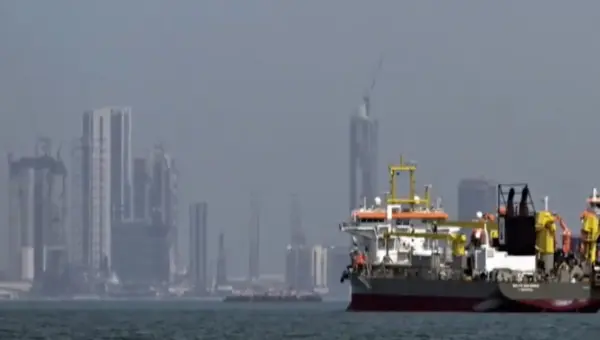
Iran Blocks China Ships, Exposing Beijing’s Weak Grip
Iran's recent decision to block Chinese ships at the Strait of Hormuz is exposing the limits of Beijing's influence in the Middle East. This action is causing delays and cancellations for Chinese manufacturers, turning a perceived geopolitical win into an economic strain.
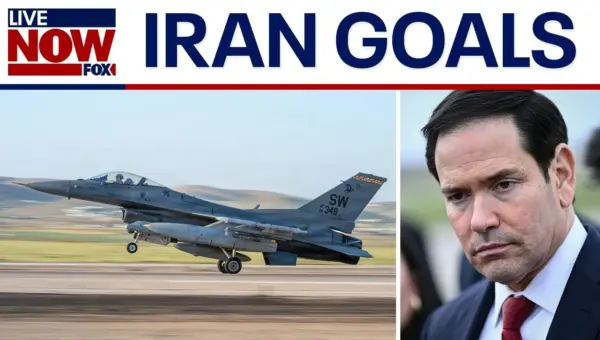
Rubio: US Can Achieve Iran War Goals Without Troops
Senator Marco Rubio outlined a strategy to counter Iran without deploying U.S. ground troops, focusing on weakening the regime and enhancing maritime security. He also criticized Cuba's economic system and expressed concerns about West Bank violence.


Israel Escalates Iran Strikes, Warns of Wider War
Israel has launched significant strikes inside Iran following continued missile fire, warning of further escalation. The conflict risks wider regional instability and economic disruption, especially concerning the Strait of Hormuz.