Moscow Suffers Massive Economic Blow Amid Internet Blackout
Moscow is grappling with significant economic losses exceeding $70 million due to a prolonged, unexplained mobile internet and voice call outage lasting over a week. The disruption is seen by analysts as a potential tool for information control and a test of the Kremlin's digital suppression capabilities.


Moscow Faces Economic Fallout as Internet Outage Hits Capital
The Russian capital, Moscow, has endured a prolonged period of mobile internet and voice call disruptions, exceeding a week, leading to significant economic losses and raising questions about the Kremlin’s control and transparency. Preliminary estimates suggest that the initial five days of the outage cost businesses at least $70 million, highlighting the critical role of digital infrastructure in the modern economy.
Unexplained Disruptions Cripple Services
Residents and businesses in Moscow have been operating without reliable internet access for over a week, a situation described as unprecedented for a major global capital. The outages have affected not only mobile internet but also voice calls, severely impacting daily life and commercial activities. Internet service providers, Russia’s mobile operators, have reportedly disavowed any responsibility for the disruptions and offered no official explanation, a response characterized by some observers as “Soviet-style.” This lack of communication has left the public and businesses in the dark, exacerbating the negative consequences.
Economic Repercussions Mount
The extended internet blackout has had a tangible impact on Moscow’s economy. Sectors heavily reliant on digital connectivity, such as taxi services, delivery platforms, and online retail, have experienced significant downturns. The preliminary estimate of $70 million in losses within the first five days underscores the vulnerability of businesses to such infrastructure failures. This economic strain occurs at a time when Russia is reportedly facing considerable fiscal challenges, with its GDP being smaller than that of Italy or Spain, making such losses particularly acute.
Strategic Implications: Control and Information Warfare
Analysts suggest that the prolonged internet shutdown in Moscow may serve multiple strategic purposes for the Kremlin. Beyond the immediate economic impact, the blackout is viewed as a tool to suppress dissent and control information flow. By limiting access to external news and communication, authorities can potentially mitigate the risk of public protests and maintain a tighter grip on the narrative surrounding domestic and international affairs, including the ongoing conflict in Ukraine. The lack of explanation for the outage further compounds concerns about government transparency and its approach to managing public perception.
“This is also a good instrument to prevent any potential protests and protect Putin’s regime from the collapse. But as all of his master strategies, it has some negative consequences and leads to the collapse of more and more businesses in Moscow…”
Testing Ground for Future Controls
The sustained internet outage is also being interpreted as a large-scale test for both the Russian population’s resilience to such disruptions and the technological capabilities that the Kremlin might deploy more broadly. Observers note that this period could be used to assess public reaction to extended communication blackouts and to refine technologies that could be employed to restrict inter-personal communication during times of perceived crisis or unrest. The scenario is seen as a stark contrast to Ukraine, where internet access remains functional despite the ongoing war, underscoring the different approaches to information management and public engagement.
Broader Geopolitical Context
The events in Moscow occur against a backdrop of heightened global geopolitical tensions. The article draws a parallel between the Kremlin’s actions and broader concerns about Russia’s international conduct, suggesting that its “criminal actions against international law” pose risks not only to Ukraine but also to other regions, including the Middle East and Taiwan. The author posits that the ultimate resolution to global instability lies in the “defeat and demilitarization of Russia,” arguing that such an outcome would contribute to a safer world.
Historical Parallels and Disregard for Public Welfare
The observed approach to managing the internet crisis has been likened to “Soviet” tactics, characterized by a lack of transparency and what is perceived as a disregard for the welfare of the population. The absence of advance warning or clear explanations for the prolonged service interruption highlights a pattern of top-down decision-making that prioritizes state control over public convenience and economic stability. The article suggests that this approach, coupled with other policies like increased taxation, contributes to the decline of businesses and economic hardship within Russia.
Source: PANIC IN MOSCOW: MOBILE INTERNET DOWN FOR A WEEK Vlog 1346: War in Ukraine (YouTube)

Related Articles

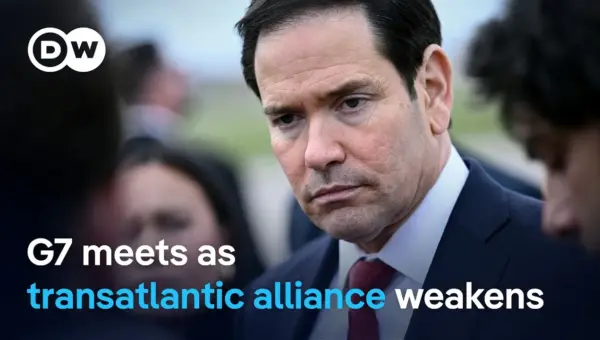
G7 Allies Clash Over Iran War Strategy, Urge Focus on Russia
G7 foreign ministers met in Paris, revealing deep divisions over the U.S. war with Iran. European allies urged the U.S. to pressure Russia, linking its actions to the conflict and fearing support for Ukraine will wane.

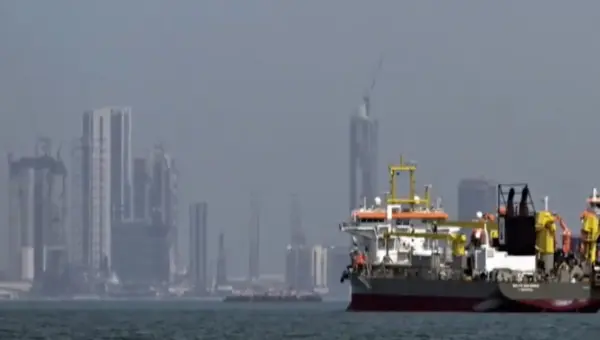
Iran Blocks China Ships, Exposing Beijing’s Weak Grip
Iran's recent decision to block Chinese ships at the Strait of Hormuz is exposing the limits of Beijing's influence in the Middle East. This action is causing delays and cancellations for Chinese manufacturers, turning a perceived geopolitical win into an economic strain.
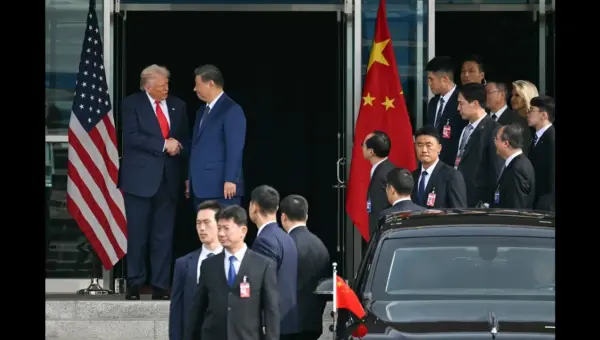
Trump’s “Walk Away” Tactic Signals Tougher Stance on China
Retired Air Force Brigadier General David Stillwell believes President Trump's strategy of being willing to walk away from negotiations puts pressure on China. This tactic, combined with US global actions and strengthened alliances, signals a more assertive American foreign policy.