NASA’s Artemis II Moon Mission Hits Snag: Persistent Helium Leaks Force Rollback, Delaying Historic Lunar Flyby
NASA's ambitious Artemis II mission, set to send four astronauts on a lunar flyby, has encountered a significant setback. Persistent helium leaks detected during pre-launch tests will force the Space Launch System rocket to be rolled back to the Vehicle Assembly Building, likely delaying the launch from March to April or beyond. This critical delay underscores the meticulous safety protocols for human spaceflight and the technical challenges of deep space exploration.

NASA’s Artemis II Moon Mission Hits Snag: Persistent Helium Leaks Force Rollback, Delaying Historic Lunar Flyby
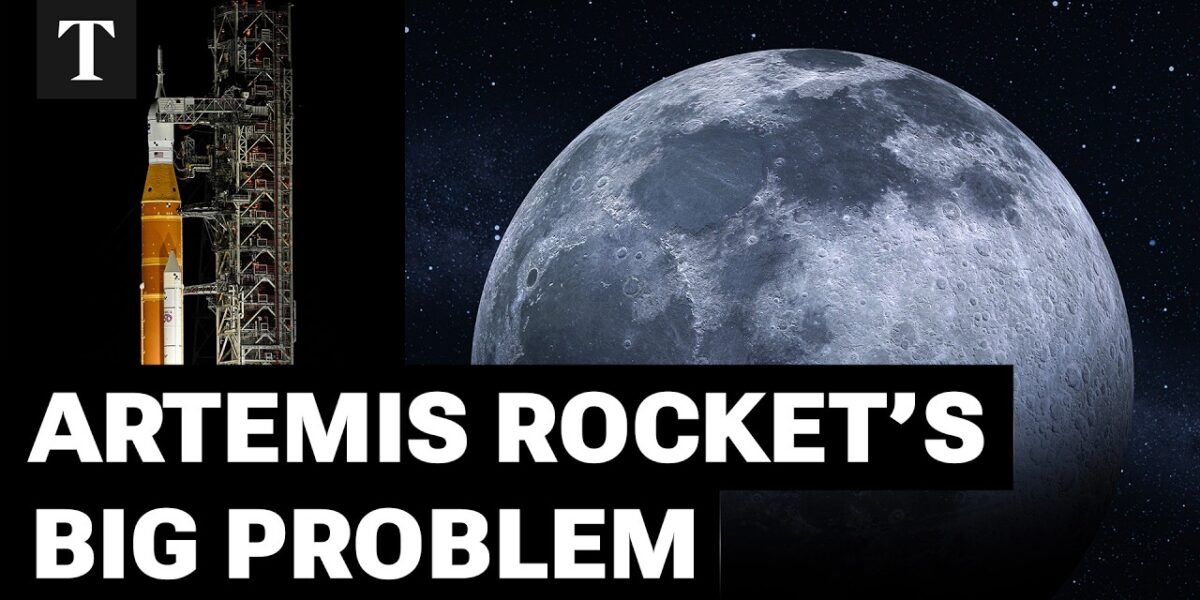
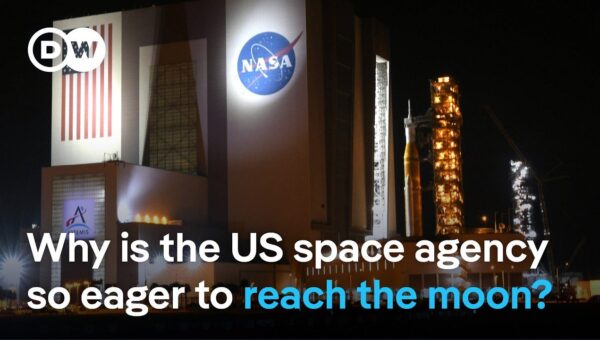
CAPE CANAVERAL, Florida – NASA’s ambitious Artemis II mission, poised to send a crew of four astronauts on a historic journey around the Moon, has encountered a significant setback. Persistent helium leaks, detected during pre-launch tests, have forced the agency to roll back its colossal Space Launch System (SLS) rocket and Orion spacecraft from Launch Pad 39B to the iconic Vehicle Assembly Building (VAB). This meticulous and time-consuming process is expected to push the mission’s planned March 6th launch date, and indeed the entire March launch window, to April or potentially beyond.
The delay underscores the inherent complexities and stringent safety protocols governing human spaceflight, particularly for a mission that will carry astronauts further into space than any humans have gone in over 50 years. The setback follows a comprehensive wet dress rehearsal earlier in the week, which initially showed promising signs, only for critical helium leaks to re-emerge overnight.
The Persistent Challenge of Helium Leaks
The culprit behind the latest delay is a familiar adversary in rocket science: helium. As explained by Times writer Jackie Godard, who broke the news from Florida, helium is not merely a propellant but a crucial pressurizer for the rocket’s fuel tanks. “Helium is a pressurizer for the fuel tanks. It kind of fills the empty space in the fuel tanks to get the pressure up,” Godard elaborated. The challenge lies in its molecular properties: “It’s an extremely tricky thing to be working with, very tiny molecules. It’s very nifty and it can get out of the smallest, smallest gap.”
These leaks have been specifically identified in the flow of helium from the launch pad into the cryogenic propulsion stage on the rocket. This isn’t an isolated incident; the problem with helium management has reportedly plagued rocket development for years, affecting not only the SLS but other launch vehicles as well. Addressing such a hardware issue requires an extremely thorough and painstaking process, necessitating the return of the rocket to the VAB for in-depth inspection and repair.
The rollback itself is a monumental undertaking. The SLS rocket, standing taller than the Statue of Liberty, travels at a glacial pace of approximately one mile per hour on its crawler-transporter. This journey, which takes several hours, effectively nullifies any immediate launch aspirations. “It’s an extremely meticulous process to get a rocket now back from the launchpad, settle it back into the vehicle assembly building and really start working, drilling down on this hardware problem,” Godard emphasized.
Artemis II: A Critical Stepping Stone to Mars
The Artemis II mission represents a pivotal moment in NASA’s long-term vision for human space exploration. It is designed to send four astronauts – NASA’s Reid Wiseman, Victor Glover, Christina Koch, and the Canadian Space Agency’s Jeremy Hansen – on a 10-day journey around the far side of the Moon and back to Earth. This uncrewed flyby is not merely a symbolic gesture; it is a crucial test flight for the Orion spacecraft’s life support systems, communication capabilities, and re-entry procedures with a human crew aboard.
Following the successful uncrewed Artemis I mission, which orbited the Moon in late 2022, Artemis II is intended to pave the way for Artemis III, the mission that aims to land humans on the lunar surface, including the first woman and first person of color, marking humanity’s return to the Moon after more than five decades. The ultimate goal of the Artemis program, however, extends far beyond the Moon. NASA views the Moon as a vital proving ground and a “stepping stone” for future human missions to Mars.
“The longer term view is the colonization of Mars,” Godard stated, acknowledging that while it might sound like science fiction, it mirrors the skepticism once held about lunar travel in the 1950s. The Moon offers unique opportunities for research, testing out hardware in a deep-space environment, and developing technologies crucial for the arduous six-month journey to Mars. This includes establishing bases where resources like water, which can be converted into rocket fuel, could be extracted, thereby making deep-space travel more sustainable and less reliant on Earth-launched supplies.
Safety First: Lessons from Starliner and the New Era of Human Spaceflight
The meticulous approach to safety, even at the cost of delays, is paramount for NASA, particularly in the wake of recent scrutiny. The announcement of the Artemis II delay comes on the heels of a critical report on Boeing’s Starliner mission, where NASA was reportedly criticized for management decisions that impacted safety during an abortive mission. This context amplifies the agency’s commitment to ensuring absolute safety for the Artemis II crew.
As Godard highlighted, “this being a new rocket and the first time that the crew are due to ride on it and going further than any humans have gone before, you can’t really be doing anything other than 100% safety proofing that thing.” This philosophy dictates that no shortcuts can be taken, especially when human lives are at stake and the mission pushes the boundaries of human exploration.
The New Space Race and Geopolitical Stakes
Beyond the technical challenges, the Artemis program operates within a heightened geopolitical landscape. While the original space race pitted the United States against the Soviet Union, today’s competition is largely with China, which is also rapidly advancing its lunar and deep-space capabilities. China aims to establish its own lunar research station and has declared ambitions to land astronauts on the Moon by 2030.
This renewed space race carries significant stakes, not just for national pride but for strategic and geopolitical influence. “Supremacy in space has always been America’s domain,” Godard noted, emphasizing the importance of maintaining that leadership, especially as the U.S. embarks on this endeavor with international partners, while China largely pursues its goals independently.
The pressure to perform and avoid repeated delays is immense, as continued setbacks could impact public perception, political support, and crucial funding for the Artemis program. Congress closely scrutinizes the efficacy of the Space Launch System, particularly in comparison to the rapidly developing commercial space sector, exemplified by SpaceX’s Starship program. NASA’s new administrator is navigating a “pivot moment,” weighing the balance between retaining in-house human spaceflight capabilities and leveraging commercial partners.
Looking Ahead: A Delayed But Determined Path
While the immediate future for Artemis II involves a return to the VAB and a revised launch timeline, the long-term objectives of the Artemis program remain unchanged. The helium leak, though a significant hurdle, is a testament to the rigorous testing and safety protocols in place. The delay, while frustrating for those eagerly anticipating the launch, ensures that when the Artemis II crew eventually embarks on their lunar journey, every possible measure has been taken to guarantee their safety and the mission’s success.
The world watches as NASA meticulously addresses this latest challenge, understanding that each step, however delayed, contributes to humanity’s audacious quest to extend its presence beyond Earth and ultimately, to Mars.
Source: Artemis Mission: Nasa's Moon Rocket Faces Delays After Propulsion Issues Arise (YouTube)

Related Articles
NASA’s Asteroid Mission: From Mars Dream to Lunar Gateway
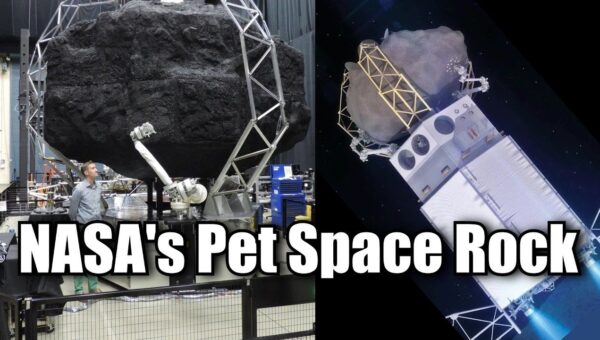
NASA's ambitious Asteroid Redirect Mission (ARM), designed as a stepping stone to Mars, aimed to capture a small asteroid boulder and tow it to lunar orbit for astronaut testing. Though cancelled, its advanced propulsion and robotic technologies live on in NASA's Lunar Gateway and future deep space exploration plans.

NASA’s Evolving SLS Rocket Hints at New Upper Stage
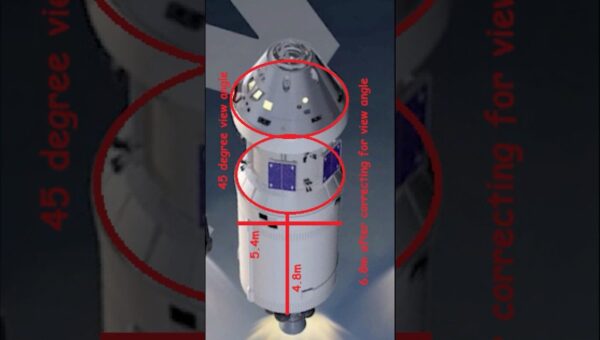
NASA's Artemis program may be adopting a new upper stage for its Space Launch System (SLS) rocket, potentially utilizing the commercially available Centaur V. An updated infographic reveals design changes and hints at evolving mission strategies, including advanced lunar lander operations.

NASA Revises Artemis Moon Landing Goal to 2028
NASA is revising its Artemis program, targeting a 2028 lunar landing amidst a new space race with China. The plan includes preparatory missions in 2027 and focuses on exploring lunar poles for resources. International collaboration remains key, though funding questions persist.