Schiff Blames Trump’s Overconfidence for Iran Strategy Failure
Senator Adam Schiff has accused President Trump of failing on Iran strategy due to "overconfidence," leading to a "quagmire" and rising fuel costs. He highlighted congressional efforts to reclaim war powers amid Republican resistance. The interview also touched upon Democratic foreign policy visions and skepticism towards the Trump administration's shifting stance on agricultural labor.

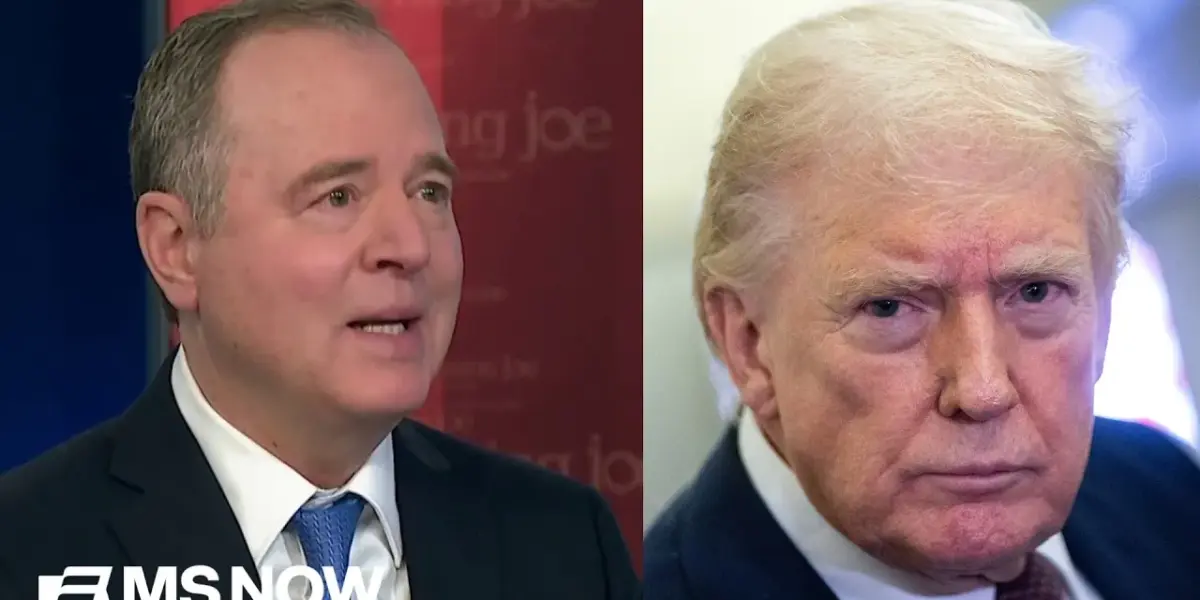
Schiff Blames Trump’s Overconfidence for Iran Strategy Failure
WASHINGTON D.C. – Senator Adam Schiff of California has sharply criticized President Trump’s foreign policy strategy, particularly concerning Iran, asserting that the president’s “overconfidence” and “failure to recognize that in war things are unpredictable” has led to a deepening “quagmire.” Schiff’s remarks, made during a recent interview, directly link the current geopolitical instability and rising fuel costs to decisions stemming from what he described as the president’s “own success militarily in Venezuela” and a belief that challenges would be “easy.”
Misjudging the Threat: The Iran Strait of Hormuz Crisis
The core of Schiff’s critique centers on the administration’s response to potential threats in the Strait of Hormuz. According to Schiff, the president was “briefed on the fact that Iran might close the strait.” However, instead of heeding cautions from military leaders like General Kane, the president allegedly exhibited overconfidence, a trait Schiff believes has become a hallmark of his foreign policy decision-making. This perceived hubris, Schiff argues, has resulted in a situation where “we don’t have a changed regime, where we don’t have a secure straight, where the cost of fuel and price at the pump is going up.” The senator’s remarks highlight a significant divergence in how the Trump administration’s actions are perceived, with Schiff pointing to a strategic miscalculation rather than effective deterrence.
Congressional Pushback: War Powers and Republican Stalemate
In response to the escalating tensions and the perceived overreach of presidential authority in foreign conflicts, Schiff detailed efforts within Congress to reassert its war powers. “We’ve been introducing war powers resolutions. We’re going to introduce and have introduced more, and we’ll be taking those up, I think, fairly soon,” Schiff stated. He expressed optimism that these resolutions would gain traction, particularly among Republican members of the Senate, especially if the administration escalates its military involvement by introducing ground troops. However, he lamented the current resistance, noting that “at this point, we’re reliant on Republican members of the Senate to reassert our congressional war power. They have thus far refused.” Schiff concluded this point with a somber plea: “I hope that changes and I hope it changes before we see further loss of American lives.”
Debating Strategy: Beyond ‘Opposing Trump’
The interview also delved into broader criticisms of the Democratic Party’s foreign policy approach, referencing an op-ed by former Obama White House Chief of Staff Rahm Emanuel. Emanuel’s piece, titled “Opposing Trump Isn’t a Global Strategy,” argued that Democrats need to offer concrete results and a clear vision, not just procedural arguments or opposition to Trump. “Democrats need to realize that foreign policy demands results not merely rules,” Emanuel wrote. “The most important question is whether Mr. Trump’s approach advances America’s global security and economic interests.”
Schiff acknowledged the validity of Emanuel’s point, stating, “Well, I think he’s right.” He emphasized that while pushing back against the president’s current policies is crucial due to their impact on Americans and soldiers, Democrats have indeed articulated a contrasting vision. He elaborated on this by highlighting key policy differences:
- Support for Ukraine: “Democrats are solidly WE WOULD NOT BE IN SUPPORT OF UKRAINE, WE WANT TO PROVIDE STRONGER MATERIAL SUPPORT FOR UKRAINE.”
- Russia Sanctions: “WE WOULD NOT BE LIFTING SANCTIONS ON RUSSIA RIGHT NOW WHICH IS JUST FILLING THE RUSSIAN WAR COFFERS WITH MORE MONEY TO MAKE WAR AGAINST Ukraine.”
- Countering Drones: “We would be seeking Ukraine’s help participation in countering the Iranian Shahed drones, which they have great experience.”
- NATO Alliance: “We are very firmly supportive of NATO. We recognize NATO’s value. The president does not, and we see with the president’s call now on NATO to help bail him out OF THIS PROBLEM HE’S CREATED, THE NECESSITY OF HAVING STRONG ALLIANCES.”
Schiff contrasted these positions with the president’s actions, such as “denigrating Zelenskyy, BLAMING ZELENSKYY FOR HIS OWN ACTIONS, FOR THE PRESIDENT’S OWN ACTIONS IN TAKING THE PRESSURE OFF RUSSIA.” He stressed that these are significant policy distinctions that go beyond mere support for international institutions, representing a fundamentally different foreign policy posture.
Agriculture and Immigration: Policy Flip-Flops
The conversation then shifted to domestic policy, specifically the Trump administration’s approach to immigration and its impact on the agricultural sector. Citing a New York Times report, Schiff discussed the administration’s apparent move to make it easier for migrants to work on U.S. farms by expanding and potentially cheapening the H-2A guest worker visa program, including lowering wage requirements and allowing housing to count as compensation. This policy shift comes after years of targeting migrants for deportation, which has exacerbated labor shortages in agriculture.
Schiff expressed skepticism about the sincerity of this proposed change, recalling a similar instance early in the administration. “Farmers are really in a difficult position because, in addition to the immigration raids that have discouraged farm workers from showing up at work and leaving fields untended. You also have tariffs, which are just crushing farmers. And now you add to it the increased costs not only from the tariffs but from fertilizer not getting through the Strait of Hormuz, it’s a perfect storm of offal for farmers.” He questioned whether this was just another “iteration of the president flip FLOPPING BECAUSE HE DOESN’T KNOW WHAT TO DO.” Schiff concluded, “I WILL BELIEVE IT WHEN I SEE IT. BUT RIGHT NOW, ALL OF THIS IS CONSPIRING TO RAISE THE COSTS ON CONSUMERS GOING TO THE GROCERY STORE IN DIRECT VIOLATION WITH THE PRESIDENT PROMISED HE WOULD DO.”
Looking Ahead
As geopolitical tensions continue to simmer and domestic policy debates intensify, the focus remains on whether Congress can effectively reassert its war powers and whether the Trump administration’s often contradictory policy shifts will yield tangible results for American consumers and industries. The coming weeks will likely reveal whether Republican senators will break ranks to support war powers resolutions and whether the administration’s adjustments to immigration policy for agriculture will materialize into concrete relief for farmers and stable food production.
Source: Schiff : This moment fueled Trump’s failure on Iran strategy (YouTube)

Related Articles
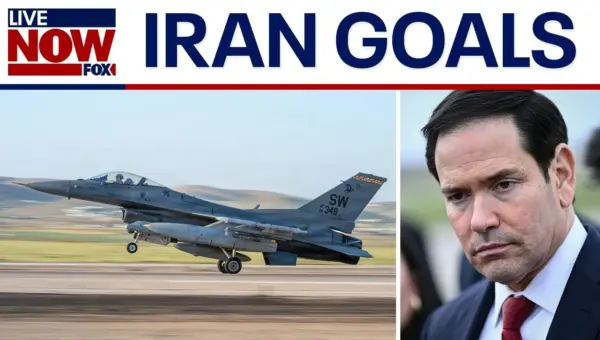
Rubio: US Can Achieve Iran War Goals Without Troops
Senator Marco Rubio outlined a strategy to counter Iran without deploying U.S. ground troops, focusing on weakening the regime and enhancing maritime security. He also criticized Cuba's economic system and expressed concerns about West Bank violence.
Trump’s “Walk Away” Tactic Signals Tougher Stance on China
Retired Air Force Brigadier General David Stillwell believes President Trump's strategy of being willing to walk away from negotiations puts pressure on China. This tactic, combined with US global actions and strengthened alliances, signals a more assertive American foreign policy.

Israel Escalates Iran Strikes, Warns of Wider War
Israel has launched significant strikes inside Iran following continued missile fire, warning of further escalation. The conflict risks wider regional instability and economic disruption, especially concerning the Strait of Hormuz.