Kimmel’s Oscar Jab: A Subtle Warning to Authoritarianism?
Jimmy Kimmel's subtle jab at the Oscars, linking free speech concerns to a potential Trump reaction, sparks a discussion on political satire and democratic values. The monologue highlights filmmakers' role in truth-telling, contrasting it with authoritarian tendencies.

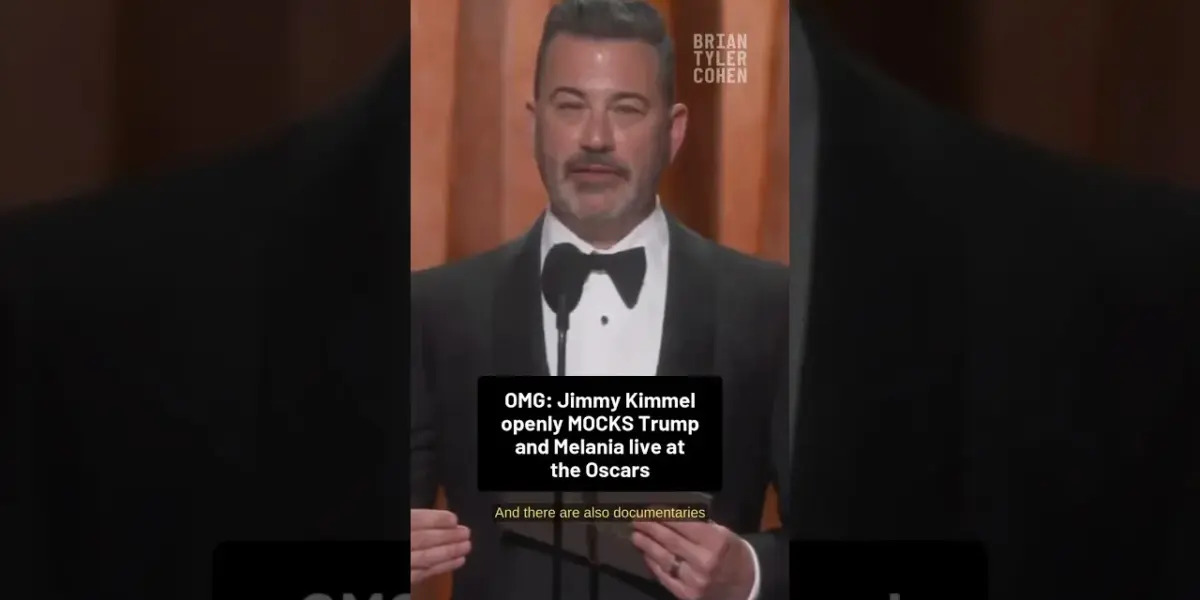
Kimmel’s Oscar Jab: A Subtle Warning to Authoritarianism?
The recent Academy Awards ceremony, typically a celebration of cinematic achievement, offered a moment that transcended the glitz and glamour, touching upon the delicate balance between artistic expression and political commentary. Host Jimmy Kimmel, in a seemingly lighthearted jab, referenced the absence of a nomination for Melania Trump, linking it to a broader, albeit veiled, commentary on leaders who do not support free speech. While delivered with the characteristic wit of a late-night host, this moment warrants a closer examination of its implications in the current global political climate.
The Veiled Reference
Kimmel’s opening monologue included a pointed remark: “As you know, there are some countries whose leaders don’t support free speech. I’m not at liberty to say which. Let’s just leave it at North Korea and CBS.” This was followed by a dig at Donald Trump: “Oh man, is he going to be mad his wife wasn’t nominated for this.” The juxtaposition of these two statements, though brief, is significant. By alluding to countries that stifle free speech and then immediately pivoting to a potential Trumpian reaction to a perceived snub, Kimmel subtly drew a parallel. The implication, however indirect, is that leaders who are sensitive to criticism or who operate in environments where free speech is curtailed might react negatively to even the slightest perceived slight, especially when it touches upon their personal or public image.
Filmmakers as Truth-Tellers
Kimmel then shifted to praise the role of filmmakers, particularly documentarians, in upholding truth and challenging injustice. He stated, “Fortunately, fortunately for all of us, there is an international community of filmmakers dedicated to telling the truth, oftentimes at great risk, to make films that teach us, that call out injustice, that inspire us to take action.” This segment serves as a vital counterpoint to the earlier political quip. It highlights the very essence of free expression and the courage it takes to use art as a medium for social and political commentary. The documentary form, in particular, is often at the forefront of holding power accountable, a stark contrast to the environments Kimmel alluded to earlier.
Contextualizing the Remark
The remark about Melania Trump’s lack of a nomination and the potential for Donald Trump’s ire is not entirely out of character for political satire. Late-night hosts have long used humor as a vehicle to address political figures and events. However, the timing and the preceding commentary on free speech lend it a layer of gravity. In an era where democratic norms are being tested in various parts of the world, and where political discourse often devolves into personal attacks and accusations of bias, Kimmel’s comment can be seen as a subtle, yet pointed, reminder of the values that underpin a free society. It’s a reminder that in democracies, public figures, even those at the highest levels, are subject to commentary and critique, and that the freedom to offer such commentary is a fundamental right.
Balanced Viewpoints
It is important to acknowledge that Kimmel’s comment was delivered in jest. The Oscars stage is a platform for entertainment, and humor is an integral part of that. Some might view the remark as merely a lighthearted poke at a well-known political figure, devoid of deeper meaning. Others might see it as a gratuitous political statement that detracts from the celebratory nature of the event. The interpretation largely depends on the viewer’s political perspective and their general view on the role of celebrities and comedians in political discourse.
However, the strength of Kimmel’s statement lies in its subtlety. By not directly naming or overtly criticizing, he allows the audience to draw their own conclusions. The reference to “countries whose leaders don’t support free speech” creates a backdrop against which the subsequent jab at Trump resonates more strongly for those attuned to the political climate. It suggests that the behaviors and sensitivities of leaders who are perceived to be anti-free speech are notable, and even a seemingly minor incident, like a film not getting nominated, could elicit a strong reaction from such figures.
Why This Matters
This seemingly small moment at the Oscars carries significant weight in the broader conversation about free speech and political accountability. In a world where authoritarian tendencies are on the rise, and where the very definition of truth is often contested, the role of public discourse and artistic expression becomes even more critical. Kimmel’s monologue, by highlighting the bravery of filmmakers who speak truth to power and by subtly critiquing leaders who may not tolerate dissent, serves as a reminder of the values that a healthy democracy must protect. It underscores the idea that in open societies, criticism and commentary are not only tolerated but are essential for the functioning of government and the protection of citizens’ rights.
Implications, Trends, and Future Outlook
The trend of comedians and entertainers using their platforms to address political issues is not new, but it has become increasingly prominent. As political polarization deepens, these figures often serve as a conduit for public sentiment, translating complex issues into accessible and often humorous observations. Kimmel’s specific approach – using indirect references and juxtapositions – reflects a sophisticated form of political commentary that can be both entertaining and thought-provoking. It allows for engagement without necessarily alienating a broader audience. The future likely holds more instances of such commentary, as entertainers continue to grapple with the pressing social and political issues of their time. The challenge for them, and for audiences, will be to discern the genuine critique from mere entertainment, and to recognize the underlying messages about democratic values.
Historical Context
The use of satire and humor to critique political figures dates back centuries. From Aristophanes in ancient Greece to Jonathan Swift in the 18th century, artists have used their craft to challenge authority and expose societal flaws. The late-night talk show format, which gained prominence in the mid-20th century, became a modern-day forum for such critique. Hosts like Johnny Carson, David Letterman, and Jon Stewart, and now Jimmy Kimmel, have consistently used their monologues to comment on the political landscape. The Oscars, too, have a history of moments where the line between entertainment and political statement has been blurred, often sparking debate and reflection long after the ceremony concludes. Kimmel’s comment, therefore, is part of a long tradition of using popular culture platforms to engage with and comment on political realities.
In conclusion, Jimmy Kimmel’s remark at the Oscars, while fleeting, encapsulates a broader dialogue about free speech, political sensitivity, and the role of art in society. It serves as a subtle reminder that in a world grappling with the erosion of democratic freedoms, the courage of those who speak truth, and the vigilance of those who defend the right to do so, are more important than ever.
Source: OMG: Jimmy Kimmel openly MOCKS Trump and Melania live at the Oscars (YouTube)

Related Articles
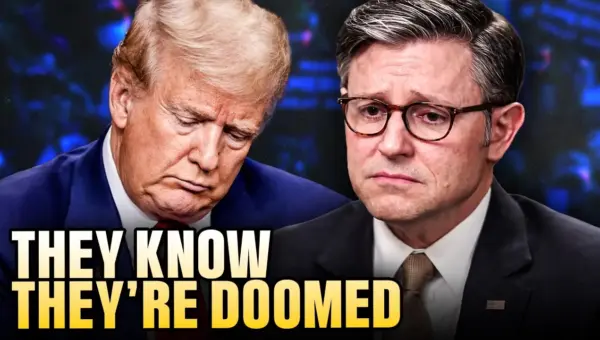
Polls Spell Doom: Republicans Face Voter Backlash
New polling data reveals a sharp decline in public confidence regarding the economic impact of Republican policies, particularly under Donald Trump. A significant majority now feel financially worse off, a trend that is especially pronounced among independent voters. This economic discontent poses a major challenge for the Republican party heading into future elections.
Trump Delays Iran Strike Deadline Amidst Shifting Diplomacy
President Donald Trump has extended his deadline for potential strikes on Iranian energy plants to April 6th, amid reports of U.S.-Iran diplomatic talks mediated by Pakistan. This move comes as Israel continues its strikes on Iran and the U.S. deploys additional military assets to the region. Analysts point to mixed signals, economic pressures, and strategic miscalculations as key factors shaping the evolving situation.
Iran War Claims Ring Hollow as US Troops Injured in New Attack
Days after Donald Trump claimed "we've won" the war with Iran, a new attack injured approximately a dozen U.S. troops and damaged aircraft. This incident contradicts Trump's assertions of victory and raises serious questions about the strategy and reality of the ongoing conflict.