Canada Fuels Ukraine’s Lifeline: Armored Surge Bolsters Survival
Canada's latest military aid package, including hundreds of Roshel Senator armored vehicles, significantly bolsters Ukraine's protected mobility. This move addresses the critical need for safe transport amidst relentless drone and artillery threats, underscoring the evolving nature of modern warfare where survival on the move is paramount.

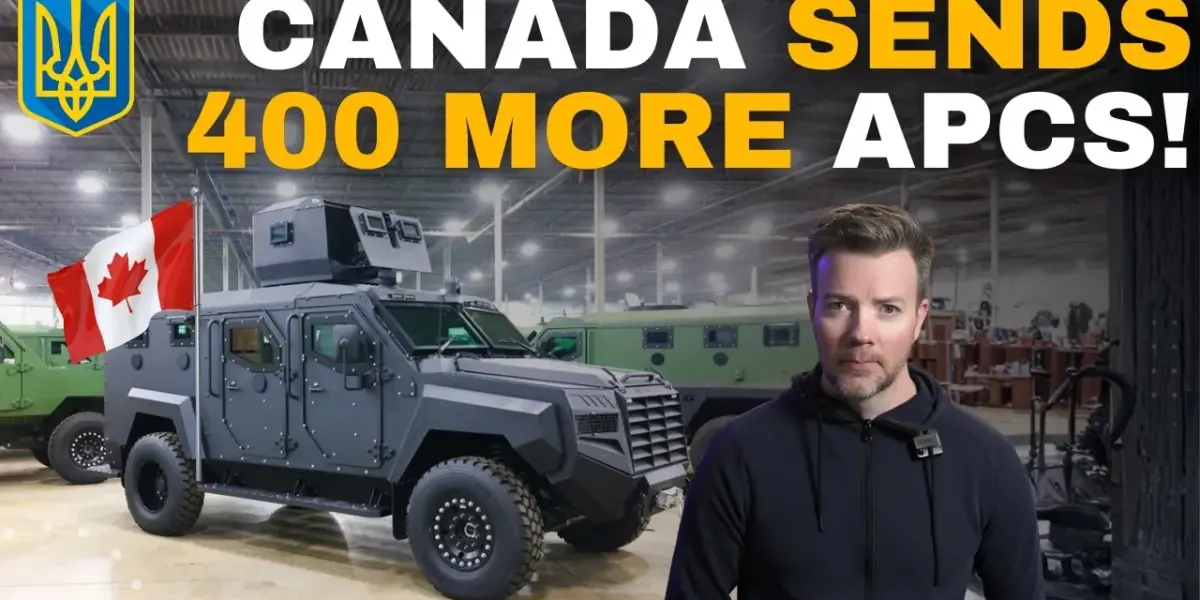
Canada’s Armored Reinforcements: A Strategic Lifeline for Ukraine
In a significant move signaling continued Western support, Canada has announced a substantial package of military aid to Ukraine, with a particular focus on armored vehicles. This latest contribution, valued at $300 million Canadian dollars as part of a larger $2 billion commitment, introduces hundreds of new armored personnel carriers and light armored vehicles to Ukraine’s arsenal. The core of this package comprises 383 Roshel Senator armored vehicles and 66 LAV6 (Light Armored Vehicle 6) from General Dynamics, a move designed to bolster Ukraine’s protected mobility capabilities in the face of relentless Russian drone and artillery threats.
The Strategic Imperative of Protected Mobility
The current conflict in Ukraine has fundamentally reshaped the nature of warfare, elevating the importance of simply moving personnel and equipment safely. The battlefield has become a meticulously engineered trap, where Russian forces utilize a combination of FPV drones, mines, artillery, and reconnaissance to punish any movement. Ukraine’s response has been a multi-layered strategy of defense, deception, dispersion, and, crucially, the acquisition of more protected mobility platforms. The Canadian aid directly addresses this critical need, aiming to ensure that Ukrainian soldiers can traverse the battlefield in armored trucks rather than open-bed vehicles, and that wounded soldiers can be evacuated with greater protection.
The specificity of the Canadian announcement, explicitly naming the Roshel Senator and LAV6, is noteworthy. It highlights Ottawa’s strategic intent to provide vehicles that serve distinct but complementary roles. The LAV6, a heavier and more capable armored fighting vehicle, represents a classic mechanized capability. In contrast, the Senator is positioned as a mass-producible, wheeled armored workhorse, designed for rapid deployment across numerous units. This approach aligns with Ukraine’s current operational doctrine, which necessitates that not every unit requires a high-end Infantry Fighting Vehicle like the Bradley, but many units urgently need reliable transport that can withstand mines and drone attacks.
The Roshel Senator: A Proven Workhorse
The Roshel Senator armored vehicle has emerged as a particularly vital asset for Ukraine. Canada has been a consistent supplier of these vehicles since the early stages of the full-scale invasion. Initial donations in May 2022 included eight Senators, followed by a significant commitment of 200 additional vehicles in January 2023. These earlier donations were framed as direct responses to Ukrainian requests, underscoring the vehicle’s proven utility on the front lines. Beyond direct government aid, the Senator has become a significant part of Ukraine’s protected mobility fleet through global procurement channels, with Roshel itself reporting the delivery of over 2,000 Senators to Ukraine.
The sheer volume of Senators in Ukrainian service, bolstered by Canada’s direct contributions and other procurement efforts, signifies more than just a numbers game. It reflects a deliberate strategy to reinforce a platform that Ukraine has already mastered in terms of operation, maintenance, and integration. Introducing new, complex systems during wartime is a significant logistical and training burden. By continuing to supply the Senator, Canada and other partners are ensuring Ukraine can effectively leverage existing capabilities and supply chains. This hybrid approach—combining state-led aid with industrial ramp-up and direct procurement of proven platforms—illustrates the evolving dynamics of modern defense support.
Understanding the Senator’s Design and Role
The Roshel Senator is not a monolithic design; it exists in multiple variants, primarily the Armored Personnel Carrier (APC) and the Mine-Resistant Ambush Protected (MRAP) configurations. While both share a similar commercial-rooted platform, featuring a 6.7L diesel V8 engine and a 10-speed automatic transmission, their seating capacities and primary design philosophies differ. The APC variant typically seats up to 12, while the MRAP variant seats up to 10. The MRAP, in particular, is engineered with survivability against the most prevalent threats in the Ukrainian conflict: fragments, drones, small arms fire, and mines.
The Senator MRAP is reported to meet NATO STANAG 4569 standards for ballistic and blast protection, including surviving significant underbody and underwheel blast tests. Operationally, this means the vehicle is designed to absorb direct hits from mines or drone-emplaced explosives, and while it may be damaged or immobilized, its primary function is to keep the occupants alive. This survivability has been demonstrated in numerous battlefield accounts, including instances where Senators have survived direct FPV drone strikes and mine blasts, allowing crews to dismount safely even after sustaining heavy damage.
Deployment and Operational Impact
Ukraine employs the Senator not as a frontline assault vehicle in the traditional sense, but as a critical tool for protected movement in a high-threat environment. Its role encompasses troop transport between positions where exposure to enemy fire is minimized, logistical runs for vital supplies, and casualty evacuation (medevac/casevac). In drone-saturated zones, where the ‘golden hour’ for medical aid is constantly under threat, a vehicle that can withstand damage and continue moving is invaluable.
The Senator’s true impact lies in its ability to raise the threshold for enemy kills. A soft-skinned vehicle hitting a mine can result in mass casualties. A Senator, even if crippled, transforms such an event into a recovery or mobility challenge, preserving the lives of its occupants. This distinction is crucial in a war where mines and drones create a pervasive sense of psychological warfare, making every movement a potentially fatal gamble. Protected mobility platforms like the Senator offer a tangible advantage, tipping the odds in favor of survival and allowing soldiers to fight with greater confidence and reduced fatalism.
Strengths and Limitations
The Senator’s strengths are clear: its wheeled design offers speed, relative simplicity in maintenance, and ease of fielding in large numbers. The use of commercial drivetrains enhances parts availability compared to highly specialized military-only designs. Roshel’s proven ability to scale production further solidifies its suitability for Ukraine’s needs.
However, the Senator is not without its limitations. It is not a tank; it remains vulnerable to anti-armor weapons, heavy artillery, and precise close-range FPV drone strikes. Furthermore, like all wheeled vehicles, its mobility can be significantly constrained by challenging terrain, particularly during Ukraine’s notorious mud seasons.
Why This Matters
The continued supply of vehicles like the Roshel Senator is not merely about replacing losses; it is about sustaining Ukraine’s ability to wage a war of attrition while simultaneously building a force capable of adapting to future phases of conflict. Russia’s relentless drive to lower the cost and increase the proliferation of drones is met by Ukraine’s persistent effort to elevate survivability on the battlefield. These two trends converge on the roads, in the trenches, and at critical points like casualty collection sites.
The 383 Senators and 66 LAV6s from Canada, while not decisive on their own, represent a critical reinforcement of Ukraine’s protected mobility infrastructure. They will reduce avoidable deaths, enhance operational maneuverability under constant threat, and crucially, preserve Ukraine’s manpower—a strategic resource in a nation fighting for its survival. Moreover, these tangible deliveries serve as a powerful message: Canada is not just providing financial aid but is actively contributing to a pipeline of equipment that proves its worth on the front lines, often under fire. In an information war, a vehicle that survives long enough for its crew to walk away is one of the most persuasive arguments for continued support.
Future Outlook
The Senator’s role exemplifies the evolving nature of modern warfare, where survivability against ubiquitous, low-cost threats like drones and mines has become a primary combat function. The ongoing need for such vehicles underscores a broader trend: the industrial capacity to produce and deliver robust, survivable platforms quickly is as vital as advanced weaponry. As the conflict continues, the emphasis on vehicles that can absorb punishment and keep personnel alive will likely remain paramount. Canada’s sustained commitment, coupled with Ukraine’s demonstrated ability to integrate and effectively utilize these platforms, positions the Senator and similar vehicles as enduring components of Ukraine’s defense strategy for the foreseeable future.
The story of the Roshel Senator in Ukraine is a testament to a machine designed for the harsh realities of modern combat: a machine built to buy seconds and preserve lives in a war where movement itself is often the greatest danger.
Source: Ukraine's Proven Lifesaver Just Got 400 More Units from Canada (YouTube)

Related Articles


Ukraine Strikes Cripple Russian Oil Exports
Ukrainian drone strikes are crippling Russia's oil exports and damaging its economy, leading to falling domestic support for President Putin. The targeted attacks on refineries and terminals aim to cut off war funding and have significant geopolitical consequences.

Russia’s TV Dreams of Dividing Europe
Russian state television broadcasts increasingly aggressive rhetoric, discussing the division of Europe and dismissing Ukraine's statehood. This contrasts with battlefield realities and official diplomatic stances, highlighting a dual strategy of projecting strength and seeking geopolitical advantage. Analysts warn that these televised fantasies ignore the ongoing war and Ukraine's fight for sovereignty.

Ukraine Strikes Russian Oil Hubs, Straining War Funding
Ukraine's repeated strikes on Russian oil export terminals are targeting the financial backbone of Moscow's war machine. These attacks aim to cripple Russia's revenue streams and force a costly defense of its energy infrastructure, creating significant economic and political pressure on the Kremlin.