Sweden Arms Coastal Boats for Drone Warfare Dominance
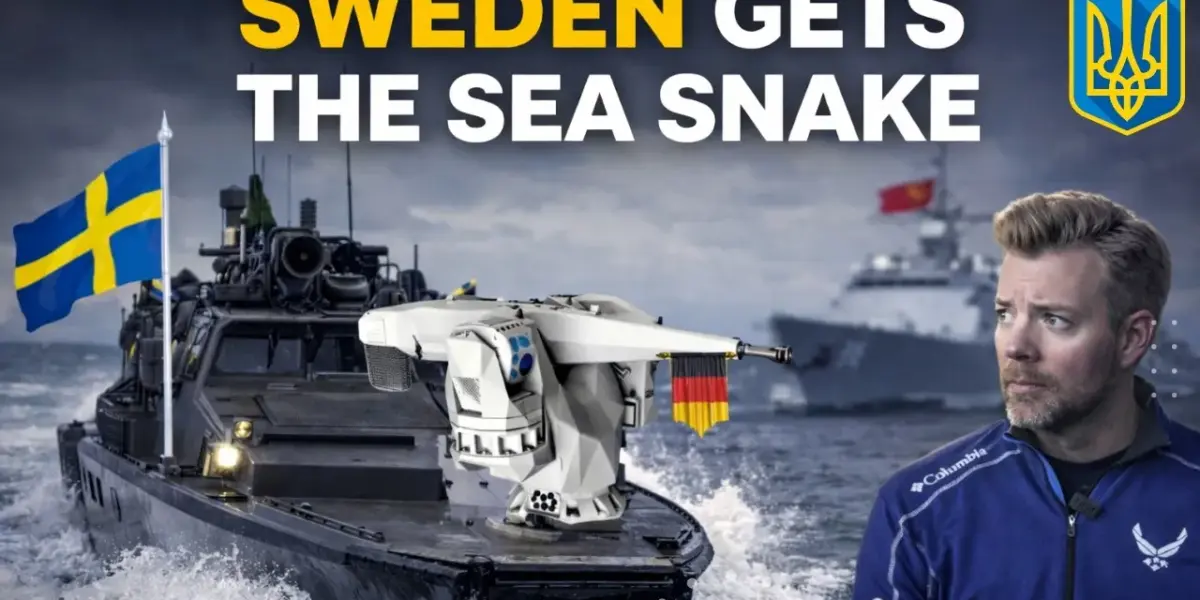
Sweden is equipping its Combat Boat 90 (CB90) with the advanced Sea Snake 30 naval gun system, a strategic move acknowledging the growing drone threat. This upgrade transforms the agile assault craft into a networked coastal defense platform, reflecting lessons learned from Ukraine and signaling a significant adaptation in naval warfare.

Sweden’s Coastal Defense Evolves: The CB90 and the Sea Snake Revolution
Sweden is making a significant strategic pivot in its naval capabilities, not with a new fleet of battleships, but by arming its ubiquitous Combat Boat 90 (CB90) with advanced anti-drone and close-in defense systems. The recent acquisition of eight Sea Snake 30 naval gun systems marks a critical acknowledgment of the changing nature of warfare, particularly the pervasive threat posed by drones and low-altitude aerial attacks. This move signals Sweden’s adaptation to the realities of modern conflict, heavily influenced by lessons learned from the ongoing war in Ukraine.
The CB90: A Platform Built for Swedish Geography
The CB90 has long been a cornerstone of Swedish amphibious and coastal operations, designed specifically to counter the nation’s unique geography. Unlike nations with vast open coastlines, Sweden’s strength lies in its intricate archipelagos, narrow channels, and shallow waters. In these cluttered environments, large naval vessels struggle to maneuver and remain hidden. The CB90, with its high speed, shallow draft, water jet propulsion, and capacity for rapid troop and weapon deployment, excels. Swedish forces have historically treated these boats not merely as naval assets but as extensions of ground combat – mobile platforms for inserting special teams, repositioning forces swiftly, and appearing in unexpected locations.
Ukraine’s Influence: The Drone Age Dawns on Coastal Warfare
The ongoing conflict in Ukraine has starkly illuminated the vulnerability of all platforms, regardless of size or speed, to modern aerial threats. Sweden has itself contributed CB90s to Ukraine, where they have been employed in roles consistent with their design: coastal and riverine movement, rapid insertions, and maintaining mobility under surveillance. The Ukrainian experience has underscored a crucial battlefield reality: the air threat does not cease at the shoreline. Drones, FPVs, and helicopters can target naval and amphibious assets with alarming effectiveness. Visibility and movement, even for fast, agile craft, now equate to targetability.
This is precisely the pressure point Sweden is now addressing with the Sea Snake 30. The procurement reflects an explicit need for a credible, close-range response to drones and helicopters for its amphibious units. As one project lead noted, the Sea Snake system is intended to defeat drones with high precision, thereby enhancing both the protection and offensive capabilities of the CB90.
Introducing the Sea Snake 30: A System for the Modern Threat
The Sea Snake 30 is a remotely operated naval gun system centered around a 30x173mm revolver cannon, a caliber widely used within NATO, simplifying logistics and ammunition supply. Its design prioritizes close-range defense and integrates a robust sensor package, including daylight and infrared cameras, a laser rangefinder, and capabilities for automatic target detection and multi-target tracking. Several features are particularly critical for the CB90’s mission profile:
- Remotely Operated: This significantly reduces crew exposure to enemy fire and allows for more stable targeting, especially when the platform is navigating rough coastal waters at speed.
- 30mm Ammunition: The use of a common NATO caliber ensures interoperability and access to a variety of munitions.
- Programmable Air Burst: This capability is the core of its anti-drone and anti-helicopter function. Instead of relying on a direct hit, airburst rounds detonate in a volume of air, saturating the target area with fragments, making them highly effective against small, agile aerial threats.
- Compact and Low Silhouette: While not offering true stealth, these characteristics aid in signature management, making the system harder to detect by visual, thermal, or radar sensors, which are increasingly operated by drones.
Integration and Networked Warfare: The CB90 as a Node
The integration of the Sea Snake 30 with a naval radar system, such as the reported inclusion of the Spexer 2003D Mark III, transforms the CB90 from a standalone vessel into a networked node. This pairing of a short-range radar with an electro-optical gun mount enables rapid detection, tracking, and engagement of small aerial targets, drastically reducing the decision-making cycle. In drone warfare, where engagement ranges are closing rapidly, this speed is paramount. A delay of even a few seconds can mean the difference between survival and destruction.
Furthermore, Sweden’s procurement emphasizes integration into broader command and control systems. These upgraded CB90s are not intended to operate in isolation but as part of a larger, coordinated coastal defense network, capable of sharing targeting data and cues with other units. This networked approach is fundamental to modern military doctrine, where collective defense and information sharing are key to overwhelming an adversary.
Strategic Implications: Interoperability and Proactive Defense
The decision to procure 37 Sea Snake systems (an initial eight with an option for 29 more) indicates that this is not an experimental upgrade but a foundational element of Sweden’s future coastal warfare doctrine, especially as a member of NATO. The fact that Sweden, with its own robust domestic defense industry, chose a German supplier for this critical capability also speaks volumes. It underscores a dual commitment: first, to the paramount importance of interoperability within the NATO alliance; and second, to acquiring the most effective solutions to the severe drone threat, even if it involves navigating international procurement complexities.
A CB90 equipped with the Sea Snake 30 is fundamentally different from its predecessor. It moves beyond being solely a mobility platform to become a self-defense asset and a protector of nearby units. This capability fundamentally alters operational planning for amphibious assaults, escort missions, and near-shore operations in environments saturated with drone threats. It forces adversaries to reconsider their tactics, requiring them to respect engagement ranges and approach vectors, thereby slowing their operations and increasing their risk.
Why This Matters
Sweden’s procurement of the Sea Snake 30 for its CB90 fleet is a clear indicator that the era of unchallenged aerial dominance, even at low altitudes and near shorelines, is over. The lessons from Ukraine are being absorbed and translated into tangible military upgrades by nations actively seeking to maintain a strategic edge. This development highlights several critical trends:
- The Ubiquity of the Drone Threat: Drones are no longer niche weapons but pervasive tools of warfare, demanding dedicated countermeasures across all domains, including naval and amphibious operations.
- The Need for Organic Defense: Relying solely on external air defense coverage creates exploitable gaps. Small, agile platforms require their own integrated defensive systems to survive.
- The Evolution of Coastal Warfare: Traditional naval battles are increasingly complemented, and perhaps even supplanted, by distributed, networked operations in complex littoral environments, where speed, flexibility, and integrated defense are key.
- The Feedback Loop from Conflict Zones: Real-world combat, particularly in Ukraine, is serving as a harsh but invaluable testing ground, driving rapid innovation and adaptation in military technology and doctrine.
Future Outlook
As more nations observe the effectiveness of drone warfare and the necessary countermeasures, similar upgrades to existing naval platforms are likely. The integration of advanced sensor suites and directed energy or kinetic weapon systems onto smaller, faster vessels will become increasingly common. Sweden’s move with the Sea Snake 30 positions it as a forward-thinking defense force, adapting its capabilities to the evolving battlefield. The CB90, once a fast knife for shallow waters, is being transformed into a more versatile tool capable of swatting away threats, forcing adversaries to plan around its enhanced capabilities and, in doing so, securing a crucial advantage.
Sweden is turning a fast assault boat into a small, networked coastal air defense and surface fight problem for anyone who thinks literals are an easy shortcut. The Sea Snake turns that knife into something that can also swat. Not perfectly, not forever, yet credibly enough that an enemy has to plan around it. And planning around it is already a win.
Source: Sweden’s CB90 Just Got a Weapon Built for Ukraine's Drone Age (YouTube)

Related Articles

A-10 Warthogs Shred Iranian Boats in Strait
The A-10 Thunderbolt II, or "Warthog," has proven its effectiveness in the Strait of Hormuz, destroying Iranian fast attack craft and mine layers with its powerful GAU-8 cannon. These actions aim to ensure freedom of navigation in the vital waterway.


US Eyes Strait Control Amid Iran War
The U.S. is preparing to secure the Strait of Hormuz amid the Iran War, a crucial waterway for global oil. Iran's potential tactics include missiles, drones, speedboats, and mines. The U.S. aims to counter these with advanced naval power and air support.


US Navy Faces New Threats in Strait of Hormuz
Defense experts reveal the growing dangers facing the US Navy in the Strait of Hormuz, where drones and explosive boats challenge advanced warships. The narrow waterway demands new strategies to counter rapidly emerging threats, drawing lessons from recent conflicts.