America’s Missile Stockpile Drained: Deterrence in Peril?
Years of under-procurement and recent high-intensity conflict have depleted America's precision missile stockpiles, raising serious questions about its ability to deter global adversaries and sustain multiple wars simultaneously. The implications for future deterrence are significant.

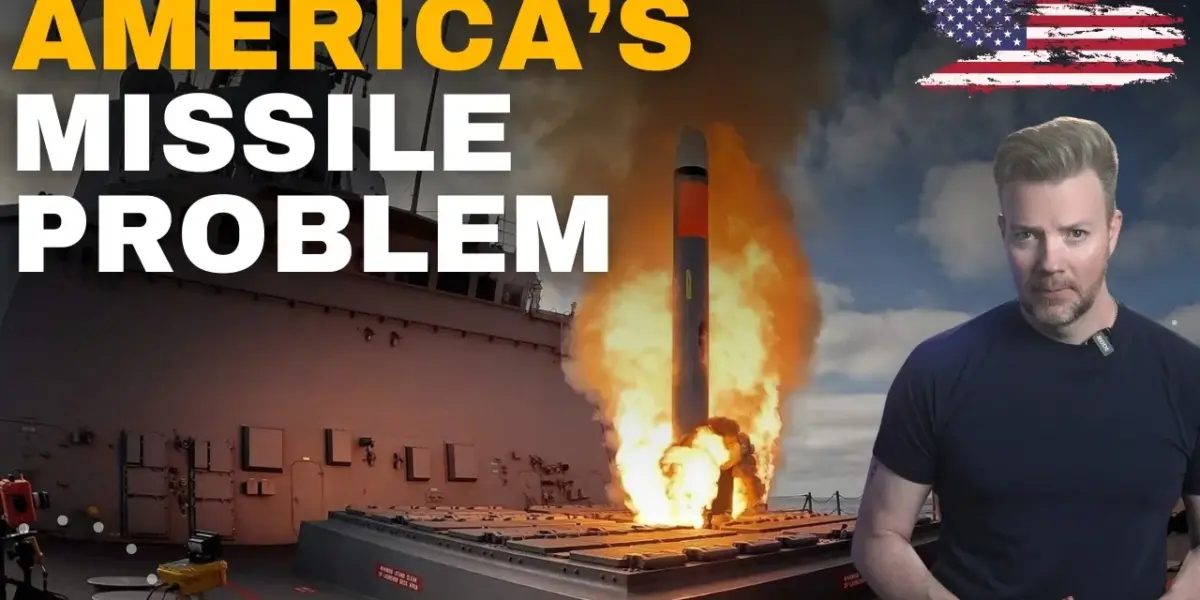
America’s Missile Stockpile Drained: Deterrence in Peril?
In the high-stakes theater of global geopolitics, the United States military finds itself confronting a quiet crisis: a potentially dwindling supply of precision-guided munitions. Recent large-scale military actions, coupled with years of under-investment in production, have sparked urgent questions about America’s ability to sustain its global commitments and maintain its deterrent posture. The implications are profound, with adversaries like China and Russia closely observing every expenditure and production rate.
The “Operation Epic Fury” Wake-Up Call
The transcript highlights a hypothetical scenario, “Operation Epic Fury,” where the Pentagon expends over 2,000 precision munitions in the initial 48 hours of conflict against Iran, costing an estimated $5.6 billion. This intense burn rate, described as “out of the gate,” immediately raises concerns about the sustainability of such operations. While former President Trump has suggested virtually unlimited weapon supplies, the analysis distinguishes between abundant conventional “iron bombs” and the critically important, yet finite, precision-guided missiles and interceptors.
The core issue is that conventional bombs, while plentiful, require air superiority to be employed effectively. In the absence of such dominance, nations are forced to rely on longer-range, precision munitions, which are far more expensive and time-consuming to produce. The very fact that the Pentagon is reportedly considering invoking the Defense Production Act—a Korean War-era law designed to compel manufacturers to prioritize government orders—signals that stockpiles are not as robust as many might assume. This is not a sign of unlimited resources, but rather an indication that the “math gets uncomfortable.”
A Legacy of Under-Procurement
The problem is not new; it’s a structural issue that predates the current administration. As retired Rear Admiral Mark McGomery is quoted, “We did marginal to minimum purchases every year and hoped we didn’t get caught out in the open, and we did.” This strategy of “peacetime rates” for production, buying just enough to keep lines warm but not enough to build substantial reserves for a sustained, multi-front war, has been a bipartisan failing. The post-Cold War drawdown and the subsequent focus on counter-insurgency operations in Afghanistan and Iraq, which did not demand high-end interceptors, further exacerbated the situation.
Furthermore, the nature of modern warfare and alliance structures plays a critical role. Alliance warfare distributes the burden of munitions across multiple nations. However, when the U.S. is forced to act unilaterally or with limited partners, the demand on its own stockpiles increases exponentially. The analysis emphasizes that precise inventory numbers are classified, but the signals—procurement rates, congressional actions, and analyst warnings—are loud and clear.
Key Weapon Systems Under Strain
The analysis delves into specific weapon systems to illustrate the severity of the issue:
- Tomahawk Cruise Missiles: These have been the U.S.’s go-to for opening air campaigns. With a range of over 800 miles and a cost of approximately $1.3 million per missile, their expenditure in the recent conflict with Iran is significant. While the U.S. is thought to have had around 4,000, the current procurement rate (budgeted at 72 for FY2025, dropping to 57 for FY2026) and the two-year production lead time suggest a long road to replenishment, even with RTX aiming for over 1,000 per year.
- THAAD (Terminal High Altitude Area Defense): This missile defense system is facing critical depletion. An estimated 25% of the entire THAAD stockpile was reportedly used defending Israel during a conflict with Iran. The plan to quadruple production from 96 to 400 interceptors per year over seven years stands in stark contrast to the rapid consumption seen in just 12 days of conflict.
- SM3 and SM6 Missiles: These are crucial for the Navy’s layered missile defense. A Center for Strategic and Budgetary Assessments (CSBA) warning about depleting inventories in late 2025 is now being cited urgently. Congressional approval of multi-year procurement for the SM6 is seen as a significant red flag indicating insufficient current stocks.
- Patriot PAC-3: This system is in high demand globally, with Ukraine, the Persian Gulf, Taiwan, and NATO allies bordering Russia all needing them. The controversial decision to move a Patriot battery from South Korea to the Middle East underscores the perceived scarcity. A statement from the administration noting Iran’s faster missile production than U.S. interceptor manufacturing capacity highlights the alarming exchange rate.
- JASMER and LRASM: These long-range, stealthy strike missiles for the Air Force and Navy are also subject to multi-year procurement approvals during active conflict, signaling that current inventories are insufficient for sustained operations.
The Strategic Danger: Uncertainty and Escalation
The true strategic danger lies not just in running out of weapons, but in the *uncertainty* created by stretched capabilities. Neither Russia nor China needs the U.S. to be completely disarmed; they simply need to perceive that the U.S. cannot sustain high-tempo, multi-theater operations simultaneously. This uncertainty erodes deterrence, prompting adversaries to probe weaknesses and exploit opportunities.
The U.S. military is designed for a “one-war planning construct.” However, current operations—supporting Ukraine, deterring China, engaging in the Middle East, and even limited deployments in places like Ecuador—represent a de facto multi-war scenario. A Heritage Foundation study suggested U.S. munition stockpiles could last only 25 days in a high-intensity conflict with China, the very adversary the force structure is supposedly designed to counter.
Russia may see an opening for “gray zone” escalation in Europe while U.S. attention is diverted. China is calculating how long the U.S. can sustain missile defense over Taiwan. The recent conflict has provided them with an estimated number, turning a previously unknown variable into a calculable risk.
Signals to Watch
Several key indicators will signal the ongoing evolution of this crisis:
- Supplemental Appropriations Requests: White House requests for additional funding will be public confirmation of the need for munitions.
- Surge Contracts and Procurement Expansions: Further approvals for multi-year procurements beyond those already announced indicate a slow-motion industrial mobilization.
- Theater Relocation Decisions: The movement of critical assets like THAAD or Patriot batteries out of one theater and into another signals stress on global stockpiles and risk-trading in real-time.
Why This Matters
The United States is not facing an immediate weapons shortage in the sense of having zero missiles. However, it has expended a significant portion of its most critical, difficult-to-replace munitions during the initial phase of a conflict with an undefined duration. The reliance on emergency production laws and the acknowledgment of Iran’s superior production rates for certain missile types are stark warnings.
The core of the issue is a strategic gamble by three administrations that peacetime procurement levels would suffice because major conflicts would be avoided. The recent events demonstrate that this gamble has failed. Applying an “Amazon Prime logic” or “just-in-time” inventory model to strategic munitions is fundamentally flawed. Deterrence relies on the perception of an inexhaustible capacity to respond. When that perception wavers, adversaries are emboldened to test boundaries. The question is no longer if the U.S. can fight, but if it can sustain the fight across multiple theaters, and whether adversaries will exploit the perceived limitations.
Historical Context and Future Outlook
The end of the Cold War led to a significant reduction in military spending and a shift in focus away from large-scale, high-intensity conflict preparedness. The subsequent decades of counter-terrorism operations further reduced the perceived need for massive stockpiles of advanced munitions. The current situation is a direct consequence of these strategic choices, amplified by recent geopolitical events.
The future outlook hinges on a sustained, significant increase in defense manufacturing capacity and a strategic re-evaluation of required stockpile levels. This will require not only congressional appropriations but also long-term industrial policy and potentially greater international cooperation to share the burden of defense production. The current trajectory suggests a period of heightened risk as the U.S. attempts to rebuild its munition reserves while simultaneously managing global security challenges. The “magazine is not empty, but it is however no longer infinite,” and in the realm of deterrence, that perceived finiteness can be a dangerous invitation.
Source: America's Missile Problem Just Got Worse (YouTube)

Related Articles

Pentagon Weighs 10,000 Troops for Iran Showdown
The Pentagon is reportedly weighing a significant troop increase of 10,000 soldiers to the Middle East, potentially escalating tensions with Iran. This move comes amid reports of U.S. precision strikes and interceptions of Iranian missiles by allies, raising concerns about regional stability and global oil supplies.

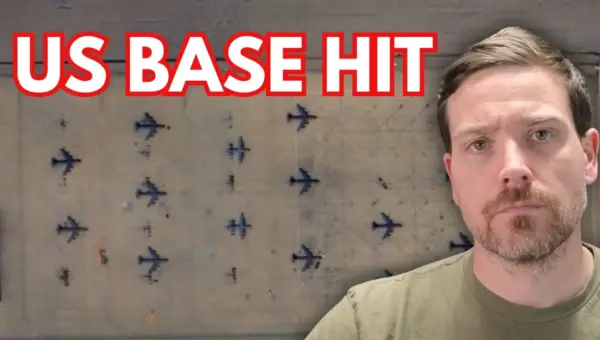
Iran Strikes US Base: Are We Learning from Mistakes?
A recent Iranian drone and missile attack wounded American service members and damaged aircraft in Saudi Arabia. This incident highlights concerns about military preparedness and the failure to learn from past mistakes, as exposed aircraft remain vulnerable targets. The ongoing conflict involves complex regional dynamics, including Iran's missile capabilities and the potential involvement of groups like the Houthis, raising questions about future stability.


Iran Conflict Sparks Market Volatility, Experts Weigh In
Geopolitical tensions in the Middle East have rattled global markets, with stocks falling and safe-haven assets like the U.S. dollar strengthening. Experts suggest the market may have overreacted, creating potential buying opportunities, but warn of a "bumpy journey" ahead due to infrastructure damage and potential oil shortages. Concerns also linger about the Federal Reserve's independence amidst political commentary.