US Unleashes Fury: Iran’s Leadership Crumbles Under Airstrikes
The U.S. military's Operation Epic Fury has reportedly crippled Iran's conventional forces and targeted its leadership, with the new Supreme Leader said to be wounded. This marks a strategic shift away from ground invasions, favoring air power and precision strikes to destabilize the regime.

US Unleashes Fury: Iran’s Leadership Crumbles Under Airstrikes
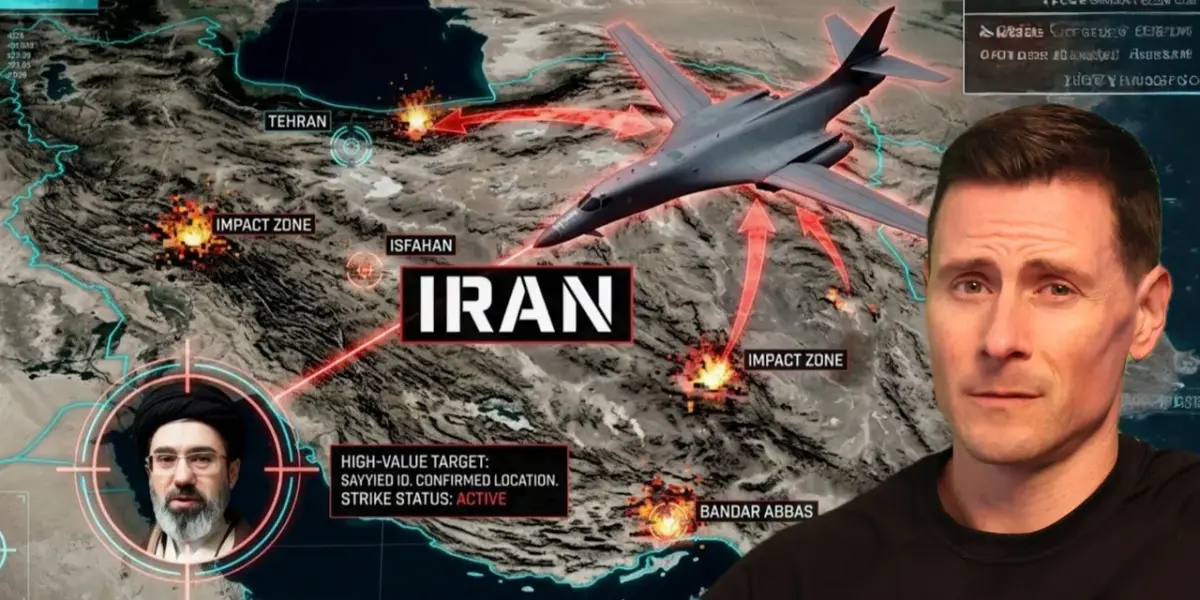
In a dramatic escalation of Operation Epic Fury, the United States military, in concert with Israeli forces, has launched a series of devastating strikes targeting Iran’s leadership. As of March 13th, 2026, the operation, now in its fourteenth day, has reportedly inflicted significant damage on Iran’s command structure, with Secretary of War Pete Hegsth announcing that Iran’s new Supreme Leader, Majaba Kimemeni, has been wounded and is likely disfigured. This development marks a critical juncture in the conflict, signaling a strategic shift towards decapitating the Iranian regime.
Defiance Amidst Devastation
Despite the reported injuries to their new leader, the Iranian regime’s rhetoric remains defiant. Reports indicate Kimemeni is vowing to expel U.S. influence from the Middle East and destroy Israel. This defiant stance, even in the face of personal injury and widespread military destruction, highlights the ideological tenacity of the regime. The transcript notes the sheer audacity of such pronouncements, likening Kimemeni to a “trash talker of trash talkers” who “belongs in the UFC.” The regime insists on continued attacks on U.S. and Israeli assets unless regional bases are closed and the U.S. completely withdraws, a demand widely dismissed as having “a snowball’s chance in hell of that happening.” Furthermore, Iran continues to assert control over the Strait of Hormuz, harassing and striking vessels, thereby applying pressure on a vital artery for global oil supply, even as its own naval and air forces have been largely annihilated.
A Gaping Military Void
The scale of the U.S. military’s success is starkly illustrated by the decimation of Iran’s conventional forces. The transcript emphasizes that “Iran’s navy is gone. Their air force is erased. Missiles and drones are decimated.” This overwhelming air power dominance has forced Iran to resort to asymmetric warfare tactics, including the harassment of shipping in the Strait of Hormuz using underwater unmanned vehicles and drones. The conflict has also seen a tragic incident: the loss of a U.S. KC-135 refueling tanker with four crew members lost and two missing. While U.S. Central Command (CENTCOM) has stated the incident in friendly airspace was not due to enemy fire or friendly fire, but likely a complex mid-air collision, the volatile environment underscores the inherent risks of sustained military operations.
The Rise of Reza Pahlavi and a New Strategic Doctrine
Amidst the military onslaught, a significant political development is the emergence of exiled crown prince Reza Pahlavi as a potential transitional leader. Pahlavi has called for nationwide strikes, positioning himself as a figurehead for a post-regime Iran. This aligns with a new strategic doctrine articulated by Secretary of War Pete Hegsth, who explicitly rejects the models of the past. “This is not 2003. This is not endless nation building under those types of quagmires we saw under Bush or Obama. It’s not even close. Those days are dead,” Hegsth stated. This signifies a departure from large-scale ground invasions and prolonged nation-building efforts, favoring instead a strategy of precision strikes and pressure designed to fracture the existing regime without entangling the U.S. in another protracted ground war.
Cyber Warfare and Underground Fortifications
The conflict is not confined to the physical battlefield. An Iran-linked hacker group has claimed responsibility for a cyberattack on a U.S. medical tech company, marking a potential new front in the hostilities. Simultaneously, satellite imagery reveals activity around Pickax Mountain, a fortified site with deep underground facilities. The potential use of the GBU-57 Massive Ordnance Penetrator by B-2 bombers against such hardened targets is a grim reminder of the advanced weaponry being deployed.
The Future Outlook: Regime Collapse or Protracted Asymmetric Warfare?
The current trajectory suggests a potential collapse of the Iranian regime in the coming weeks, driven by internal fracturing and the systematic elimination of its leadership and military capabilities. The U.S. administration has declared the regime is being “totally destroyed,” with its navy sunk, air force gone, and leaders eliminated. President Trump’s statement, “Watch what happens to these deranged scumbags today,” underscores the administration’s focus on immediate and decisive action. However, Iran’s capacity for asymmetric warfare, particularly in the Strait of Hormuz, remains a persistent challenge. The reliance on proxies like Hezbollah and Hamas, and the potential use of sophisticated underwater drones, indicates that even a crippled regime will likely continue to pose a threat through unconventional means. The U.S. is countering this with advanced technology, including reverse-engineered drones and swarms of AI-guided craft, aiming to neutralize threats before they materialize.
Why This Matters
The current conflict represents a paradigm shift in U.S. foreign policy and military strategy. The explicit rejection of large-scale ground invasions and nation-building, as championed by Secretary of War Hegsth, signals a move towards more targeted, less costly interventions. The focus on decapitating enemy leadership, combined with a strategy of preparing the battlefield for potential surgical operations, aims to achieve strategic objectives with minimal U.S. casualties. The potential collapse of the Iranian regime, if realized, could dramatically reshape the geopolitical landscape of the Middle East, potentially paving the way for a new regional order, possibly with a transitional government led by figures like Reza Pahlavi. However, the enduring threat of asymmetric warfare and the potential for the regime’s remnants to adopt even more desperate and unconventional tactics means the long-term stability of the region remains uncertain. The conflict also highlights the evolving nature of warfare, with cyber capabilities and advanced drone technology playing increasingly significant roles.
Historical Context
The current operations echo historical patterns of U.S. intervention in the Middle East, yet deliberately diverge from the costly ground wars in Iraq and Afghanistan. The targeting of leadership to destabilize regimes has precedents, but the emphasis on air power and the stated avoidance of a protracted ground presence are distinct. The Strait of Hormuz has long been a point of strategic contention, a choke point whose control has significant global economic implications. Iran’s historical reliance on proxy forces and asymmetric tactics, honed through years of facing conventional military superiority, is a well-documented phenomenon that predates the current escalation.
Implications, Trends, and Future Outlook
The implications of Operation Epic Fury are far-reaching. The potential unraveling of the Iranian regime could lead to widespread instability within Iran, creating opportunities for both democratic movements and extremist factions. The U.S. strategy of “surgical scalpel” interventions, if successful, could become a template for future conflicts, prioritizing air superiority and intelligence-driven strikes over boots on the ground. The reliance on advanced technology, from stealth bombers like the B-21 to AI-powered drone swarms, indicates a trend towards a more technologically sophisticated form of warfare. The future outlook suggests a period of intense pressure on Iran’s remaining leadership, a continued struggle to secure maritime trade routes, and a complex political transition that could either usher in a new era of stability or plunge the region into further uncertainty. The resilience of Iran’s asymmetric warfare capabilities, even in a state of military collapse, will be a critical factor in determining the ultimate outcome.
Source: U.S. Military Just UNLEASHED HELL On Iran's Leadership (YouTube)

Related Articles

G7 Allies Clash Over Iran War Strategy, Urge Focus on Russia
G7 foreign ministers met in Paris, revealing deep divisions over the U.S. war with Iran. European allies urged the U.S. to pressure Russia, linking its actions to the conflict and fearing support for Ukraine will wane.

Iran Blocks China Ships, Exposing Beijing’s Weak Grip
Iran's recent decision to block Chinese ships at the Strait of Hormuz is exposing the limits of Beijing's influence in the Middle East. This action is causing delays and cancellations for Chinese manufacturers, turning a perceived geopolitical win into an economic strain.
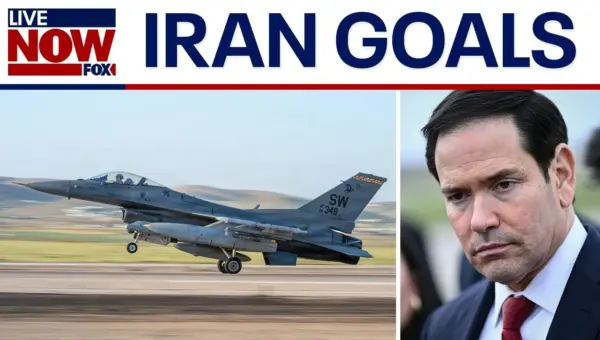
Rubio: US Can Achieve Iran War Goals Without Troops
Senator Marco Rubio outlined a strategy to counter Iran without deploying U.S. ground troops, focusing on weakening the regime and enhancing maritime security. He also criticized Cuba's economic system and expressed concerns about West Bank violence.