US Strikes Iran’s Oil Hub: A Calculated Gamble for Global Supply
The U.S. military has conducted a major precision strike on Iran's Kharg Island, targeting military infrastructure to neutralize threats to the Strait of Hormuz. While Iran vows retaliation, the U.S. aims to secure global oil supply routes through strategic degradation of Iranian capabilities.

US Strikes Iran’s Oil Hub: A Calculated Gamble for Global Supply
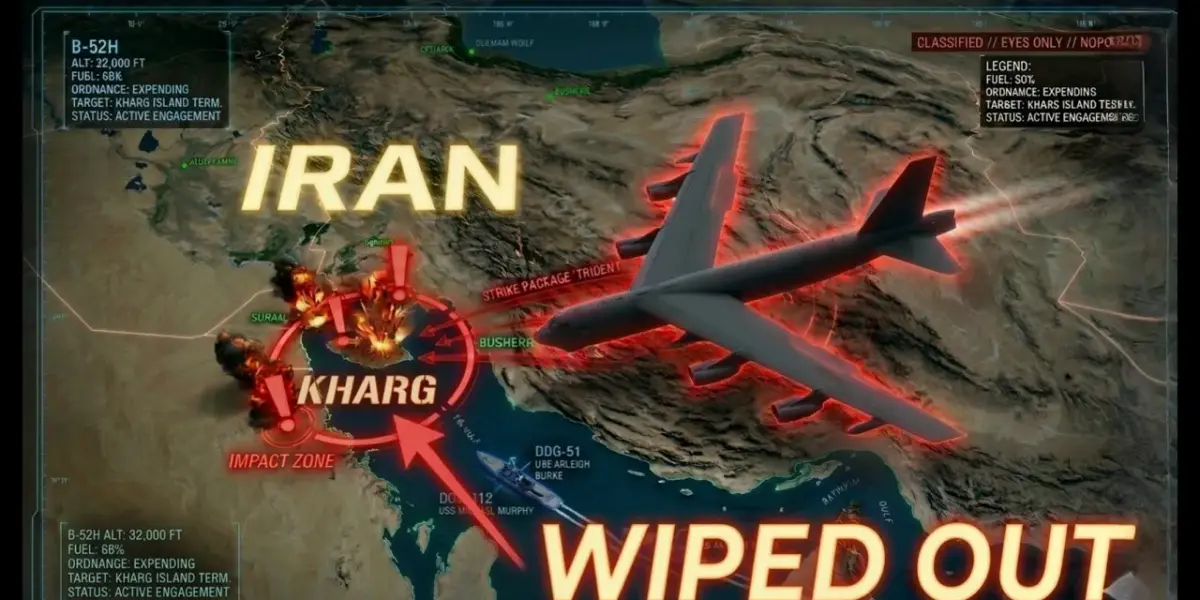
In a significant escalation of regional tensions, U.S. forces have executed a large-scale precision strike on Iran’s Kharg Island, a critical oil export hub. The operation, dubbed ‘Epic Fury,’ targeted over 90 military installations, including naval mine storage facilities, missile bunkers, and command centers, aiming to cripple Iran’s ability to disrupt global shipping lanes, particularly the vital Strait of Hormuz. While the military infrastructure bore the brunt of the assault, the crucial oil terminals were reportedly left untouched, suggesting a strategic decision to avoid immediate global economic shockwaves.
Degrading Iran’s Naval Capabilities
The strikes are presented as a direct blow to Iran’s capacity to maintain a de facto blockade of the Strait of Hormuz, a chokepoint through which a significant portion of the world’s oil supply transits. Even after sustaining heavy losses to its navy, including a substantial number of ships and mine-laying vessels, Iran has persisted in its asymmetric warfare tactics. These include laying mines, harassing commercial tankers, and launching drone swarms to project a soft blockade, creating an environment of risk that deters normal maritime traffic.
The actual oil terminals stayed untouched for now. President Trump hit Truth Social, confirming that every military asset there totally obliterated while the actual oil terminals stayed untouched for now. This rate is a direct gut punch to Orion’s ability to keep the Straits of Hormuz choked even after the US has destroyed 90% plus of their navy, including 60 ships, 30 mine laying ships, and slash their missile and drone launches by about 95%.
The U.S. strategy appears focused on systematically degrading Iran’s logistical capabilities, thereby enabling the forced opening of the Strait of Hormuz and neutralizing Iran’s economic leverage. The operation’s success is framed as a major win for the U.S., with expectations that the full reopening of the strait could be imminent.
Iran’s Asymmetric Resilience and Rhetoric
Despite the significant military pressure, Iran is depicted as demonstrating a degree of resilience through asymmetric warfare. The transcript notes Iran’s continued efforts, even after extensive strikes on over 15,000 targets, to employ unconventional tactics. This includes drone attacks on perceived adversaries, such as a recent strike on a port in the UAE, and threats against oil and energy infrastructure of firms cooperating with the U.S. The rhetoric from Iranian leadership, including warnings to President Trump and claims of striking U.S. bases, highlights their intent to continue challenging U.S. and allied interests.
The U.S. military, through CENTCOM, has actively debunked some of Iran’s claims, labeling them as recycled lies, particularly regarding the operational status of naval assets like the USS Abraham Lincoln carrier strike group. This suggests a broader information warfare component accompanying the kinetic operations.
Strategic Implications and Future Outlook
The targeting of Kharg Island’s military infrastructure, while preserving oil terminals, is characterized as a strategically sharp move. This approach aims to dismantle Iran’s offensive capabilities, particularly its mine-laying and drone operations, without immediately exacerbating global oil supply concerns. The U.S. is holding the oil terminals as a potential bargaining chip, intending to escort naval vessels through the Strait of Hormuz once Iranian threats are sufficiently neutralized.
The introduction of advanced U.S. naval technology, such as AI-powered underwater swarms like the ‘Lamprey,’ is highlighted as crucial for detecting and neutralizing mines and underwater drones, thereby ensuring the safe passage through the Strait of Hormuz. This sustained degradation of Iran’s military forces aims to increase pressure on the regime, potentially fostering internal dissent and anti-regime protests, which are seen as a precursor to a possible revolution, as suggested by Israeli Defense Forces (IDF) assessments.
Domestic Political Dimensions
The geopolitical situation has also spilled into domestic U.S. politics. The transcript mentions former President Trump’s decision to open strategic oil reserves and coastal drilling in California to mitigate potential oil price hikes. This move, however, has drawn sharp criticism from California’s government, which accuses the administration of exploiting the crisis for political gain and disregarding environmental concerns. The debate underscores the complex interplay between international conflict, energy security, and domestic policy.
Historical Context and Escalation
While the transcript frames the current events as a significant military operation, the broader context involves a long-standing geopolitical rivalry between the U.S. and Iran. Iran’s nuclear ambitions, its ballistic missile program, and its support for proxy groups have been sources of international concern for decades. The current military actions can be seen as a culmination of these tensions, with the U.S. seeking to decisively counter Iran’s regional influence and its perceived threats to international stability and energy markets.
The Role of Naval Power and Technological Superiority
The deployment of U.S. military assets, including the 31st Marine Expeditionary Unit with F-35 fighter jets, underscores the U.S. emphasis on combined joint operations and technological superiority. The use of B-2 bombers for long-range strikes targeting Iran’s defense industry further illustrates a strategy aimed at not only neutralizing current threats but also preventing future rearmament. The emphasis on precision strikes and avoiding large-scale ground invasions aligns with stated U.S. policy to minimize prolonged military engagements.
Conclusion: A High-Stakes Strategy
The U.S. military’s actions on Kharg Island represent a high-stakes strategy to reassert control over a critical global maritime artery. By targeting Iran’s military infrastructure while temporarily sparing its oil export facilities, the U.S. aims to inflict maximum strategic damage on Iran’s ability to project power, while attempting to manage the immediate global economic fallout. The situation remains fluid, with Iran’s continued asymmetric tactics and the potential for internal unrest shaping the immediate future. The effectiveness of this strategy will likely be determined by its ability to permanently alter Iran’s calculus and ensure the unhindered flow of global commerce through the Strait of Hormuz.
Source: U.S. Military Just Did Something HUGE To Iran’s Kharg Oil Island (YouTube)

Related Articles


Stocks Ignore War Risks, Focus on “Taco Moments”
Stock markets appear to be overlooking the severe supply chain risks stemming from the Iran conflict, focusing instead on potential diplomatic de-escalations. While the S&P 500 shows resilience, bond and commodity markets signal deep concern over disruptions to critical resources like LNG, helium, and fertilizers.


U.S. Iran Tensions Rise Amid Shifting Alliances
Rising tensions between the U.S. and Iran are creating a volatile geopolitical situation. With conflicting signals on de-escalation and potential shifts in alliances like NATO and U.S.-Israel relations, the path forward remains uncertain. The global economy and regional stability hang in the balance.


Iran Targets US With Cyberattacks, Escalating Digital Warfare
Iran is increasingly using cyberattacks to challenge the U.S., as seen in a recent hack of the FBI director's account. Experts say this is a strategic shift due to Iran's limitations in conventional warfare. The U.S. needs to strengthen its digital defenses, focusing on encryption and cloud computing, rather than solely relying on traditional security measures.