Trump Faces Iran’s ‘Revenge’ as War Risks Spiral
The Trump administration faces escalating conflict with Iran, where predictable risks are now materializing. Despite warnings, the U.S. proceeded with military action, leading to Iran leveraging the Strait of Hormuz and expanding regional instability. Experts outline a path to victory involving degrading Iran's capabilities, securing vital waterways, and negotiating a conditional surrender, while acknowledging immense economic and geopolitical pressures.


The Obvious Comes Due: Iran Conflict’s Unforeseen Complications
In a stark assessment of the escalating tensions with Iran, a recent discussion highlights how past presidents, when wary of military engagement, were not merely avoiding difficult decisions but were prudently deterred by the self-evident risks of a conflict spiraling out of control. The current situation, where the expected consequences of action are unfolding, suggests that the Trump administration may have learned the wrong lessons from history, particularly from the flawed planning that followed the invasion of Iraq. By setting seemingly unachievable objectives such as unconditional surrender and regime change, President Trump has inadvertently provided his adversaries with a crucial narrative: survival itself can be framed as victory.
Ignoring Warnings, Embracing Conflict
Reporting over the weekend indicated that the Chairman of the Joint Chiefs of Staff had explicitly warned the President about Iran’s potential to disrupt shipping lanes through the Strait of Hormuz. Despite this forewarning, the administration proceeded, apparently under the belief that Iran’s efforts to impede maritime traffic would falter. However, these efforts have not only persisted but have also significantly complicated the broader strategic landscape.
The Enduring Iranian Regime: A Difficult Adversary
As experts noted, the very regime that the Trump administration sought to challenge remains firmly in place and is fighting for its survival. This existential struggle imbues Iran with a potent willingness to employ all available means, including its significant leverage over the United States: control over the Strait of Hormuz. For some time, Iran has been preparing for such a confrontation, fortifying its positions with underground bunkers and developing asymmetrical naval capabilities, such as unmanned boats designed for prolonged disruption.
Expanding the Battlefield: Iran’s Network of Resistance
Beyond the Strait of Hormuz, Iran has demonstrated its capacity to broaden the conflict by activating its network of allied groups. This strategy has manifested in increased activity along its “axis of resistance,” with reports suggesting the potential for Iranian-backed militias in Iraq to instigate civil unrest. This expansion of the conflict zone presents a complex challenge, turning a localized dispute into a potentially wider regional conflagration.
A Well-Studied War: Decades of Analysis Ignored
The prospect of war with Iran is far from a novel consideration; it has been extensively studied by military strategists and think tanks for decades. These analyses have consistently predicted the very complications now being encountered. The difficulty in conceptualizing a clear victory in such a conflict has been a recurring theme in these studies. The simplistic notion of “death and destruction” or sinking a few ships, as suggested by some defense officials, fails to capture the intricate web of consequences and the profound challenges inherent in achieving a meaningful resolution.
Defining Victory: A Presidential Imperative
The critical question of what constitutes victory in the current context remains largely undefined and needs to be articulated by the President himself. While President Trump’s improvisational style has yielded results in other arenas, it is unlikely to be effective in the face of such a complex and deeply rooted geopolitical challenge. To navigate this crisis, experts suggest a three-pronged approach:
- Degrading Nuclear and Missile Capabilities: The immediate priority should be to significantly degrade Iran’s nuclear and missile programs, setting back its capabilities by three to five years. This would involve targeting launch pads and infrastructure that pose a threat to regional allies, including Israel and various Arab states.
- Securing the Strait of Hormuz: A paramount objective is to guarantee the unimpeded flow of traffic through the Strait of Hormuz. This is not merely a challenge but a prerequisite for any successful resolution before withdrawing forces.
- Negotiating a Conditional Surrender: A comprehensive deal must be struck with elements within the Iranian leadership. This would entail a conditional surrender, with clearly defined terms. Key Iranian figures would need to be assured of survival in a new capacity, distinct from the current regime, in exchange for the withdrawal of U.S. forces and a commitment to rebuilding their nation. Such an agreement could be bolstered by economic incentives, including the lifting of sanctions, contingent upon adherence to specific guidelines.
The Quagmire and Economic Pressures
Failure to achieve these objectives risks trapping the United States in a protracted quagmire. The economic ramifications are also severe. With oil prices soaring to $110-$150 per barrel, the domestic economic pressure on the administration and its congressional allies could become overwhelming, particularly as the midterm elections approach. The effectiveness of the military in the coming weeks is therefore critical to mitigating these mounting pressures.
Misaligned Incentives and the Path Forward
While the military aspects of the campaign may show signs of success, the economic vulnerabilities and Iran’s strategic leverage present significant obstacles. The Trump administration faces immense pressure to conclude the conflict swiftly due to economic concerns and upcoming elections. Conversely, Iran has every incentive to exploit the Strait of Hormuz to ensure its long-term survival. Reconciling these diametrically opposed interests in the short term appears to be a formidable, if not insurmountable, challenge.
Looking Ahead: The Unfolding Consequences
The coming weeks will be crucial in determining the trajectory of the conflict. The administration’s ability to articulate a clear vision of victory, coupled with its capacity to address both the military and economic dimensions, will be tested. The international community will be closely watching to see if a diplomatic off-ramp can be found, or if the region is destined to descend further into instability, driven by the escalating consequences of actions taken in defiance of predictable risks.
Source: The Obvious Is Taking Its Revenge on Trump (YouTube)

Related Articles

G7 Allies Clash Over Iran War Strategy, Urge Focus on Russia
G7 foreign ministers met in Paris, revealing deep divisions over the U.S. war with Iran. European allies urged the U.S. to pressure Russia, linking its actions to the conflict and fearing support for Ukraine will wane.

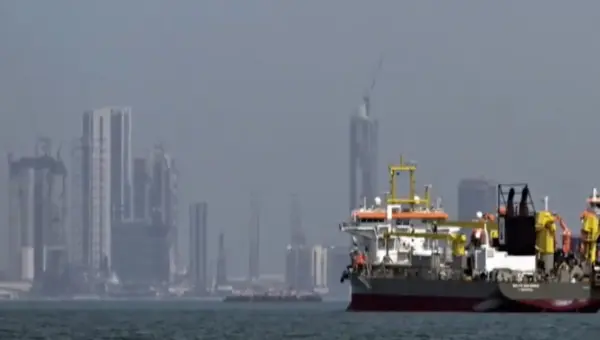
Iran Blocks China Ships, Exposing Beijing’s Weak Grip
Iran's recent decision to block Chinese ships at the Strait of Hormuz is exposing the limits of Beijing's influence in the Middle East. This action is causing delays and cancellations for Chinese manufacturers, turning a perceived geopolitical win into an economic strain.
Rubio: US Can Achieve Iran War Goals Without Troops
Senator Marco Rubio outlined a strategy to counter Iran without deploying U.S. ground troops, focusing on weakening the regime and enhancing maritime security. He also criticized Cuba's economic system and expressed concerns about West Bank violence.