Trump Admin’s Affordability Policies Criticized Amidst Rising Costs
A former top economic advisor criticizes the Trump administration's "backwards" approach to affordability as consumers face rising costs for gas, groceries, and housing. The comments come amidst geopolitical tensions and the ongoing impact of trade tariffs, raising concerns about economic strain on American families.

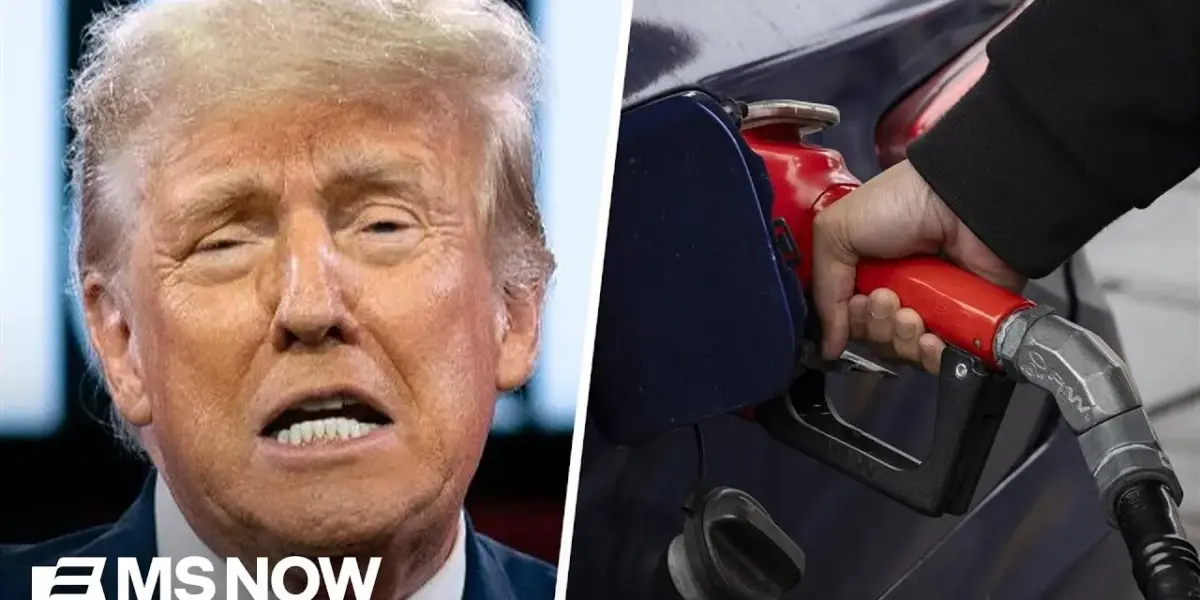
Economist Slams Trump Administration’s ‘Backwards’ Approach to Consumer Affordability
Washington D.C. – As American consumers grapple with escalating prices at the pump and in grocery aisles, a former top economic advisor has sharply criticized the Trump administration’s policies, labeling them as “backwards” and detrimental to household affordability. The comments come amidst a backdrop of rising fuel costs, increased mortgage rates, and the lingering impact of trade tariffs, which economists argue are collectively placing significant financial strain on American families.
Surging Costs Hit Consumers Hard
Recent analyses indicate that American consumers are spending hundreds of dollars more annually than they were prior to recent global events and policy decisions. The price of gasoline, a daily necessity for millions, has seen a substantial increase, with some estimates placing the rise at approximately 80 cents per gallon when factoring in various economic spillovers. This surge is compounded by other rising costs, including a significant jump in mortgage rates, which have climbed to 6.4 percent, a notable increase from just below six percent before recent geopolitical tensions escalated.
Beyond fuel and housing, the cost of essential goods like groceries is also on the rise. Economists point to the increased cost of fertilizer, a key component in agricultural production, as a contributing factor. “If you put all the spillovers together, people are looking at hundreds of dollars more in spending per year than was otherwise the case before the war,” stated a former Chair of the Council of Economic Advisors under President Biden, Jared Bernstein. “And that number was already inflated by the tariffs. So it’s really just hard to wrap your head around how backwards this administration has been on affordability concerns.”
Tariffs and Geopolitics Exacerbate Affordability Crisis
The economic strain is not solely attributed to current global events. The lingering effects of tariffs imposed by the Trump administration are also cited as a significant factor that inflated costs even before the recent price hikes. Bernstein emphasized that while geopolitical factors must be considered, the administration’s approach to affordability has been a consistent theme of pushing in the “wrong direction.”
“Simply looking at pushing the wrong way on affordability, that’s just been a consistent theme of this administration,” Bernstein remarked. He further highlighted that in the last few weeks alone, gas prices have increased by over 70 cents per gallon, a substantial burden for drivers. This situation is occurring while the administration faces scrutiny for its handling of economic pressures impacting everyday Americans.
Republican Defense and Consumer Frustration
In response to the rising costs, congressional Republicans have found themselves on the defensive. Congressman Michael McCaul suggested that military objectives in the Middle East, once achieved, would lead to a decrease in oil prices. He also expressed optimism about long-term energy control, stating, “Long term, we’re going to have more control over energy in this world than we did before the invasion of Iran. So, you have to look at it that way. For a couple weeks, sure. But long term, it is going to put us far better off for not just my children, and built for future generations.”
However, this outlook has been met with skepticism. Susan Page, Washington Bureau Chief for USA Today, pointed out the conditional nature of McCaul’s statements, noting the reliance on achieving specific military goals and gaining control over global energy markets. “Well, we do have a clock ticking,” Page observed. “The president said this military action would take four to five weeks. We’re into week three. But there are no signs that we have reached the goals that he set.” Page underscored that key objectives, such as denying Iran a nuclear program or achieving regime change, have not yet materialized, making it difficult to declare military success, especially with ongoing disruptions in the Strait of Hormuz.
Economic Momentum Questioned Amidst Global Oil Market Realities
Kevin Hassett, former Director of the National Economic Council, had previously asserted that the U.S. economy was in a strong position with sufficient momentum to offset the consequences of conflict, stating, “America is in a very strong position. They think that they’re going to harm the U.S. economy and get President Trump to back down. There couldn’t be anything that was a stupider thing to say because the bottom line is that our economy has got all this momentum in the world and we’ve got lots and lots of oil.”
Bernstein directly countered this assertion, stating, “Demonstrably, no, because of all the comments we were just making about the cost impacts of the war thus far.” He expressed frustration with what he perceives as the White House consistently dismissing concerns about affordability and rising gas prices. “People know that’s wrong,” Bernstein asserted. “And I need to make an important point. I’ve been listening to a while in our broadcast so far about administration officials saying somehow a bunch of new oil magically appears on the market after this war is over. That’s not at all the way it works.”
Bernstein clarified that the global oil market does not operate in such a manner. He explained that upon the cessation of conflict, the market would revert to its pre-war state, not introduce new supply. “It’s not like Iranian oil was shut in before the war. It was largely going to China and India. So this just gets us back to where we were before. There’s no new outflow of oil that takes the price of gas lower than it was before the war.” He reiterated that oil is a global commodity with prices intertwined worldwide, a fact he believes administration members need to internalize.
Midterm Elections Loom as Affordability Remains Key Issue
The escalating costs come at a critical juncture, with the midterm elections just eight months away. Susan Page highlighted the challenge for President Trump, posing the question: “Can Trump run a war and a midterm campaign at the same time?” She noted that focusing on one often detracts from the other. “The biggest issue that Americans say they are facing today is that issue of affordability, including gas prices and housing prices and the price of health care. And this war, whatever the geostrategic reasons to wage it, are making all those things worse.”
As the election cycle intensifies, voters’ focus on the economy and affordability issues is expected to grow, placing Republicans in a defensive position regarding the current economic climate. The interplay between foreign policy decisions, global economic conditions, and domestic affordability will likely be a central theme in the upcoming political landscape.
Looking Ahead
With the midterm elections on the horizon and consumer affordability remaining a paramount concern, the effectiveness of the administration’s economic strategies and its response to global price shocks will be under intense scrutiny. The coming months will reveal whether the current economic pressures continue to shape voter sentiment and influence electoral outcomes, and how policy adjustments, if any, will be made to address these pressing affordability challenges.
Source: 'Hard to wrap your head around how backwards Trump admin is on affordability': Economist (YouTube)

Related Articles

Polls Reveal Deep Voter Concerns Over War, Economy for Trump
Recent polls and political analysis suggest President Trump faces significant challenges due to voter concerns about the prolonged conflict in Iran and the struggling economy. Republicans are growing anxious as these issues impact the president's standing, while Democrats see an opportunity to present themselves as a more stable alternative.


Farmers slam ‘out of touch’ administration policies
John Boyd Jr. of the National Black Farmers Association criticized the White House for being "out of touch" with struggling farmers. He highlighted rising costs for fertilizer and fuel, a lack of invitations to key events, and the urgent threat of farm foreclosures, calling the administration's proposed solutions inadequate.


Scout’s Range Extender: A Hybrid Solution for High Gas Prices?
With gas prices soaring, the upcoming Scout SUV featuring a range extender could be the perfect solution for drivers seeking flexibility. This innovative hybrid system combines electric power with a gasoline generator, offering both efficiency and extended travel capability without range anxiety.