Iran’s Resilience: “Enemy Gets a Vote” in Military Conflict
Retired Army Lt. Gen. Mark Hertling warns that military strategies often fail to account for the unpredictable nature of combat, a phenomenon he calls "the enemy gets a vote." Despite U.S. military actions against Iran, the general notes Iran's continued ability to retaliate, highlighting issues with pre-combat planning and resource allocation.

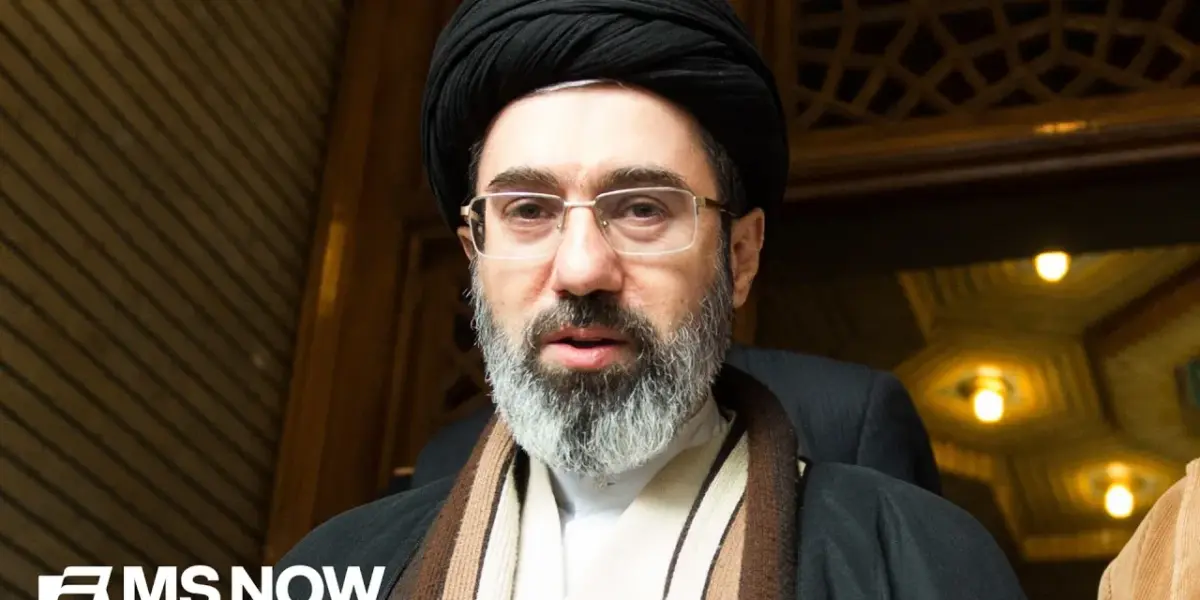
Iran’s Unexpected Resilience Challenges US Military Projections
In the wake of sustained U.S. military operations against Iran, a retired Army Lieutenant General has offered a stark assessment, asserting that the Iranian military retains significant capacity to retaliate. The assertion comes despite frequent White House pronouncements detailing the “enormous destructive capability” of American forces and the release of dramatic, often interspersed with cartoonish, attack videos. The ongoing effectiveness of Iran’s counter-operations two weeks into the campaign has raised questions about U.S. strategic planning and battlefield adaptability.
“The Enemy Gets a Vote”: Acknowledging Combat Chaos
Retired Lieutenant General Mark Hertling, in an article for The Bulwark titled “The Enemy Gets a Vote,” argues that military leaders must acknowledge the inherent unpredictability of warfare. “You can’t control the chaos which occurs in combat. You can only attempt to plan for it and adjust and adapt as it happens,” Hertling stated. He emphasized that no commander, regardless of their position, can accurately predict the precise end of a conflict, as such projections are invariably undermined by the realities of the battlefield. This human dimension, he explained, is intensely personal and requires meticulous planning that anticipates not only the initial strategy but also its subsequent branches and unintended consequences.
Troop to Task: The Imperative of Pre-Combat Planning
Hertling introduced the concept of “troop to task” as a critical element often overlooked in the rush to engage in conflict. This principle dictates that when a military objective is defined, specific units must be assigned to accomplish that particular task. He criticized the notion of improvising or “winging it” when battlefield conditions change, citing the example of escorting hundreds of large cargo tankers through the Strait of Hormuz. “You can’t just wing it and do it on the fly when things start changing and say, well, we’re going to have people escorting literally hundreds of ships, huge cargo tankers through the Straits, and that’s a last minute notice because you haven’t planned for it,” Hertling explained.
Ignoring Warnings: The Perils of Underestimating Adversaries
The general highlighted a concerning report indicating that General Cain had previously warned the administration of a “high probability” that the Strait of Hormuz would be closed. This warning, however, was reportedly dismissed with the assumption that U.S. military dominance would be so overwhelming that such a scenario would be unnecessary. “If that’s the case and they waived it off saying no, that won’t happen, we’re going to be so devastating that we won’t need any kind of escorts,” Hertling noted, “Well, now you’re in a problem because you don’t have the ships to conduct both Tomahawk attacks, protection of aircraft carriers that are launching aircraft into Iran and at the same time use those same destroyers and cruisers for another task.”
Task Expansion and Mission Creep: Strained Military Resources
This situation, Hertling elaborated, leads to what is known as “task expansion,” or in some contexts, “mission creep.” It forces the military to divert resources and attention in multiple directions for which it may not be adequately prepared. “It just causes the military to go in a bunch of different directions that they’re not prepared to do. That’s what we’re starting to see right now,” he observed. The general expressed dismay at the subsequent blame being placed on the military for failing to escort ships, pointing out the fundamental issue of insufficient resources allocated to meet the expanding mission requirements. “All the other missions they’ve been assigned,” he concluded, “Well, because they don’t have enough ships to do it and all the other missions they’ve been assigned.”
General Hertling’s insights underscore the complex realities of modern warfare, where underestimating an adversary’s capabilities and failing to adequately plan for contingencies can lead to strained military resources and compromised operational effectiveness. His new book, “If I Don’t Return: A Father’s Wartime Journal,” is now available.
Source: The enemy gets a vote”: Top Army Vet on Iran's ability to strike back (YouTube)

Related Articles

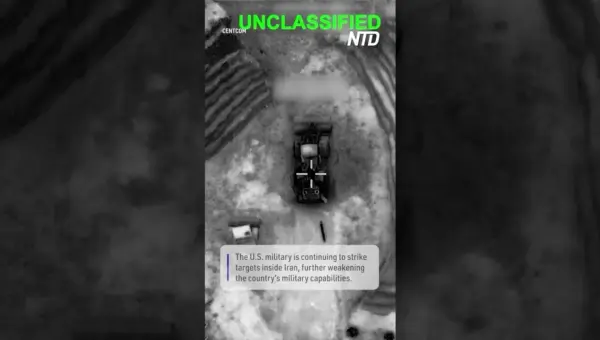
US Strikes Cripple Iran’s Military Might, CENTCOM Reports
U.S. Central Command reports ongoing strikes inside Iran are significantly weakening its military power. This direct action aims to reshape regional security dynamics, but carries risks of escalation. The long-term impact depends on Iran's response and ability to adapt.
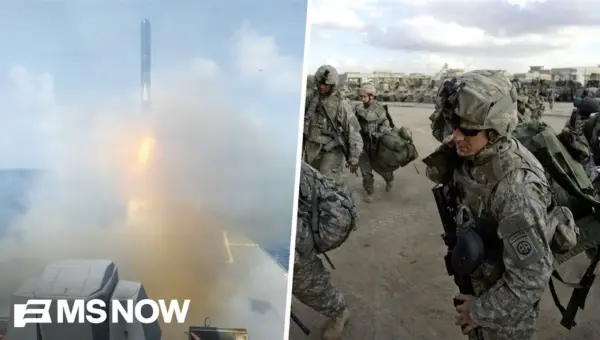
Iran Missile Strikes Injure US Troops, Raise War Concerns
Iranian missile strikes have injured U.S. service members, escalating tensions as the conflict nears one month. The attacks are raising concerns about the effectiveness of U.S. military strategy and the depletion of crucial missile stockpiles. Global oil prices have surged, impacting economies worldwide.


Saudi Arabia Pushes US for Iran War, Report Claims
Saudi Arabia's Crown Prince Mohammed bin Salman has reportedly urged the US to escalate military action against Iran, viewing it as an opportunity to reshape the Middle East. While Saudi officials deny the report, the push comes amid increased Iranian attacks on Saudi oil infrastructure. Experts suggest a complex dynamic where Saudi Arabia seeks US intervention while also managing the risks of regional instability.