Iran’s Future: Leader’s Fate, Regime Survival, and Regional Stability
A former Iranian diplomat analyzes the devastating impact of recent conflicts on Iran, questioning the fate of its new Supreme Leader and the regime's long-term viability. He discusses the complex internal dynamics, the human cost of war, and the potential for a future beyond theocracy.

Iran’s Shifting Sands: A Nation at a Crossroads
The recent conflict involving Iran has inflicted a level of devastation on the nation, according to former Iranian diplomat Dr. Fereydoun Majidi, that is difficult to compare to anything in its long history, save for the catastrophic invasions by the Arab and Mongol forces centuries ago. This immense destruction, coupled with a lack of resources for rebuilding, paints a grim picture for the immediate future of the country.
The Enigma of Supreme Leadership: Rumors and Realities
Amidst the turmoil, a significant point of discussion has been the status of Iran’s new Supreme Leader, Mohammad Reza Pahlavi. President Trump’s assertion that the leader might be dead has been met with skepticism by Dr. Majidi. He characterizes the claim as a rumor, noting that within Iran, there are even jests about the leader potentially being deceased at the time of his father’s death, with his nomination serving as a strategic diversion. Drawing a parallel to Mark Twain’s famous quote about reports of his death being greatly exaggerated, Dr. Majidi suggests the leader is likely alive, though perhaps not in a position to govern effectively on a day-to-day basis. He posits that power in Iran has become diffused, making it improbable for any single individual to wield the same authority as his predecessor. The close ties of the new leader to the Islamic Revolutionary Guard Corps (IRGC), the backbone of the current system, are acknowledged, but Dr. Majidi anticipates that senior politicians who served the previous leader will likely gain more autonomy. Ultimately, whether the leader is dead, unwell, or incapacitated, the net effect on the country’s governance, according to Dr. Majidi, remains largely the same: a decentralized and potentially weakened leadership structure.
Assessing the Regime’s Resilience: A Complex Equation
The question of the Islamic Republic’s remaining strength and longevity is complex. Dr. Majidi highlights the presence of a solid base of 10-15% of the Iranian population that actively supports the regime. These individuals, numbering between 10 to 15 million out of a population of 90 million, are described as armed, organized, and ideologically indoctrinated, capable of acting as a unified force. In contrast, a similarly sized segment of the population is vehemently opposed to the regime but lacks organization, leadership, and arms. The vast majority, however, comprising 50-70% of the population, are primarily concerned with living peacefully and securing a future for themselves and their children, finding themselves caught between these two factions. This dynamic makes an overnight collapse of the regime unlikely.
While the regime’s regional influence has waned, its proxies are damaged, and its nuclear program is all but defunct, the capacity to rebuild these capabilities remains. Furthermore, despite limitations in missile and drone technology, the regime possesses the means and the will to suppress its own population, as evidenced by past ruthless actions. Dr. Majidi asserts that the regime is not on the verge of collapse, contrary to the hopes of some international actors. Their survival, he argues, depends not on nuclear weapons or proxies, but on their internal control mechanisms, which they have proven willing to employ with severe force.
The Aftermath of Conflict: Rebuilding and Regional Ripples
The path to recovery for Iran is contingent on the conditions that prevail after hostilities cease. If law and order are maintained and the Iranian state retains control, Dr. Majidi believes that a shift in power dynamics could open avenues for international financial institutions and interested parties, potentially from the United States, to invest in rebuilding. This would, however, require a government capable of ensuring stability and ceasing provocative international behavior, such as the chant of “Death to America.”
The departure of the previous Supreme Leader is seen as a significant factor that could enable forward steps, even under a successor like Mohammad Reza Pahlavi. The regime’s survival necessitates a change in direction, particularly concerning its hostility towards the United States. While the war may intensify resentment among the general populace due to the damage inflicted, pragmatic Iranians at a national level may recognize the need for a more measured approach towards the U.S. to ensure a better future for generations to come.
Public Opinion and the Cost of War
The popularity of the war within Iran is a nuanced issue. While a minority may cheer external intervention as a means to overthrow the regime, particularly after experiencing brutal crackdowns, the reality on the ground is different. Dr. Majidi recounts the regime’s violent suppression in January, where a significant number of lives were lost in a short period, drawing a stark comparison to international reactions to other conflicts. When the attacks actually occur, and loved ones are lost, infrastructure is destroyed, and civilian casualties mount, public sentiment shifts. The initial hope for external intervention can quickly turn to a different assessment of the situation.
The justification for opposing the Iranian regime has persisted for 47 years, fueled by its rhetoric and actions against the United States and Israel. However, Dr. Majidi questions whether the recent war was the correct approach, especially when diplomatic and economic pressures appeared to be yielding results. He suggests that a war that has brought such havoc to the region, affecting the prosperity and peace of mind of Gulf Arab countries, could have been avoided. The adamant stance of some parties, driven by their own objectives, pushed for military action, a decision Dr. Majidi believes will not lead to a happy ending for anyone.
The Human Toll: Beyond Geopolitics
The impact of the conflict on ordinary Iranians is profound. Families are frightened, uncertain about the future, and facing shortages of food and escalating prices, making life intolerable, especially for the poor. Dr. Majidi shares a personal account of a colleague who initially supported the aerial strikes as “humanitarian intervention” but changed his stance after his own sister was killed in an air raid. This personalizes the devastating consequences of war, illustrating how even those frustrated with a regime can be tragically affected when the wished-for intervention hits home.
The conflict has also disrupted the peace and prosperity enjoyed by Gulf Arab countries, who have actively lobbied to avoid such a conflict. Industries like tourism in Dubai and gas exports from Qatar have been impacted, and even previously safe ports have been attacked. This widespread disruption underscores the interconnectedness of regional stability and the far-reaching consequences of the conflict.
The Threat of Escalation and Future Scenarios
While acts of terrorism by individuals cannot be entirely ruled out, Dr. Majidi does not place significant emphasis on state-sponsored cyberattacks or sleeper cells as a primary long-term threat. He notes that Iran’s military arsenal is limited, and they cannot match the resources of the United States or Israel. Their strategy has involved regional attacks, hoping to create pressure through hindered oil exports. However, for the Iranian regime, the immediate concern is survival within its own borders. The continuation of hostilities, he believes, is not in their interest, as they likely seek a ceasefire to solidify their position.
The Dawn of a New Iran? Opposition and Transition
The opposition within Iran has historically been repressed, and divisions have existed among exiled groups. Dr. Majidi expresses hope for a future where capable Iranians can unite to lead the country to a better place, particularly if Mohammad Reza Pahlavi proves to be a transitional figure. He likens Pahlavi’s potential leadership to that of Richard Cromwell, suggesting it may not endure. The era of theocracy in Iran, he argues, is drawing to a close, with respect for Islam among the youth at an all-time low. The desire for a system based on popular sovereignty, rather than arbitrary rule, is growing.
Dr. Majidi believes that key figures within the regime, along with technocratic Iranians who have excelled globally, could collaborate to rebuild the nation. He acknowledges the historical significance of the Shah’s son as a recognizable figure representing tradition and continuity, but notes his recent missteps in supporting intervention. Ultimately, a unified opposition, committed to democratic principles and the replacement of theocracy with popular sovereignty, could pave the way for a modern Iran with closer ties to the West.
However, the path forward is fraught with peril. Without careful management, the conflict could devolve into a civil war, leading to widespread instability, mass refugee flows, and sectarian strife, mirroring the devastating upheavals of past invasions. Dr. Majidi concludes with a note of cautious optimism, emphasizing the existence of thoughtful and patriotic Iranians who are willing to work together to forge a better future for their nation and for generations to come.
Source: ‘He’s probably alive’ | Former Iranian diplomat rejects Trump’s claim Iran’s new leader is dead (YouTube)

Related Articles

Trump Halts Iran Strikes Amid Stalled Diplomacy
President Trump announced a pause on planned strikes against Iran, citing productive talks, though Iran denies negotiations occurred. Reports also suggest a potential U.S. ground operation on Iran's Hark Island. The situation raises concerns about international support for Ukraine and potential shifts in U.S. foreign policy.

Iran’s Missile Threat Reduced by 90%, Analyst Says
An analyst reports that Operation Epic Fury has degraded Iran's missile launchers by 90%, despite challenges in targeting hidden sites. The conflict's duration and media coverage are also discussed, with implications for global energy markets and investor confidence.
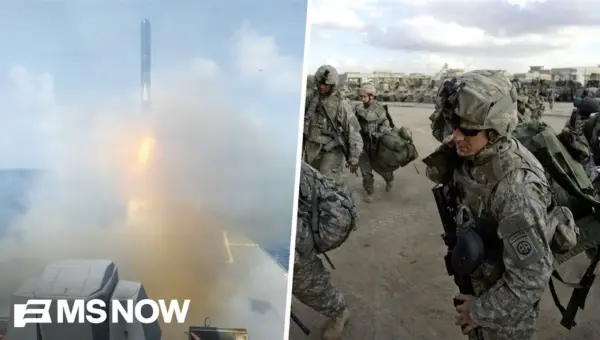
Iran Missile Strikes Injure US Troops, Raise War Concerns
Iranian missile strikes have injured U.S. service members, escalating tensions as the conflict nears one month. The attacks are raising concerns about the effectiveness of U.S. military strategy and the depletion of crucial missile stockpiles. Global oil prices have surged, impacting economies worldwide.