China’s Military Weakened by Internal Chaos, Expert Claims
President Trump is reportedly considering delaying his Beijing trip to pressure China over the Strait of Hormuz. Expert Gordon Chang claims China's military is weakened by internal chaos, making an invasion of Taiwan unlikely despite increased regional activity.

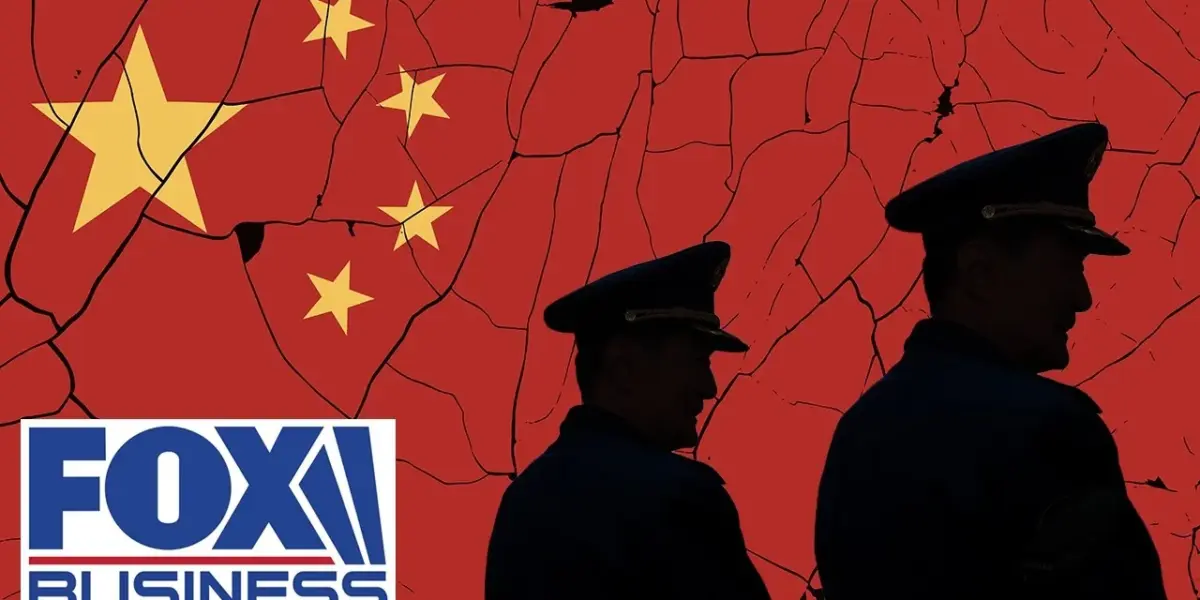
US President Considers Delaying Beijing Trip Amidst Iran Tensions
President Trump is reportedly considering delaying his upcoming trip to Beijing, a move aimed at pressuring Chinese President Xi Jinping to reopen the Strait of Hormuz. The President’s potential hesitation stems from the ongoing conflict in Iran, which has disrupted vital oil supply lines. In remarks to the Financial Times, the President stated, “I think China should help because China gets 90% of its oil from the Strait of Hormuz. We would like to know before the trip.” He further indicated that a two-week delay might be necessary.
Treasury Secretary Scott Bessent echoed these sentiments, suggesting that traveling during wartime would not be optimal. Bessent is currently in Paris, engaging with Chinese counterparts to address significant trade disagreements ahead of the planned visit.
China’s Alleged Complicity in Iran Conflict
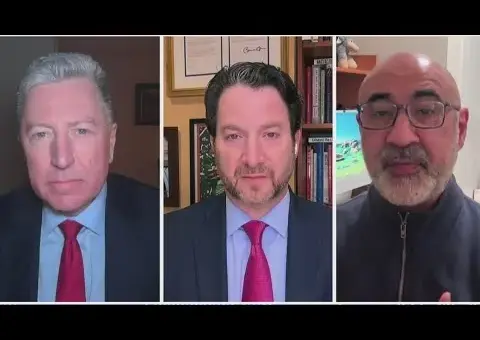
Gordon Chang, a fellow at the Gatestone Institute, joined the discussion, asserting that President Trump’s stance is entirely justified. Chang argued that the U.S. President should not visit the Chinese capital while China is actively supporting Iran, which he characterized as an “enemy combatant” by providing military intelligence and weapons, short of deploying combat troops.
“The President was absolutely right. First of all, the President of the United States should not go to the Chinese capital during the war. A war where China is helping the other side… I think that President Trump’s message to China is absolutely, absolutely the right one.”
Chang’s assertions align with existing concerns about China’s role in supporting Iran’s illicit activities, particularly its continued purchase of Iranian oil. Oil prices have seen fluctuations, with Brent crude trading around $103.29 and crude oil down 1.5% at $97.16, as the U.S. seeks international cooperation to secure the Strait of Hormuz.
The President has urged nations, including France, Japan, South Korea, and the UK, to deploy warships to the region to ensure the free flow of oil. However, Japan’s Prime Minister has stated that no decision has been made regarding the deployment of warships, despite an upcoming meeting with President Trump.
Adding to the complexity, Iran’s Foreign Minister has claimed that China and Russia are providing military cooperation to Iran to counter attacks from the U.S. and Israel. Chang pointed to evidence such as a Chinese ship off Iran’s coast providing military intelligence and a Shanghai-based company publishing coordinates of American military assets. He also noted that Iranian drones reportedly contain Chinese microchips.
Economic Pressure and Trade Disputes
Beyond geopolitical tensions, the U.S. is also pursuing investigations into tariffs on goods from China and other nations, including Singapore, Switzerland, Malaysia, Cambodia, Thailand, and Korea. Section 301 of U.S. trade law is a key element in these ongoing trade disputes, with a 150-day bridge leading up to potential further tariffs on March 11.
Increased Military Activity Around Taiwan
Chang also addressed China’s recent military activities near Taiwan, including a significant number of aircraft and naval vessels operating in the vicinity of the island. He noted that this escalation coincided with the conclusion of major political sessions in Beijing.
Despite the increased military posturing, Chang expressed skepticism about China’s immediate ability to launch a full-scale invasion of Taiwan. He attributed this to what he described as China’s “decimated military” and significant “disarray at the top of the Communist Party.” While acknowledging the possibility of China stumbling into conflict, Chang believes the current military actions are largely a show of force.
The Role of China’s Maritime Militia
The report highlighted the formation of a Chinese fishing militia, reportedly numbering in the thousands, around Taiwan. These vessels, sometimes referred to as “little blue men,” have been observed forming lines, potentially signaling an attempt by China to surround the main island of Taiwan.
Chang characterized these actions as a “bluffing attempt,” dismissing concerns that the U.S. focus on Iran would embolden China to move on Taiwan. He reiterated his assessment that China is currently not in a position to undertake such an aggressive maneuver.
Looking Ahead
The coming weeks will be critical in determining the trajectory of U.S.-China relations, particularly concerning the Strait of Hormuz and potential trade escalations. The outcome of President Trump’s decision regarding his Beijing trip, and the response from other global powers to securing vital shipping lanes, will be closely watched. Furthermore, China’s continued military activities around Taiwan, despite expert assessments of its internal military weaknesses, warrant ongoing observation.
Source: 'CHINA HAS DECIMATED ITS MILITARY': Chang says Beijing’s military WEAKENED by internal chaos (YouTube)

Related Articles

Stocks Ignore War Risks, Focus on “Taco Moments”
Stock markets appear to be overlooking the severe supply chain risks stemming from the Iran conflict, focusing instead on potential diplomatic de-escalations. While the S&P 500 shows resilience, bond and commodity markets signal deep concern over disruptions to critical resources like LNG, helium, and fertilizers.

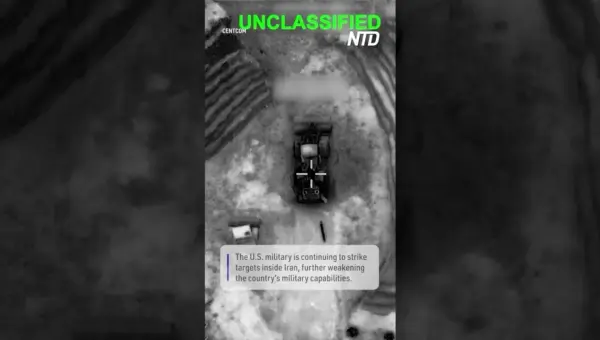
US Strikes Cripple Iran’s Military Might, CENTCOM Reports
U.S. Central Command reports ongoing strikes inside Iran are significantly weakening its military power. This direct action aims to reshape regional security dynamics, but carries risks of escalation. The long-term impact depends on Iran's response and ability to adapt.
U.S. Iran Tensions Rise Amid Shifting Alliances
Rising tensions between the U.S. and Iran are creating a volatile geopolitical situation. With conflicting signals on de-escalation and potential shifts in alliances like NATO and U.S.-Israel relations, the path forward remains uncertain. The global economy and regional stability hang in the balance.