Winter Olympics Injuries: A Doctor’s Perspective
Dr. Mike analyzes severe injuries from the Winter Olympics, including spinal fractures, head trauma, and orthopedic injuries. He explains the medical implications and the remarkable resilience of athletes in overcoming adversity.

Winter Olympics Injuries: A Doctor’s Perspective
The Winter Olympics, while showcasing incredible athleticism and human endurance, also present unique and often severe injury risks. From the icy slopes to the bobsled track, athletes push their bodies to the absolute limit, sometimes resulting in devastating accidents. Dr. Mike, a physician and popular online personality, recently reviewed several high-profile Winter Olympic injuries, offering medical insights into the mechanisms of harm, potential consequences, and the remarkable resilience of athletes.
Understanding the Risks of High-Speed Winter Sports
Dr. Mike highlights that many winter sports combine high speeds with sharp edges or hard surfaces, creating a dangerous environment for athletes. The luge, for instance, involves sliding down an icy track at extreme velocities. In a particularly harrowing incident from the 2018 Olympics, luger Emily experienced a severe crash.
Cervical Spine Injuries in Luge
The crash resulted in Emily hitting the wall and then the ice, leading to a fracture of her cervical spine. Dr. Mike explains that the impact caused compression of the vertebrae, potentially damaging the fluid-filled discs between them. This compression can lead to a herniated disc, where the disc material presses on spinal nerves, causing pain and dysfunction. In severe cases, such as Emily’s, a high cervical spine fracture can compromise the spinal cord, which, if severed in that region, is unfortunately not compatible with life.
Emily’s recovery was arduous, requiring six months for her bones to heal. Even after being cleared to train, she faced psychological and physiological challenges. Dr. Mike emphasizes that athletic performance relies not only on physical conditioning but also on confidence and the ability to visualize success. Rebuilding this mental fortitude after a severe injury is a significant part of the rehabilitation process.
Remarkably, nine months after her crash, Emily returned to competition, winning a bronze medal. Her journey underscores the power of perseverance, suggesting that sometimes, forcing oneself to perform despite fear and hesitation can build the confidence needed for future success.
The Dangers of Head Trauma in Winter Sports
Head injuries are a significant concern across many sports, and winter disciplines are no exception. Dr. Mike discusses the case of figure skater Mandy Wotzel, who suffered multiple concussions during her career. He points out that while Chronic Traumatic Encephalopathy (CTE) is often associated with contact sports like football, any sport involving repetitive head impacts or direct blows to the head, such as falling on hard ice, carries a risk.
Another incident involved a snowboarder who experienced a significant fall. Dr. Mike advocates for a cautious approach to imaging, such as CT scans, after such injuries. While necessary in many cases to rule out serious trauma, he notes that overuse of CT scans, driven by a desire to avoid liability (‘CYA medicine’), can expose individuals to unnecessary radiation, potentially increasing long-term cancer risks.
Facial Lacerations and Psychological Impact
In pair figure skating, the proximity of skaters during spins creates a risk of blade strikes. Jessica Dube suffered a severe laceration to her face and nose after being hit by her partner’s blade. Although she avoided fractures and eye damage, the injury required surgery. The psychological toll was also significant, with Dube and her partner undergoing post-traumatic stress therapy, which involved repeatedly watching the accident. Dr. Mike explains this as a form of desensitization therapy, commonly used to treat phobias by gradually exposing individuals to a feared stimulus until the panic response diminishes.
Orthopedic Injuries in Alpine Skiing and Snowboarding
Alpine skiing and snowboarding are notorious for orthopedic injuries. Lindsey Vonn, a decorated skier, suffered a torn ACL and MCL, along with a lateral tibial plateau fracture. Dr. Mike explains that a tibial plateau fracture involves the top part of the shin bone, which forms part of the knee joint. Such injuries can increase the long-term risk of developing arthritis in the affected joint due to damage to the articular surfaces.
Another incident involved a skier who sustained a facial injury after falling. While the immediate concern was stitches and potential fractures, Dr. Mike highlights the importance of monitoring orbital swelling, as pressure in certain parts of the eye socket can affect vision and neurological function.
Understanding Disability in Sports: Paralympics vs. Special Olympics
Dr. Mike also takes a moment to clarify the distinction between the Paralympics and the Special Olympics. The Paralympics are elite international sporting events for athletes with physical and intellectual impairments. The Special Olympics, conversely, focus on inclusive participation for individuals with intellectual disabilities. He adds a poignant observation that disability is the only minority group anyone can join at any time, emphasizing the importance of empathy and understanding.
He discusses a case involving lumbar sacral agenesis, a condition where parts of the lower spine do not form properly. This can lead to not only physical challenges but also physiological issues affecting organs like the bladder and gastrointestinal system.
Extreme Cold and Its Dangers
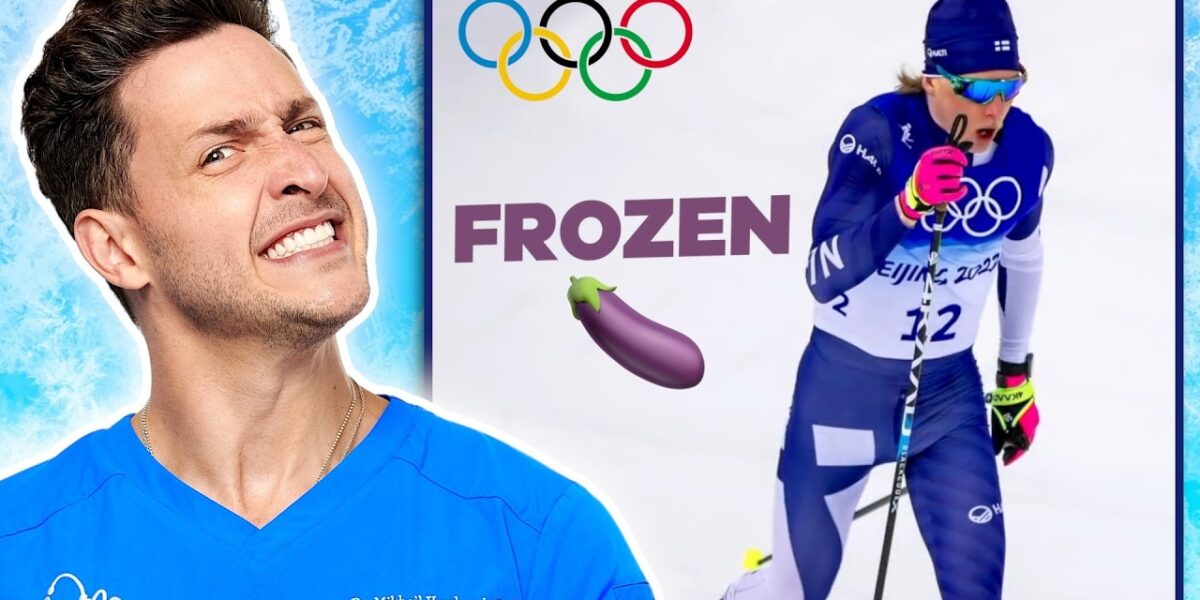
The extreme cold of winter sports venues poses its own set of risks. A cross-country skier experienced frostbite to his penis due to the frigid temperatures and thin clothing. Dr. Mike explains that warming a frostbitten area too quickly can worsen the damage. He also elaborates on how the body conserves heat by constricting blood vessels in extremities, making them more vulnerable to cold injury compared to areas closer to the body’s core.
Genital and Other Injuries
A skier suffered a testicular injury after being hit by a gate, a potentially serious incident that can lead to rupture or significant damage. Dr. Mike recalls a practice in Taekwondo where participants were instructed to jump up and down on their heels, a seemingly arbitrary action he later researched, finding no standard medical basis for it, suggesting it might have been a distraction technique.
The Infamous Nancy Kerrigan Attack
Perhaps one of the most infamous incidents in Winter Olympics history is the attack on figure skater Nancy Kerrigan in 1994. Clubbed on the leg with a baton, Kerrigan sustained a significant knee injury, causing swelling and pain that temporarily ruled her out of competition. Dr. Mike explains this as a potential bone bruise or periostitis (inflammation of the bone’s outer membrane), which can be very painful.
The incident led to the investigation and eventual prosecution of individuals connected to rival skater Tonya Harding. Despite her injuries, Kerrigan went on to win a silver medal at the Olympics, while Harding faced legal consequences, including probation and a lifetime ban from figure skating.
Key Health Takeaways
- High-Speed and Impact Risks: Winter sports like luge, skiing, and snowboarding carry inherent risks due to high speeds, hard surfaces, and potential for severe impact, leading to injuries like spinal fractures and concussions.
- Protective Gear is Crucial: Helmets and other protective gear are essential for mitigating head injuries, though they cannot eliminate all risks.
- Understanding Spinal Injuries: Cervical spine injuries can be particularly dangerous, with the potential for catastrophic outcomes if the spinal cord is compromised.
- Concussions Require Caution: Repetitive head impacts, even in sports not typically associated with CTE, can pose long-term neurological risks.
- Orthopedic Trauma: Ligament tears (ACL, MCL) and fractures of weight-bearing bones like the tibial plateau are common in skiing and snowboarding, potentially leading to long-term issues like arthritis.
- Cold Weather Hazards: Extreme cold poses risks of frostbite, especially to extremities, requiring appropriate clothing and careful rewarming protocols.
- Psychological Recovery is Key: Overcoming severe injuries involves not just physical healing but also rebuilding mental confidence and overcoming fear.
- Importance of Medical Evaluation: Athletes experiencing significant trauma should undergo thorough medical evaluation to diagnose injuries accurately and prevent long-term complications.
Disclaimer: This article is for informational purposes only and does not constitute medical advice. Always consult with a qualified healthcare professional for any health concerns or before making any decisions related to your health or treatment.
Source: Doctor Reacts To Winter Olympics Injuries (YouTube)

Related Articles

TikTok Health Trends: Separating Fact from Fiction
Dr. Mike analyzes popular health advice trending on TikTok, separating scientifically sound recommendations from potentially dangerous misinformation. Learn about protein intake, heart rate, supplement risks, and more.


Fluffy’s Fierce Fall: Iglesias Knocked Out in Skirt on ‘All That’!
Comedian Gabriel Iglesias recounts a bizarre and painful incident from his time on Nickelodeon's 'All That,' where he was knocked unconscious in a cheerleader costume. The mishap led to a concussion, mistaken identity with Enrique Iglesias, and a controversial waiver signing that still bothers him.


Hughes’ Golden Goal Fuels Olympic Glory and New Fame
Jack Hughes reflects on the life-changing impact of scoring the golden goal at the Winter Olympics. The monumental victory not only brought immense pride to USA Hockey but also propelled Hughes and his teammates into global stardom, while the ice remains their sanctuary for focus.