Beijing’s Silent War: How Taiwan’s Budget Became a Battlefield
Beijing's strategic silence and manipulation of Taiwan's legislative budget reveal a sophisticated hybrid warfare approach. The recent halt in military flights aimed to undermine Taiwan's defense spending, showcasing a new dimension in the cross-Strait conflict.

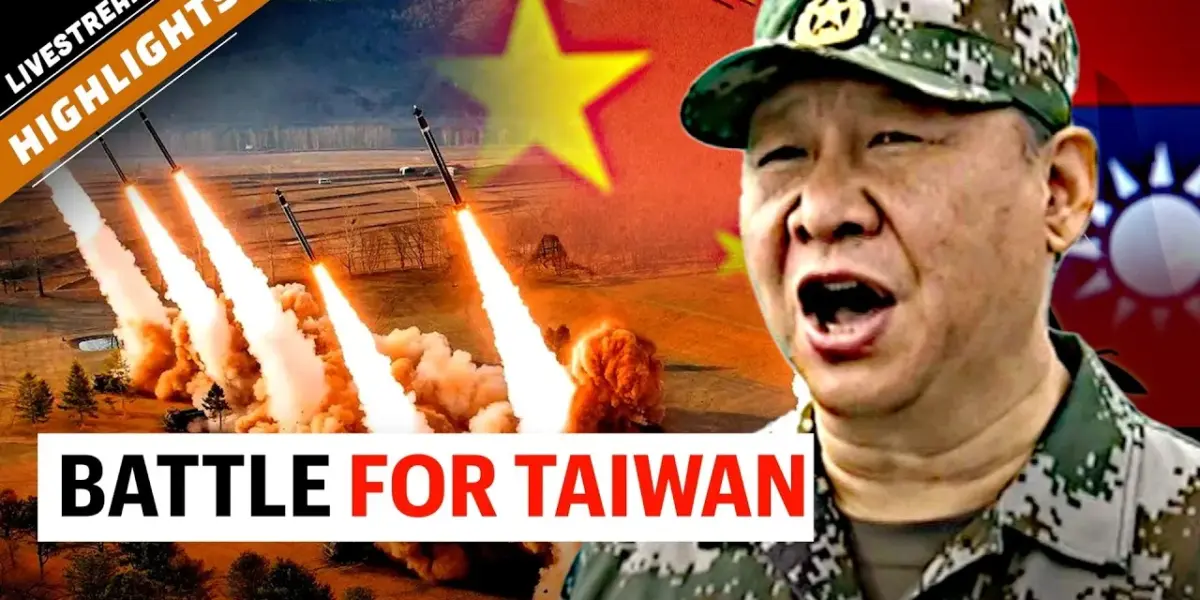
Beijing’s Silent War: How Taiwan’s Budget Became a Battlefield
In the intricate geopolitical dance surrounding Taiwan, Beijing has unveiled a strategy as subtle as it is potent. Rather than overt aggression, China’s Communist Party (CCP) appears to be orchestrating a campaign of strategic silence, aimed at influencing Taiwan’s internal political processes and undermining its defense capabilities. This approach, characterized by a sudden halt in military flights and a calculated withdrawal from public airspace, is not merely reactive; it is a leading maneuver designed to achieve specific objectives without firing a shot.
The Legislative Arena: A Different Kind of Conflict
While the world’s attention was captivated by events in the Middle East, a critical battle was unfolding within Taiwan’s own legislative chamber. Lawmakers were locked in debate over a substantial NT$1.25 trillion (approximately US$40 billion) defense budget. This ambitious plan, intended to modernize Taiwan’s military over the next eight years, centers on the development of the T-dome missile defense system, a Taiwanese equivalent of Israel’s highly effective Iron Dome and Arrow systems. However, the ruling Democratic Progressive Party (DPP) lacks a majority in the legislature. The opposition, a coalition of the Kuomintang (KMT) and the Taiwan People’s Party (TPP), holds sway and has advocated for a drastically reduced budget, seeking to cut the proposed funding by as much as 70%.
The Strategic Silence: A Masterclass in United Front Warfare
The timing of Beijing’s decision to halt military flights between February 28th and early March is no coincidence. This period of enforced silence, lasting eight days, appears designed to shape a specific narrative within Taiwan. The implicit message is stark: if Chinese military aircraft are absent from the skies, why should Taiwan invest billions in advanced missile defense systems and other military hardware? This is United Front warfare in its most insidious form. The silence itself becomes the weapon, amplifying the arguments of opposition parties that the threat from Beijing is exaggerated. It cultivates a sense of ‘alert fatigue’ among the public and, crucially, buys time. This delay is critical as a significant deadline looms: March 15th. The Defense Ministry has warned that letters of offer and acceptance for major US arms purchases are set to expire on this date. Failure to pass the defense budget before this deadline could lead to the collapse of these deals, increased costs, and a substantial delay in Taiwan’s defense modernization plans.
The T-dome: A High-Value Target
The US$20 billion T-dome system, a cornerstone of Taiwan’s defense modernization, may indeed be the primary target of Beijing’s temporary aerial absence. If the defense budget is severely curtailed, Beijing will have achieved a significant strategic victory without resorting to military action. The unprecedented eight-day grounding of PLA aircraft, while perhaps fueled in the short term by fear and paranoia, carries a deeper, more ominous message when viewed through a wider lens. It suggests a predator momentarily retreating, perhaps realizing its perceived strength might be less formidable than it believed.
Chilling Revelations from Tokyo
Adding a chilling dimension to this narrative are the recent statements by Japan’s former Defense Minister, Satoshi Morimoto. In an interview with Taiwan’s Liberty Times on March 8th, Morimoto presented two striking conclusions drawn from information reportedly surfaced following the arrest of General Guo Boxiong (though the transcript mentions ‘General Janga’ and ‘General John Yosha’, it is likely referring to high-ranking Chinese military officials). First, Xi Jinping’s timeline for Taiwan may be far more aggressive than previously assessed. While US intelligence has often pointed to 2027 as a potential window for military action, Morimoto suggests Xi originally planned an operation much sooner, possibly immediately after the third plenum in 2024. This plan, according to Morimoto, was reportedly thwarted by interventions from senior officials, including General Guo Boxiong, who cautioned against the timing during China’s election year.
Second, Morimoto argues that the concept of peaceful unification is likely dead. For years, many Western and Japanese analysts believed Beijing would opt for economic leverage, political pressure, and information warfare to achieve its goals, avoiding a direct military confrontation due to the immense costs and risks. However, Morimoto’s review of documents indicates that Xi Jinping has consistently prioritized a military solution, an ambition that has remained unwavering. Morimoto, a respected security and China military analyst who served as Japan’s Defense Minister in 2012, believes Xi, observing the conflict in Iran, may have recognized vulnerabilities in his own military – corruption, unreliable hardware, and a command structure he might not fully trust. Yet, his core ambition remains intact.
Beijing’s Calculated Gamble
Currently, Beijing appears to be betting on the political gridlock in Taipei. The hope is that internal divisions will prevent Taiwan’s legislature from passing the vital defense budget before the March 15th deadline. This strategy reflects a potential lack of confidence in Beijing’s ability to win a military conflict in the Taiwan Strait, leading them to focus on winning the political battle within Taiwan’s legislative yuan. The outcome of intense, closed-door negotiations in the days following the initial reporting was critical. The opposition shifted from outright blocking the bill to advocating for significant budget cuts, with the potential for a 70% reduction threatening Taiwan’s most ambitious defense upgrade in history.
A Glimmer of Hope
In a significant development, on Friday, March 13th, Taiwan’s legislature passed a resolution authorizing the executive branch to sign arms purchase agreements with the US before the March 15th expiration date. This crucial step ensures that deals worth approximately US$9 billion for four US weapons systems can proceed without delay. This outcome represents a victory for Taiwan’s defense modernization efforts and a positive signal for regional stability, at least in the short term.
Why This Matters
The events surrounding Taiwan’s defense budget highlight a critical evolution in Beijing’s strategy towards the island. It demonstrates a sophisticated understanding of psychological warfare and political manipulation, moving beyond overt military threats to influence internal Taiwanese decision-making. Beijing’s willingness to leverage political gridlock and economic arguments, even at the expense of its own military’s perceived strength, underscores a strategic patience and adaptability that demands close observation. The potential for a 70% cut to Taiwan’s defense budget, had it occurred, would have been a significant blow, weakening its deterrent posture and potentially emboldening Beijing. The successful passage of the resolution allowing arms purchases to proceed is a testament to Taiwan’s resilience and its ability to navigate these complex political pressures. However, the underlying tensions and Beijing’s long-term strategic objectives remain, suggesting that this form of ‘silent warfare’ will likely continue to be a prominent feature of the cross-Strait dynamic.
Implications, Trends, and Future Outlook
This incident underscores a broader trend: the increasing sophistication of hybrid warfare tactics employed by authoritarian states. Beijing’s strategy is not solely reliant on military might but encompasses political influence, economic pressure, and information operations. The focus on internal legislative processes in Taiwan suggests that Beijing is adept at identifying and exploiting internal divisions within its target nations. The near-failure of the defense budget highlights the vulnerability of democratic systems to political obstructionism, especially when amplified by external pressure. The future outlook suggests a continued escalation of these multi-faceted strategies. Taiwan will likely face ongoing challenges in securing its defense modernization amidst political headwinds, while Beijing will continue to refine its methods of coercion. The international community, particularly allies of Taiwan, must remain vigilant and prepared to support Taiwan’s defense resilience, not just through arms sales but also by countering disinformation campaigns and bolstering its political stability.
Historical Context and Background
The tension between mainland China and Taiwan dates back to the end of the Chinese Civil War in 1949, when the defeated Nationalist government retreated to the island, establishing the Republic of China (ROC). The People’s Republic of China (PRC) views Taiwan as a renegade province and has consistently pursued unification, by force if necessary. For decades, the cross-Strait relationship has been characterized by a delicate balance of military posturing, economic interdependence, and diplomatic maneuvering. Beijing’s ‘One China Principle’ is a central tenet of its foreign policy, asserting that there is only one sovereign state under the name China and that Taiwan is an inalienable part of it. This has led to diplomatic isolation of Taiwan by many nations. In recent years, under President Xi Jinping, Beijing’s rhetoric and military activities towards Taiwan have intensified, signaling a more assertive approach to achieving unification. The current situation is a manifestation of this long-standing historical dispute, now playing out with new strategic tools and heightened urgency.
Source: The Strategy Beijing Is Using Against Taiwan (YouTube)

Related Articles
China Fights Back: Tariffs Loom Ahead of Trump Visit
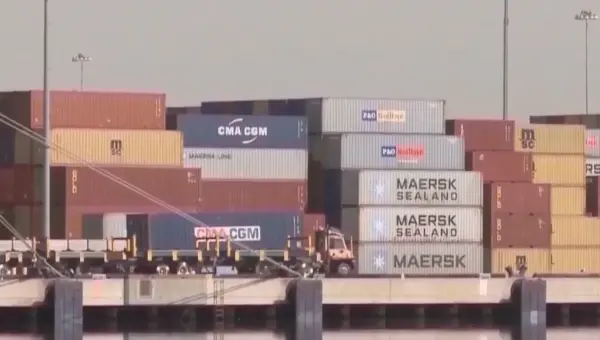
China is retaliating against US trade investigations that could lead to higher tariffs. This escalating trade tension occurs just before a planned visit by President Trump. The dispute involves accusations of unfair practices and impacts global supply chains.


Israelis Forge Resilience Amidst Constant Bomb Shelter Drills
Life in Israel is a blend of resilience and constant vigilance, with many families adapting to frequent bomb shelter drills and even sleeping in makeshift shelters. Despite ongoing missile attacks, Israelis strive to maintain normalcy, though businesses face disruption and emotional fatigue is a growing concern.


Israel Escalates Iran Strikes, Warns of Wider War
Israel has launched significant strikes inside Iran following continued missile fire, warning of further escalation. The conflict risks wider regional instability and economic disruption, especially concerning the Strait of Hormuz.