Save Act Sparks Voter Suppression Fears Ahead of Midterms
Voting rights advocates are sounding the alarm over the Save America Act, a proposed bill requiring documentary proof of citizenship for voter registration. Critics argue the legislation, championed by President Trump, would create significant barriers and disproportionately impact marginalized communities, amounting to voter suppression.

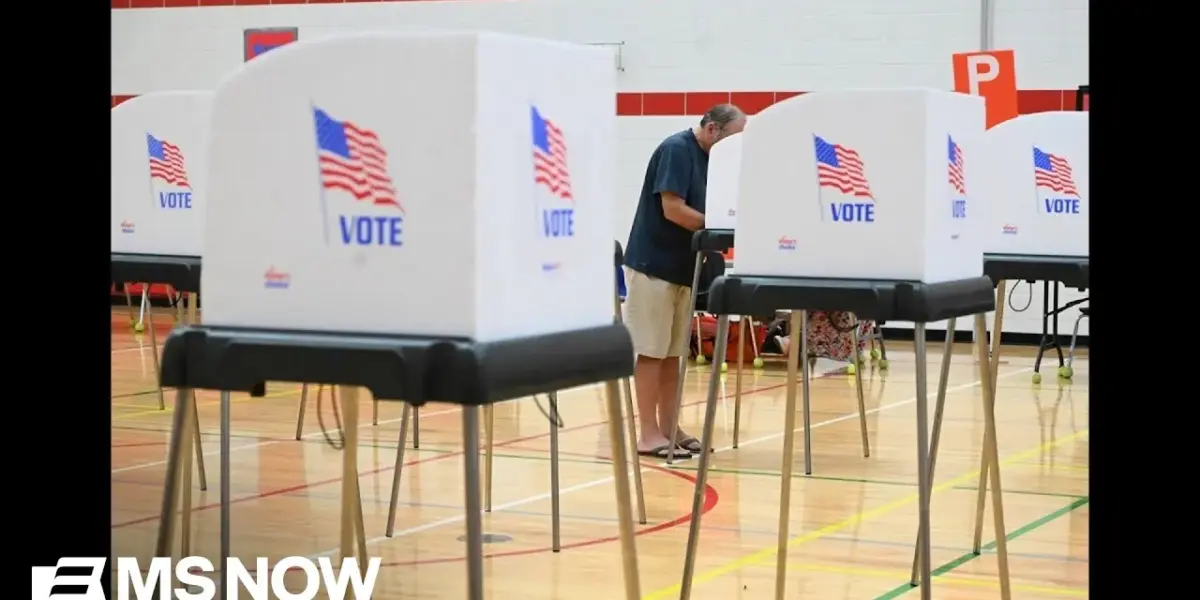
New Legislation Threatens Voter Access, Rights Groups Warn
As the United States braces for a pivotal midterm election cycle, a controversial piece of legislation known as the Save America Act is drawing sharp criticism from voting rights advocates who warn it could erect significant barriers to voter registration and disenfranchise millions. The bill, championed by President Donald Trump and slated for debate in Congress this week, proposes requiring documentary proof of U.S. citizenship for voter registration. While proponents argue the act is a necessary measure to bolster election security, organizations like the NAACP Legal Defense Fund (LDF) contend it is a thinly veiled attempt at voter suppression disguised as a security enhancement.
“A Modern Poll Tax”
Janai Nelson, President and Director-Counsel of the NAACP Legal Defense Fund, unequivocally described the Save America Act as “a modern poll tax” in a recent op-ed for The Nation. Speaking about the bill’s potential impact, Nelson stated, “The Save Act saves no one. It is an effort to truly sabotage our elections by keeping people away from the polls and making them unable to register to vote.”
The core of the controversy lies in the act’s proposed registration requirement: voters would need to present specific documents, such as a passport, birth certificate, or a state-issued ID explicitly stating U.S. citizenship. Nelson highlighted the practical difficulties this presents, noting, “I don’t know about you, but most people don’t have ready access to any of the documents that I just named that can prove your citizenship.” She emphasized that for decades, voter registration has been successfully managed by verifying citizenship, address, and eligibility without such stringent prerequisites.
“This is not as a result of any problem, it’s not meant to solve any issue, it is simply meant to suppress the vote and we need to name it for what it is. It is a voter suppression law, and it is extraordinarily harmful.”
Disproportionate Impact on Marginalized Communities
Voting rights advocates argue that the Save America Act would disproportionately affect women who have changed their names due to marriage or divorce, individuals lacking immediate access to vital documents, and other marginalized populations. These groups often face greater hurdles in obtaining or maintaining the specific documentation required by the bill.
Nelson elaborated on the potential consequences for the upcoming midterm elections, explaining that the bill’s intent is to “sabotage our elections by keeping people away from the polls and making them unable to register to vote.” She characterized it as one of the most harmful pieces of legislation seen concerning the right to vote, designed to suppress turnout rather than address any genuine electoral vulnerabilities.
Existing Safeguards and the “Invented Problem” of Voter Fraud
Countering the narrative that enhanced voter ID laws are essential for election security, Nelson stressed that robust verification processes are already in place in every state. “You cannot simply register vote and show up at a poll and cast a ballot and not have your identity verified in some way,” she asserted. State requirements vary, ranging from photo IDs issued by the state to utility bills and signature verification, but all include significant identification checks.
The argument that widespread voter fraud necessitates such measures is, according to Nelson, unfounded. “This has been studied rigorously, and there’s a minuscule set of examples over the past two decades,” she stated, citing fewer than 40 documented instances of individuals attempting to vote fraudulently. Furthermore, she pointed out that existing criminal statutes already penalize such actions, rendering the Save America Act’s proposed documentation requirements an “invented problem” designed to disenfranchise legitimate voters.
“It is an effort to steal our elections before a single vote is cast. And so the Senate is obligated to vote this bill down,” Nelson urged.
Bridging the Messaging Gap
The challenge for Democrats and voting rights groups, as highlighted in the discussion, is effectively communicating the nuances of such legislation to the broader electorate. Polling often indicates public support for voter ID measures, but this support typically stems from a general understanding of showing a driver’s license, not the complex documentation the Save America Act would mandate.
Nelson acknowledged the need for voter education, emphasizing that Americans must understand the rigorous processes already in place. “The idea that we need voter ID because there is voter fraud happening… is patently false,” she reiterated. The LDF, a nonpartisan organization, has been actively sounding the alarm about the Save America Act’s discriminatory potential, particularly for Black voters, young voters, voters with disabilities, and new citizens.
“We are trying to make this centered in the discussion about the midterms and in the effort to steal the election again before we even have a chance to go to the polls,” Nelson stated, pointing to a broader “fear of American voters” and the “fear of majority will” as underlying motivations for such restrictive legislation.
Looking Ahead
As the Save America Act faces debate, the focus remains on whether Congress will prioritize election security through measures that expand access or restrict it. The upcoming vote will be a critical indicator of the legislative landscape for voting rights and could set a precedent for future electoral challenges, particularly as the nation approaches the crucial November midterms.
Source: Janai Nelson warns Save Act Could Reshape Who Gets to Vote (YouTube)

Related Articles

Voter ID: Common Sense or Suppression?
A growing debate surrounds voter ID laws, with proponents calling them a common-sense measure against fraud and opponents fearing voter suppression. Many countries and U.S. states already require ID to vote.
Florida Shockwave: Red State Flip Signals GOP’s Midterm Peril
Democrats have secured key victories in deep-red Florida districts, boosting their chances of winning both the House and Senate in the upcoming midterms. This surprising trend suggests a potential shift in voter sentiment, even in traditionally Republican strongholds.
Polls Reveal Deep Voter Concerns Over War, Economy for Trump
Recent polls and political analysis suggest President Trump faces significant challenges due to voter concerns about the prolonged conflict in Iran and the struggling economy. Republicans are growing anxious as these issues impact the president's standing, while Democrats see an opportunity to present themselves as a more stable alternative.