Iran Uranium Search: Why US Troops Might Enter
A former Air Force commander suggests U.S. ground troops might be deployed to Iran solely to search for uranium, a highly dangerous undertaking. The potential mission underscores the strategic importance of the Strait of Hormuz and Iran's persistent drone capabilities.

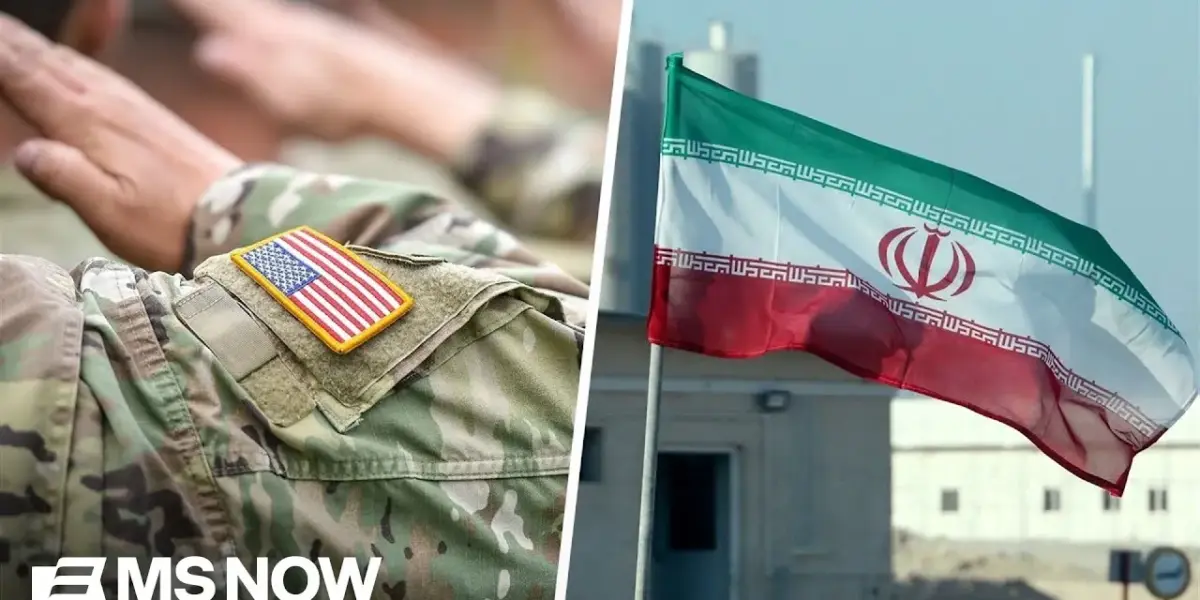
US Considers Ground Troops in Iran for Uranium Search
Amid escalating tensions in the Strait of Hormuz, the United States administration is reportedly considering deploying American ground troops into Iran, not for direct combat, but for a highly specific and dangerous mission: to locate and secure suspected uranium stockpiles. This potential deployment, revealed by former Air Force Special Operations Commander and national security expert Major Glenn Ignazio, highlights the complex strategic challenges facing the U.S. and its allies in the region.
The Strategic Bottleneck: Strait of Hormuz
The immediate concern driving these discussions is the security of the Strait of Hormuz, a critical chokepoint for global oil transit. Major Ignazio emphasized the long-standing need to address the security of this waterway, stating, “As far as the Straits of Hormuz, which was just a lead in, we definitely need those particular forces to be escorting. And at the same time, we should have taken care of the Straits of Hormuz ages ago. This is something that we knew was a bottleneck.” The potential for Iran to disrupt shipping traffic in this vital passage poses a significant threat to global economies, prompting President Trump’s call for international cooperation.
Ground Troops: A Mission for Uranium?
However, the prospect of deploying U.S. ground troops directly into Iran raises serious questions about mission scope and risk. Major Ignazio offered a stark assessment of the primary rationale for such a deployment: “The only reason why I think the ground troops would be put in there is to look for the uranium, which is the major concern about everything going on with Iran.” He elaborated on the potential dangers, explaining that this uranium could be distributed to proxies like the Houthis and Hezbollah, thereby expanding the conflict and increasing regional instability.
The challenge of locating these materials is immense. “It’s not like they’re picking up a ball,” Major Ignazio noted, describing the potential need for significant troop deployment, possibly akin to the 101st Airborne Division, to secure areas and conduct extensive searches. He warned that such an operation would be time-consuming and highly perilous, involving troops potentially operating in deeply buried or difficult-to-access locations.
“The only reason why I think the ground troops would be put in there is to look for the uranium, which is the major concern about everything going on with Iran.”
Major Glenn Ignazio, Former Air Force Special Operations Commander
Iran’s Military Capacity and Drone Warfare
Despite claims by some officials, such as U.N. Ambassador Mike Walz, that Iran has been militarily and economically decimated, Major Ignazio pointed to the persistent threat posed by Iran’s capabilities, particularly its advanced drone program. “The hard part is, again, we get into these drones. These drones have been mass produced significantly underground, distributed around the country tremendously,” he explained. This production capability allows Iran to continue its attacks even after significant tactical losses.
The sheer scale of Iran’s military forces, including an estimated million-strong army and nearly 200,000 IRGC (Islamic Revolutionary Guard Corps) personnel, presents a formidable challenge for any direct intervention. Major Ignazio highlighted the difficulty of operations aimed at regime change, stating, “you don’t have the volume compared to, say, the IRGC… So how do you beat that?”
Regional Impact and Economic Fallout
The conflict’s repercussions are already being felt across the region. The United Arab Emirates (UAE), a key U.S. ally, has been a significant target, with attacks impacting its vital tourism industry. “They have received most of the attacks, and they make 10% of their GDP on tourism,” Major Ignazio observed, questioning the long-term impact on the UAE’s image and development.
The U.S. Embassy in Baghdad has issued urgent advisories for Americans to leave Iraq, signaling a broader concern about the potential spillover of the conflict. Major Ignazio noted the shift from single-embassy evacuations to potentially larger non-combatant evacuation operations (NEOs) due to strikes on multiple countries, including Saudi Arabia and Jordan. He suggested that these neighboring countries would be more beneficial if they focused on defensive measures against drone attacks rather than direct offensive involvement.
Looking Ahead: A Prolonged Standoff?
The current situation suggests a prolonged period of heightened tension and potential conflict. Major Ignazio stressed that the longer the standoff continues, the less beneficial it is for all parties involved, especially for nations like the UAE whose economic future is tied to regional stability. The focus remains on Iran’s ability to strike and the strategic implications for its neighbors and global security. The effectiveness of international cooperation and defensive strategies will be crucial in navigating this complex geopolitical landscape.
Source: The ‘only reason’ U.S. ground troops would be in Iran is to look for uranium: Ret. Air Force Vet (YouTube)

Related Articles

G7 Allies Clash Over Iran War Strategy, Urge Focus on Russia
G7 foreign ministers met in Paris, revealing deep divisions over the U.S. war with Iran. European allies urged the U.S. to pressure Russia, linking its actions to the conflict and fearing support for Ukraine will wane.

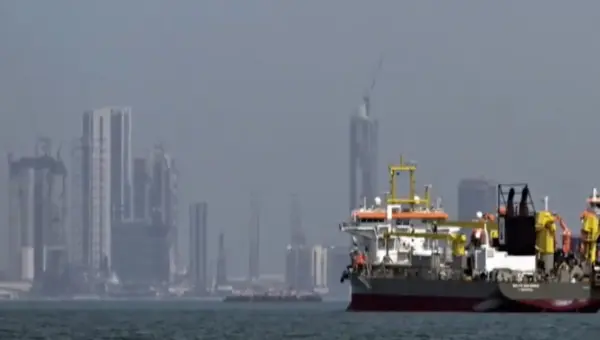
Iran Blocks China Ships, Exposing Beijing’s Weak Grip
Iran's recent decision to block Chinese ships at the Strait of Hormuz is exposing the limits of Beijing's influence in the Middle East. This action is causing delays and cancellations for Chinese manufacturers, turning a perceived geopolitical win into an economic strain.
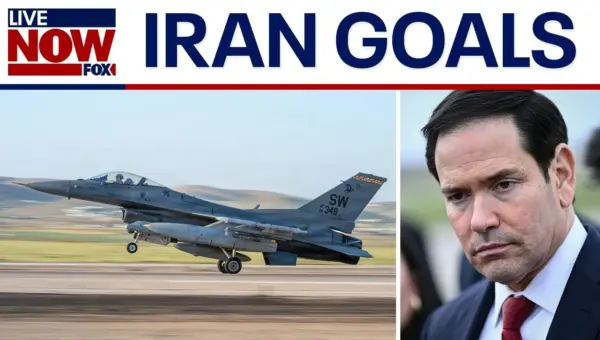
Rubio: US Can Achieve Iran War Goals Without Troops
Senator Marco Rubio outlined a strategy to counter Iran without deploying U.S. ground troops, focusing on weakening the regime and enhancing maritime security. He also criticized Cuba's economic system and expressed concerns about West Bank violence.