Iran’s Regime Resilience Undercuts Trump’s Victory Claims
Iran's regime appears to be demonstrating resilience against U.S. claims of a decisive victory, with its foreign minister denying any ceasefire requests. Experts suggest the ongoing conflict and public defiance undermine the U.S. narrative of a decapitated government, raising concerns about the true impact of military actions and the potential future for the Iranian people.

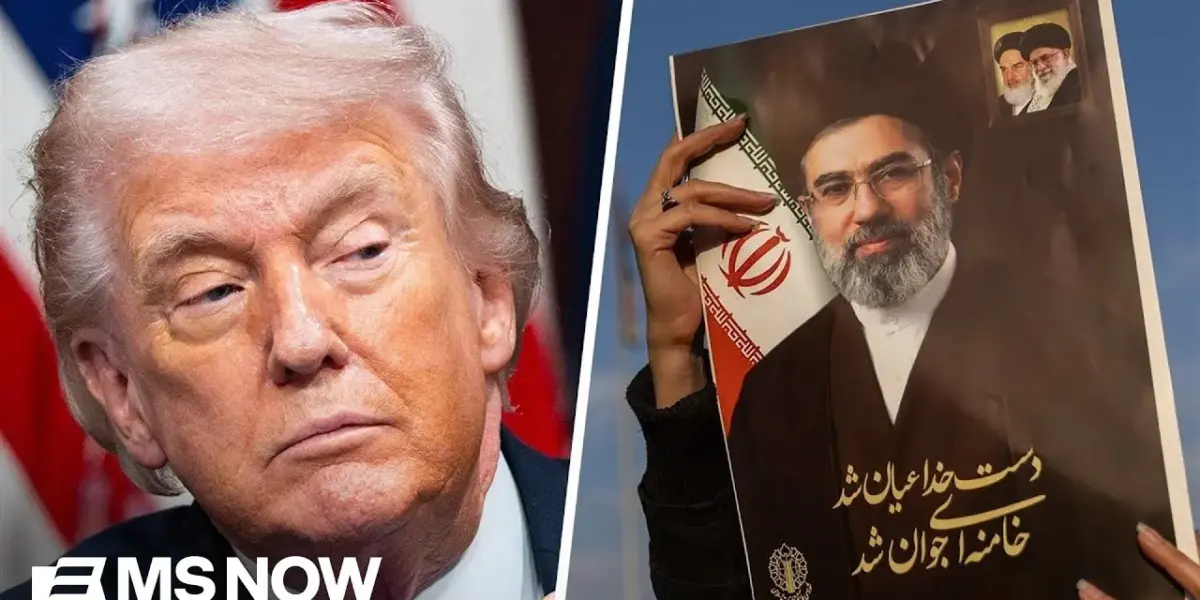
Regime’s Grip Appears Unshaken Despite US Strikes
TEHRAN, IRAN – In the wake of recent U.S. military actions, claims by the Trump administration that Iran’s regime has been decapitated and its ability to wage war effectively neutralized are being challenged. Despite assertions of a swift victory, evidence suggests the Iranian government remains functional and defiant, with its foreign minister asserting that no requests for a ceasefire or negotiations have been made. This narrative directly contradicts statements made by President Trump, who claimed Iran was seeking a ceasefire.
Oman Mediates as Iran Rejects Direct Talks
Eamon Mulhadin, co-host of The Weekend Primetime and who recently secured an exclusive interview with Iran’s foreign minister, reported that while the minister did not explicitly rule out negotiations, Iran’s current stance is one of outright rejection of a ceasefire or direct talks. “As of yet, there have been no requests for a ceasefire,” Mulhadin stated. “Of course, Donald Trump came out yesterday and said that the Iranians want a ceasefire, but he’s not ready… THE IRANIANS, OF COURSE, ARE SAYING THAT IS NOT TRUE, THAT THERE HAS BEEN NO EFFORT TO TRY AND END THIS WAR.”
According to Mulhadin, Iranian officials view the current conflict as a means to make the war costly for the United States and its allies, thereby deterring future conflicts. “They have now been burned twice,” he explained, referring to perceived betrayals during past negotiations following Israeli military actions. Iran’s leadership reportedly believes that negotiations are not a viable path to peace until the current hostilities cease entirely. They are, however, open to future discussions through intermediaries, a prospect Mulhadin believes is still distant.
Defiance and Public Appearances Undermine US Narrative
The continued public presence and operations of senior Iranian officials, including the president and head of the judiciary participating in large rallies, directly challenge the U.S. narrative of a decapitated regime. “It undercuts a very important part of what the United States is SAYING, THE UNITED STATES HAS BEEN SAYING THAT THE REGIME HAS BEEN DECAPITATED WITH THAT FIRST STRIKE,” Mulhadin observed. He added that the visible functioning and defiant posture of the regime, coupled with ongoing military actions, suggests a strategic plan designed to counter the perception of weakness.
Military Capacity and Propaganda
Retired Army General Randy Manor, former acting vice chief of the National Guard Bureau, criticized the Trump administration’s rhetoric as political propaganda not supported by facts. “The administration has been, quite frankly, using political rhetoric and propaganda to be able to say what it wants to say. It is not backed up by facts whatsoever,” Manor asserted. He highlighted that Iran’s defenses remain substantial and its stockpiles are large, despite acknowledged diminishment. “The Iranian defenses are substantial, and their stockpiles are large,” he stated.
General Manor also pointed out the logistical reality regarding the Strait of Hormuz, emphasizing that the U.S. cannot secure the vital waterway without Iran’s cooperation. “The United States cannot secure that strait whatsoever without the collaboration and cooperation of Iran. It is not physically possible.”
Russia and China: Strategic Partners
Iran’s foreign minister confirmed ongoing strategic cooperation with Russia and China, including military ties. “Well, Russia and China are our strategic partners, and we have had close cooperation in the past, which is still continuous. And that includes military cooperation as well,” he stated in the interview with Mulhadin. General Manor suggested that these allies are likely providing intelligence and technical assistance behind the scenes, driven by their own strategic interests, particularly China’s reliance on oil transiting the region.
Fears for Iranian People Amidst Shifting US Policy
Concerns are mounting among Iranians and observers about the potential consequences should the U.S. withdraw from the conflict. A former Iranian-American Democrat in Congress expressed fears that a U.S. pullout could leave the country to face a more brutal and hardline leadership under a younger Ayatollah Khamenei. Mulhadin shared these anxieties, noting that the ongoing conflict has already resulted in damage to cultural sites, civilian infrastructure, and oil refineries, leading to toxic pollution. He also noted a growing sentiment among some Iranians that the U.S. and Israel may not have their best interests at heart.
The initial U.S. stated goal of helping Iranians achieve freedom and democracy appears to have been overshadowed by the realities of the protracted conflict. “We’re told time and time again that the U .S. cares about Iranian women and cares about Iranian civilians and wants Iran to be a democratic, secular state. And as we are seeing the three weeks into this war, it seems with every passing day, the United States, certainly this administration, this Trump administration is looking for a way out that does not put the Iranian people front and center,” Mulhadin stated.
Concerns Over Leadership and Future Stability
General Manor voiced deep concern over the rhetoric emanating from the Trump administration, describing it as potentially gleeful and lacking the gravitas expected of world leaders. “I’m just very concerned that we have an administration and the secretary of defense who is very gleeful and almost frat boy style about saying, we’re going to hit them again just for fun,” he remarked. He expressed a hope for a resolution that would end the loss of life and alleviate the economic burden on the American people, urging the president to focus on domestic well-being and peace.
When questioned about the U.S. no longer being the leader of the free world, Manor suggested a shift towards a multi-polar dynamic, or perhaps a lack of a singular leader. He also found it ironic that the U.S., despite its power, was seeking international help to secure the Strait of Hormuz, a situation he attributed to the U.S. and Israel’s initial actions.
Looking Ahead
As the conflict continues, the focus will remain on Iran’s ability to sustain its military operations, the effectiveness of international mediation efforts, and the potential repercussions of a U.S. withdrawal on the Iranian populace and regional stability. The divergent narratives from Washington and Tehran, coupled with the on-the-ground realities, suggest a complex and uncertain path forward.
Source: ‘Optics’ of Iranian regime still being in control ‘undercut’ Trump’s claims of victory: Ayman (YouTube)

Related Articles

Trump Halts Iran Strikes Amid Stalled Diplomacy
President Trump announced a pause on planned strikes against Iran, citing productive talks, though Iran denies negotiations occurred. Reports also suggest a potential U.S. ground operation on Iran's Hark Island. The situation raises concerns about international support for Ukraine and potential shifts in U.S. foreign policy.

Iran’s Missile Threat Reduced by 90%, Analyst Says
An analyst reports that Operation Epic Fury has degraded Iran's missile launchers by 90%, despite challenges in targeting hidden sites. The conflict's duration and media coverage are also discussed, with implications for global energy markets and investor confidence.


DOJ Official’s Remarks Spark Outrage Over Political Allegations
A top Trump DOJ official's speech at CPAC has sparked controversy, with claims of incriminating admissions regarding fears of prosecution and alleged political motivations. The remarks have raised serious questions about impartiality within the Department of Justice.