Trump Urges Allies to Secure Strait of Hormuz Amid Tensions
President Donald Trump is urging allies to send warships to secure the Strait of Hormuz amid rising tensions with Iran. While the UK and France have deployed military assets, they are not committed to escorting commercial vessels. Iran maintains it will restrict passage for U.S. and Israeli-linked ships, creating uncertainty in global shipping lanes.

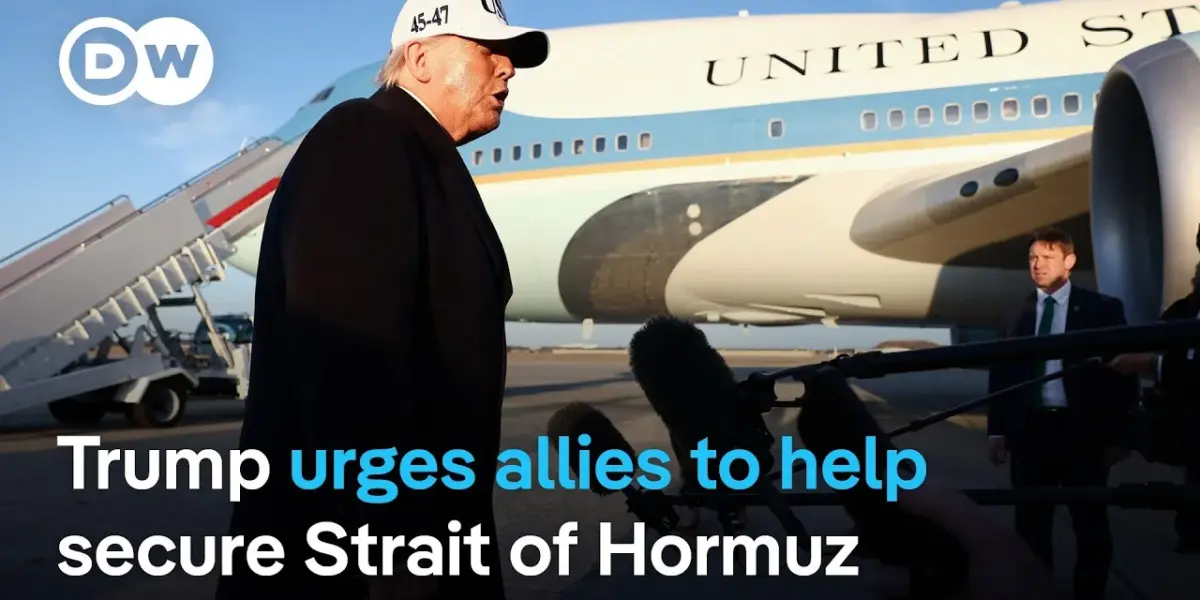
Trump Calls for Allied Naval Support in Strait of Hormuz
United States President Donald Trump has called on international allies to contribute naval forces to secure the vital Strait of Hormuz, a critical chokepoint for global oil transport. The appeal comes amid escalating tensions in the Persian Gulf, with Iran warning that it will restrict passage for vessels linked to the U.S. and Israel.
Writing on his social media platform Truth Social, Trump stated, “Countries of the world that receive oil through the Hormuz Strait must take care of that passage and we will help a lot. The US will also coordinate with those countries so that everything goes quickly, smoothly, and well.” He emphasized that the effort should be a “team effort,” suggesting a shift towards a more collaborative approach to maritime security in the region.
Allies Respond with Caution, Not Commitment
Despite President Trump’s call for a united front, Washington’s allies have shown a marked reluctance to commit warships for the explicit purpose of escorting commercial vessels through the Strait of Hormuz. While the United Kingdom and France have dispatched military assets to the Middle East, they have stressed that these deployments are intended to protect countries targeted by Iran, not to actively participate in a conflict or escort commercial traffic through the contested waterway.
This cautious approach highlights a broader division among nations regarding the handling of the Iran situation. Many European allies remain critical of the escalating conflict and are hesitant to be drawn into what they perceive as a U.S.-led confrontation.
Iran’s Selective Stance on Strait Access
Iran, meanwhile, has adopted a firm stance, asserting that its conflict is primarily with the United States and Israel, as well as nations perceived to be hosting “hostile forces.” Iranian Foreign Minister Abbas Araghchi, speaking to U.S. media, declared that the Strait of Hormuz remains open for international shipping, with the notable exception of vessels belonging to the United States, Israel, and their allies.
“The key transport route in the Persian Gulf remained open for international shipping except for vessels belonging to the United States, Israel, and their allies.”
This selective approach to passage rights introduces an element of uncertainty. Experts suggest that Iran may be leveraging this ambiguity for diplomatic gains and to avoid presenting a unified global front against it. The vagueness surrounding which companies or vessels are considered “linked” to the U.S. and Israel allows Iran to play a selective game, potentially impacting various shipping interests without imposing a blanket closure.
Historical Precedents and U.S. Capabilities
Alex Vatanka, founding director of the Iran program at the Middle East Institute in Washington D.C., noted that historical coalitions aimed at securing maritime traffic, such as those in the Bab al-Mandab Strait, have often been less effective than anticipated.
He stated that while the United States possesses the most formidable naval force, it would require weeks to prepare and implement a comprehensive security strategy for the Strait of Hormuz. “We’ve heard from senior American officials saying that could be an option, but it will take weeks to prepare for that. So, we’re not there yet,” Vatanka explained.
The question remains whether the U.S. and Israel can effectively defend the strait independently if allied support does not materialize. Vatanka suggested there’s little indication that the U.S. and Israel were banking on extensive allied support from the outset, raising questions about their pre-conflict planning.
Iran’s Strategic Objectives: Survival and Regional Reshaping
From Iran’s perspective, the primary strategic objective in the current conflict is survival. Vatanka described survival as a “major strategic victory” for the Islamic Republic, especially given the formidable military capabilities of its adversaries.
Beyond survival, some rhetoric from Tehran suggests aspirations for a reshaped Middle East, including the withdrawal of U.S. military bases from the region and the expulsion of American forces from neighboring Gulf countries. However, Vatanka characterized these ambitions as more akin to “wishful thinking” than realistic policy objectives.
Internal Iranian Perceptions Amidst Conflict
Inside Iran, public sentiment is described as a “roller coaster of emotions.” While a majority of Iranians reportedly do not support the Islamic Republic, they had hoped that foreign intervention might lead to the regime’s swift downfall. This outcome appears unlikely in the short term, leaving ordinary citizens to navigate the war’s immediate dangers.
The current conflict is unlike the Iran-Iraq War of the past, with the potential for widespread missile and bomb attacks impacting densely populated areas. Consequently, the capacity for Iranians to politically mobilize against the regime is currently limited, as their primary focus is on survival. The outcome of the war is being watched closely, but the Iranian populace currently feels detached from the decision-making process determining its course.
Outlook: Prolonged Conflict and Key Decisions
The path forward remains uncertain, with differing perspectives on what constitutes a positive outcome. For some, the ultimate goal is regime change in Iran, while for others, a swift ceasefire and a return to normalcy are paramount.
Vatanka anticipates that the conflict will likely continue for several more weeks. The critical decisions, he noted, rest with U.S. President Trump and Israeli Prime Minister Benjamin Netanyahu. The key question is whether Israel’s desire for regime change can persuade Trump to sustain U.S. involvement for an extended period, potentially months rather than weeks.
Source: Trump wants allies to send war ships to the Strait of Hormuz | DW News (YouTube)

Related Articles

G7 Allies Clash Over Iran War Strategy, Urge Focus on Russia
G7 foreign ministers met in Paris, revealing deep divisions over the U.S. war with Iran. European allies urged the U.S. to pressure Russia, linking its actions to the conflict and fearing support for Ukraine will wane.

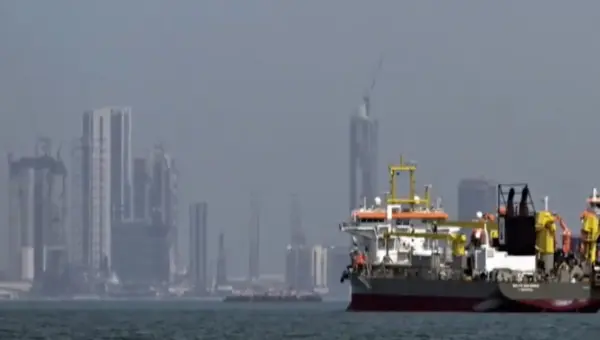
Iran Blocks China Ships, Exposing Beijing’s Weak Grip
Iran's recent decision to block Chinese ships at the Strait of Hormuz is exposing the limits of Beijing's influence in the Middle East. This action is causing delays and cancellations for Chinese manufacturers, turning a perceived geopolitical win into an economic strain.
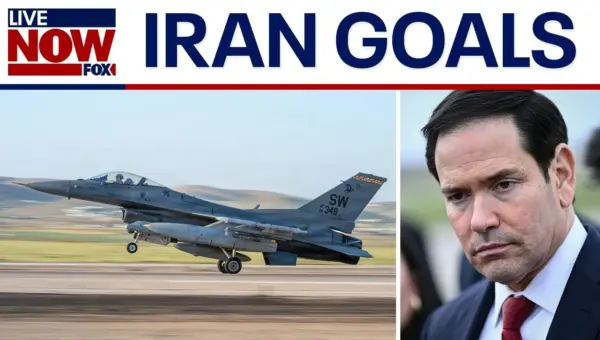
Rubio: US Can Achieve Iran War Goals Without Troops
Senator Marco Rubio outlined a strategy to counter Iran without deploying U.S. ground troops, focusing on weakening the regime and enhancing maritime security. He also criticized Cuba's economic system and expressed concerns about West Bank violence.