Iran’s Leader Flees to Russia Amidst Unprecedented Bombing Campaign
Reports indicate Iran's supreme leader may have been evacuated to Russia following a bombing, amid speculation he is dead. This unfolds as the US escalates its bombing campaign within Iran and regional tensions persist.

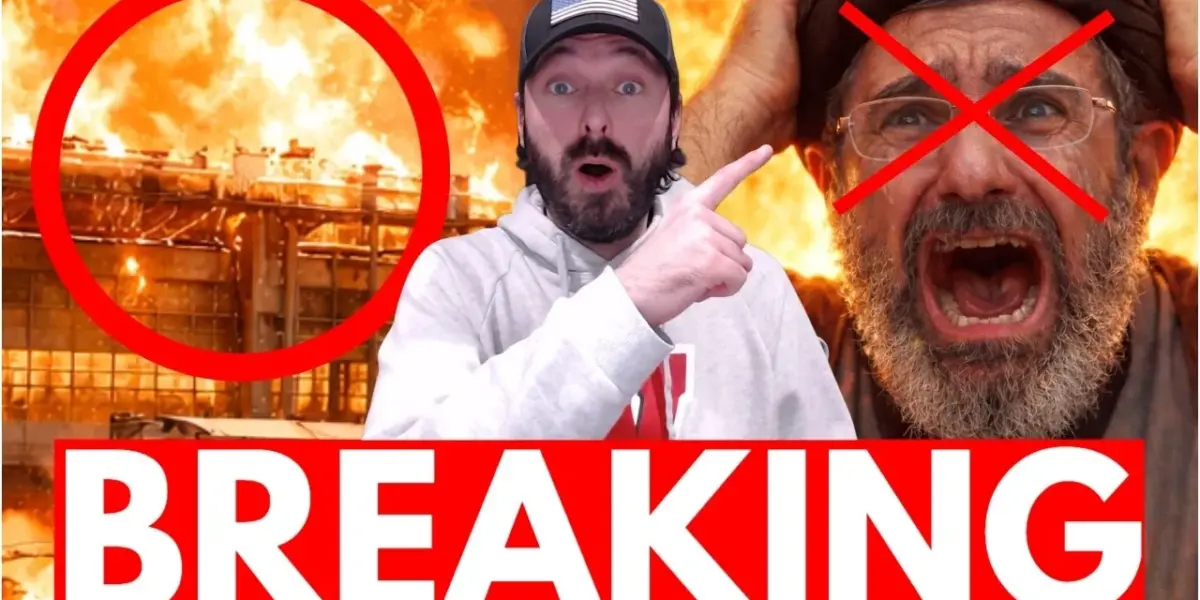
Iran’s Leader Flees to Russia Amidst Unprecedented Bombing Campaign
In a rapidly developing situation, reports have emerged suggesting that Iran’s new supreme leader, Moshaba Hmeni, may have been evacuated to Russia after sustaining critical injuries during a purported US-Israeli bombing campaign. This news comes as former President Donald Trump has publicly speculated that Hmeni might already be dead, citing his absence from public view and unconfirmed reports. The unfolding events paint a picture of significant instability within Iran’s leadership, occurring concurrently with a stepped-up military response from the United States.
Allegations of Evacuation and Health Concerns
A report originating from the Kuwaiti outlet Alerita, citing a high-ranking source close to the new Iranian supreme leader, claims that Moshaba Hmeni was transferred to Moscow via a Russian military plane. The operation is described as highly secretive, undertaken due to his deteriorating health and security situation. According to the report, Hmeni underwent a surgical procedure upon arrival and is currently receiving treatment in a private hospital within a presidential palace. The source indicates that the injuries sustained during alleged American-Israeli bombing raids on February 28th necessitated advanced medical care and close monitoring, conditions deemed impossible to provide within Iran amidst ongoing airstrikes, especially given Israel’s reported intention to target the supreme leader.
Concerns about potential leaks regarding Hmeni’s location, particularly from medical staff and specialists treating him, were reportedly a significant factor in the decision to move him to Russia. This alleged evacuation to a foreign nation, particularly one with close ties to Iran, highlights the perceived vulnerability of the leadership and the potential for internal security breaches.
Uncertainty Surrounds Leader’s Status
Adding to the uncertainty, former President Donald Trump has publicly questioned whether Hmeni is alive. In a statement, Trump noted Hmeni’s failure to appear publicly to issue his first statement as leader, and relayed information he had received suggesting the leader is not alive. Trump went further, stating, “I don’t even know if he’s alive. So far, nobody’s been able to show him. I’m hearing he’s not alive, and if he is, he should do something very smart for his country, and that’s surrender.” This statement from a prominent political figure amplifies the speculation and underscores the lack of definitive information regarding Hmeni’s condition and whereabouts.
The video transcript references previous concerns about the lack of proof of life for Hmeni, even after an initial statement was released. The uncertainty about his status raises questions about who is truly in control of Iran’s government and military operations, particularly the Islamic Revolutionary Guard Corps (IRGC).
Escalation of US Military Operations
Concurrently with these reports of leadership turmoil, the United States has reportedly intensified its military operations within Iran. Footage circulating shows significant aerial bombardments, with B-52 bombers, described as “the buffs,” being deployed. These aircraft are reportedly armed not only with conventional bombs but also with cruise missiles. The US Central Command (CENTCOM) has also announced the deployment of A-10 Thunderbolt II aircraft, known for their formidable armament, to the region. The presence of multiple advanced aircraft, including B-2s, B-1s, F-22s, F-35s, and A-10s, indicates a substantial and multifaceted air campaign targeting specific locations within Iran.
Internal Divisions and Resistance
Adding another layer to the complex situation are reports of internal divisions within Iran’s leadership. Some officials are allegedly pushing for a de-escalation or a deal to end the conflict, while the IRGC is reportedly advocating for a more hardline, pro-war stance. The chaotic decision-making process, exacerbated by the unknown fate of Moshaba Hmeni, suggests a potential fracturing of authority. This internal discord could have significant implications for Iran’s strategic direction and its ability to respond effectively to external pressures.
Furthermore, there are emerging accounts of civilian resistance and potential breakdown of order within Iran. An open-source intelligence account cited eyewitness reports of Iranian security forces being shot and killed in Isfahan by individuals who were reportedly unhappy with their actions. This suggests a growing level of public discontent and defiance against the authorities.
Continued Regional Tensions
The conflict is not confined to Iran’s borders. The transcript notes continued ballistic missile impacts in Tel Aviv, with some missiles reportedly penetrating Israel’s air defenses. While many are still intercepted, there is a perceived increase in the number of missiles reaching their targets compared to earlier stages of the conflict. Additionally, Iranian militias operating in Iraq have targeted US diplomatic facilities and logistics infrastructure near Baghdad International Airport, including bombing airport facilities under US control. These actions indicate a sustained effort by Iran-aligned groups to strike at US interests and allies in the region.
Why This Matters
The potential evacuation of Iran’s supreme leader, coupled with speculation about his demise, represents a critical juncture. It could signal a profound crisis within the Iranian regime, potentially leading to a power vacuum, increased internal strife, or a desperate lashing out. The concurrent escalation of US military action suggests a deliberate strategy to capitalize on this perceived weakness or to respond to ongoing provocations. The involvement of major air assets like B-52s points towards a significant campaign aimed at degrading Iran’s military capabilities or infrastructure.
Implications, Trends, and Future Outlook
The situation suggests a potential shift in the dynamics of the regional conflict. If Iran’s leadership is indeed incapacitated or severely destabilized, it could lead to either a more aggressive, unpredictable response from hardliners seeking to assert control, or a desperate move towards de-escalation by factions fearing collapse. The increased effectiveness of Iranian missile launches, even if partial, indicates a growing threat that requires continuous attention and countermeasures. The attacks on US facilities in Iraq by Iranian-backed militias are a clear indicator of the ongoing proxy warfare and the challenges of containing regional conflict spillover.
Looking ahead, the coming days and weeks will be crucial in determining the trajectory of this conflict. The ability of Iran to manage its internal leadership crisis, the sustained commitment of the United States to its current military posture, and the actions of regional proxies will all play significant roles. The international community will be closely watching for any signs of de-escalation or further escalation, as well as any shifts in the balance of power within Iran and the broader Middle East.
Historical Context
The current events echo historical patterns of geopolitical tension and conflict in the Middle East. The US-Iran rivalry has a long and complex history, marked by proxy conflicts, sanctions, and periods of heightened confrontation. The deployment of advanced US military assets is reminiscent of previous large-scale operations in the region, aimed at projecting power and deterring adversaries. The reported evacuation of a leader to Russia also draws parallels with past instances where allies sought refuge or medical treatment in Moscow during times of crisis, underscoring the enduring strategic alignment between Tehran and Moscow in certain contexts.
The narrative of internal dissent within Iran is also not new. The country has a history of political upheavals and popular movements challenging the ruling establishment. The current reports of public anger and potential clashes with security forces suggest that underlying societal pressures continue to simmer beneath the surface, potentially exacerbated by external conflicts and internal instability.
Source: Iran's Dictator Reportedly EVACUATED To Russia – Airport Bombed (YouTube)

Related Articles

G7 Allies Clash Over Iran War Strategy, Urge Focus on Russia
G7 foreign ministers met in Paris, revealing deep divisions over the U.S. war with Iran. European allies urged the U.S. to pressure Russia, linking its actions to the conflict and fearing support for Ukraine will wane.

Iran Blocks China Ships, Exposing Beijing’s Weak Grip
Iran's recent decision to block Chinese ships at the Strait of Hormuz is exposing the limits of Beijing's influence in the Middle East. This action is causing delays and cancellations for Chinese manufacturers, turning a perceived geopolitical win into an economic strain.
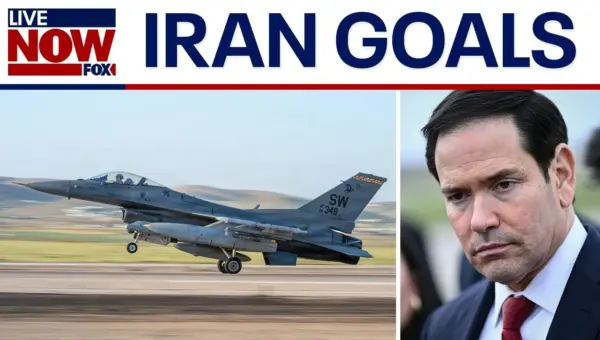
Rubio: US Can Achieve Iran War Goals Without Troops
Senator Marco Rubio outlined a strategy to counter Iran without deploying U.S. ground troops, focusing on weakening the regime and enhancing maritime security. He also criticized Cuba's economic system and expressed concerns about West Bank violence.