Vera C. Rubin Observatory Unleashes Data Firehose for Cosmic Discoveries
The Vera C. Rubin Observatory is now live, transmitting a massive stream of astronomical data that's accessible to everyone. Sophisticated data brokers and filtering tools allow astronomers and citizen scientists to search for new cosmic events in near real-time, promising a new era of discovery.

Vera C. Rubin Observatory Unleashes Data Firehose for Cosmic Discoveries
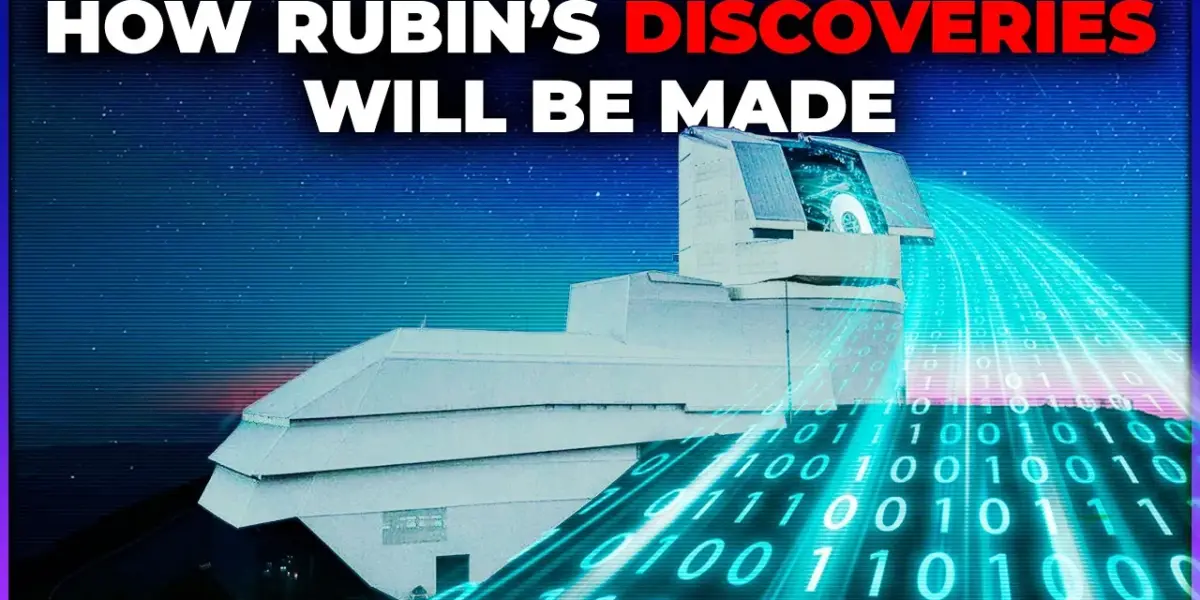
The era of the Vera C. Rubin Observatory has officially begun, ushering in an unprecedented deluge of astronomical data that promises to revolutionize our understanding of the universe. This groundbreaking observatory, designed to capture new images of the sky every few seconds, is now transmitting a colossal stream of information back to Earth, making it accessible to astronomers worldwide within minutes of observation. This rapid data dissemination is enabling near real-time discovery of cosmic events like supernovae and the tracking of moving celestial bodies, transforming astronomy into an even more dynamic and accessible field.
A Pipeline for Discovery
At the heart of this revolution is a sophisticated data pipeline, meticulously engineered to handle the sheer volume and velocity of information generated by the Rubin Observatory. Dr. Tom Matson, head of time domain services at NOIRLab and leader of the Antares data brokerage for Rubin data, explains the intricate process. “The Rubin camera has a huge field of view, and so every time they take an image, they will take a template of a previous image of the same place on the sky and digitally subtract that image,” he describes. “Anything that stands out as new, that has changed in brightness or in position, gets sent out in an alert stream.”
This process, executed automatically, begins with data acquisition in Chile. The raw information then travels to the U.S. Data Facility at SLAC at Stanford University for processing. Here, image subtraction identifies transient or moving objects. Each identified event is packaged into an alert packet and dispatched from the data center to one of seven designated data brokers strategically located around the globe. These brokers act as crucial intermediaries, receiving the full stream of alerts and making them accessible to the astronomical community through various platforms.
Democratizing Astronomical Data
A key design philosophy behind the Rubin Observatory’s data distribution is accessibility. “The Reuben alerts are world public, there’s no proprietary restrictions on that, and we don’t put any restrictions on the use of our system either,” emphasizes Dr. Matson. This means that not only professional astronomers but also citizen scientists, students, and enthusiasts can engage with the data. “You can either go to their websites,” he explains, “there are ways that they stream out filtered alerts. So there’s a whole, you know, wide variety of ways for people to interact with this. And not just professional astronomers. Anybody can go look at these websites and play around with the alerts and see what’s there.”
The decision to utilize data brokers, rather than a single raw API feed, was a strategic one. “Trying to find a way to process the alerts was just too big of an addition to the Reuben construction project itself,” Dr. Matson notes. By offloading the complex task of alert processing and filtering to specialized community systems, the core Rubin project could focus on its primary observational goals. The brokers are designed to distill the overwhelming flood of data—potentially millions of events per night at full operational capacity—into manageable subsets tailored to specific scientific interests.
Filtering the Cosmos
The role of data brokers like Antares is to provide sophisticated filtering mechanisms. “Our filters, that’s what we call the things that sort through the alert stream to try to find objects of interest,” says Dr. Matson. These filters can range from simple criteria, such as selecting only the brightest objects visible to smaller telescopes, to highly complex, machine learning-based classifiers that analyze an object’s light curve (its brightness over time) to determine its likely nature.
“Anybody can, if you have an algorithm and can write it into Python, we can deploy it on our system and find your objects for you,” he adds. This platform-as-a-service approach empowers researchers and amateurs alike to customize their data access. For instance, a user could set up a filter to be alerted every time a Type II supernova occurs within a specific galaxy or at a particular redshift distance. The system even cross-matches alerts with existing astronomical catalogs, providing contextual information about host galaxies and multi-wavelength data, further enriching the filtering capabilities.
A Marathon, Not a Sprint
The sheer scale of data from Rubin is transforming fields like supernova cosmology. Historically, astronomers painstakingly gathered a few thousand Type Ia supernovae for studies; Rubin is expected to provide at least a million. This vast sample size will allow for unprecedented statistical analysis, potentially resolving long-standing mysteries about the nature of dark energy and the expansion history of the universe.
However, the immense data flow also presents a challenge: avoiding “discovery burnout.” Dr. Matson acknowledges this, stating, “We’ve got 10 years with millions of alerts every night. So, in the end, the numbers are going to be the important thing, right? The statistical analysis of many, many events.” While immediate, high-profile discoveries are exciting, the long-term value lies in the comprehensive cataloging and analysis of a wide range of cosmic phenomena, including those that are less dramatic but statistically significant.
The Hunt for the Unknown
The ultimate goal of time-domain astronomy is to uncover the truly unknown—phenomena that astronomers haven’t even predicted. “Every time domain survey we’ve ever run has always yielded things that we didn’t know about,” Dr. Matson reflects. “The hard part is you got to find it among all the rest of the things. But, you know, it’s a classic needle in a haystack problem where you find the needle in this case by removing the hay.” By identifying and filtering out all known celestial objects and events, astronomers hope to isolate the genuine cosmic novelties.
“We are constantly surprised, which is great. I mean, that’s the fun part, right?” he adds. The Rubin Observatory, with its unprecedented depth and breadth of observation, is poised to deliver these surprises, potentially revealing entirely new classes of celestial objects and phenomena.
Engaging the Next Generation of Discoverers
The accessibility of Rubin’s data is particularly exciting for those with programming expertise who may not be professional astronomers. “If you are one of those people that I mentioned in the interview, if you are a lapsed astronomer, if you are a, you know, if you wish you could have been an astronomer, this is your chance,” encourages the interviewer. Modern AI coding assistants and readily available Python libraries make it feasible for individuals to write custom filters and contribute to scientific discovery.
For those interested in participating, Dr. Matson recommends exploring the various data broker websites, including NOIRLab’s Antares. “If you come and to our website and look at our instructions on how to write a filter, people could jump right in and start doing that really fast,” he advises. With the vastness of the cosmos now at our fingertips, the Vera C. Rubin Observatory is not just a data-gathering machine; it’s an invitation to explore, question, and ultimately, discover.
Source: How Vera Rubin's Insane Data Pipeline Works. And How You Can Use It (YouTube)

Related Articles

NASA Pivots: Mars Nuclear Probe, Moon Base Ahead
NASA is pivoting its exploration strategy, prioritizing a nuclear-powered Mars probe and accelerating plans for a moon base. The International Space Station's future is uncertain, with a shift towards commercial platforms. Meanwhile, new telescope data reveals overmassive black holes in dwarf galaxies and captures stunning images of Saturn and the Crab Nebula.


Dark Matter Defies Gravity, Forming Fuzzy Clouds Instead of Stars
Dark matter, which outweighs all visible matter, surprisingly does not collapse under gravity to form stars or black holes. Instead, it forms vast, diffuse clouds around galaxies, baffling scientists with its unique behavior. Understanding this cosmic enigma is key to comprehending the universe's structure and evolution.
New Satellites Capture ‘Impossible’ Colors from Space
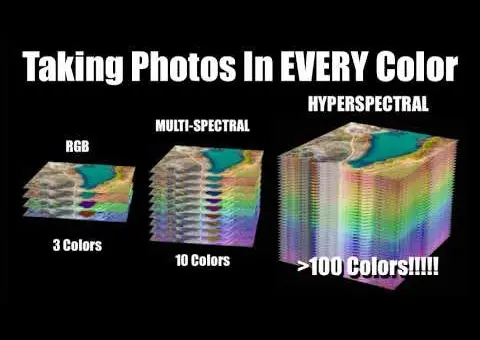
New hyperspectral satellites are capturing images with hundreds of color bands, revealing details invisible to the human eye and traditional cameras. This advanced technology builds on a 200-year legacy of spectral analysis, enabling unprecedented insights into Earth's resources and environment.