Iran’s New Leader Mystery: Is Ayatollah Khamenei Dead or Alive?
Mystery surrounds the health of Iran's new Supreme Leader, Ayatollah Ali Khamenei, amidst escalating regional tensions. Experts suggest his prolonged absence fuels rumors of death or incapacitation, potentially destabilizing the regime. The situation is further complicated by Iran's economic vulnerabilities and the strategic ambiguity of US policy.

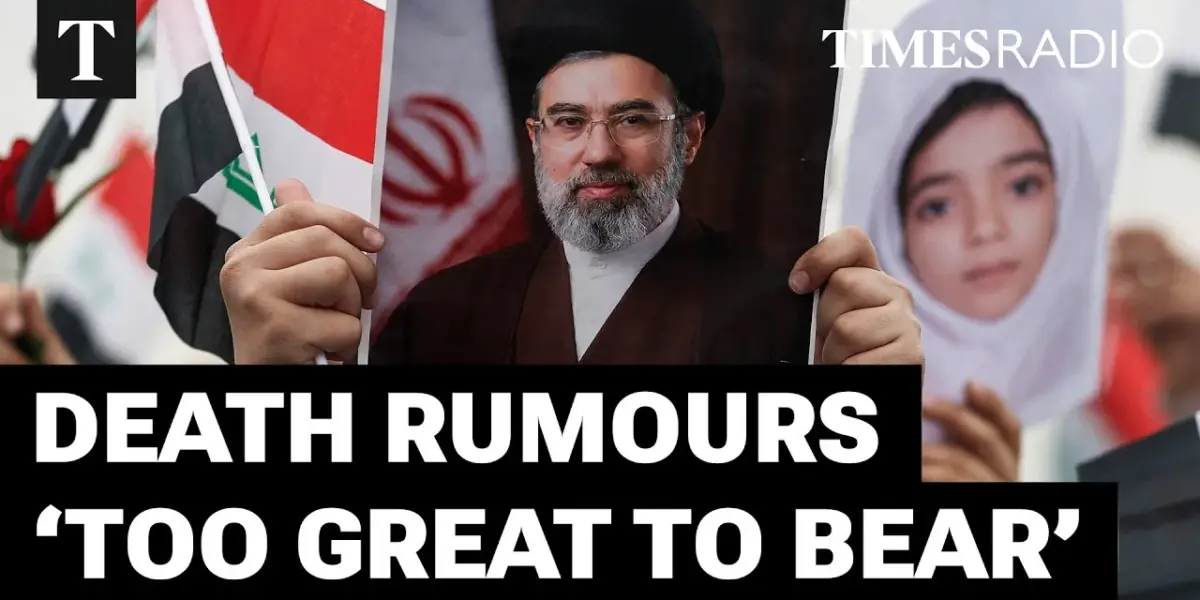
Iran’s New Leader Mystery: Is Ayatollah Khamenei Dead or Alive?
Tehran, Iran – Amidst escalating tensions and missile exchanges between the US, Israel, and Iran, a profound mystery surrounds the health and whereabouts of Iran’s new Supreme Leader, Ayatollah Ali Khamenei. President Donald Trump has fueled speculation by suggesting the leader might be dead, while Iran’s Foreign Minister insists he is in good health despite an injury. This uncertainty has led to widespread confusion and concern, with experts questioning the long-term implications for regional stability.
Uncertainty Clouds Iran’s Leadership
The critical question of Ayatollah Khamenei’s status has become a focal point in the ongoing conflict. His prolonged absence from public view, coupled with statements issued in his name, has intensified rumors of his incapacitation or demise. Michael Rubin, Director of Policy Analysis at the Middle East Forum and a former Pentagon official with extensive experience in Iran, highlighted the precariousness of the situation. “He has not been seen. There’s been a statement in his name, and there’s only so long this can continue before the rumors of his death or incapacitation are going to be too great to bear,” Rubin stated in a recent interview on Times Radio.
Strategic Ambiguity and Shifting Goals
Rubin also commented on the broader strategic landscape, noting the confusion surrounding President Trump’s objectives in the region. “Donald Trump isn’t a president that feels constrained by his own rhetoric, and that’s led to a lot of confusion whether the end goal of the current military action is simply degrading Iran’s nuclear and ballistic missile capability or whether it’s regime change,” he explained. This strategic ambiguity, while sometimes a tactical advantage, is seen as detrimental in the current volatile climate.
The Strait of Hormuz: A Ticking Clock
Despite widespread panic over Iran’s alleged closure of the Strait of Hormuz, Rubin expressed a degree of optimism. He argued that Iran’s reliance on imported gasoline and diesel, which are crucial for its military vehicles and naval operations, creates a vulnerability. “The point I was making is that there’s a ticking clock on Iran’s ability to keep it closed,” Rubin said. He suggested that Iran’s own infrastructure, particularly its “invisible jetties” used for fuel storage, could become targets, potentially leading to the reopening of the vital waterway.
Iran’s Reliance on Fuel Imports
Clarifying a common misconception, Rubin emphasized that Iran’s dependence is not on crude oil production, but on refined products. “Iran exports oil through the Strait of Hormuz, but it has to import the refined gasoline and diesel the same way,” he stated, pointing to a lack of domestic refining capabilities as a key weakness.
Boots on the Ground Unlikely, Air Power Dominates
The prospect of US troops deploying to mainland Iran or its subsidiary areas is considered highly unlikely. Rubin drew parallels to past military campaigns, noting the absence of the large troop deployments seen in operations like Desert Storm or the invasion of Iraq. Instead, he suggested that the current military actions bear more resemblance to the 1999 NATO bombing campaign in Serbia, focusing on air power to achieve objectives.
The Ayatollah Conundrum: Legitimacy and Dissension
The appointment of Ayatollah Mostafa Mohammadi as the new Supreme Leader has been met with internal dissent and questions about his qualifications. Rubin pointed out that the Iranian press initially referred to him by a lower clerical rank, “Islam,” before suddenly elevating him to “Ayatollah.” This elevation, he noted, was pushed by the Islamic Revolutionary Guard Corps (IRGC) despite a lack of constitutional qualification and a failure to produce the necessary religious dissertation. “There’s a great deal of dissension that he isn’t constitutionally qualified,” Rubin observed.
The IRGC’s Role and Vulnerability
The IRGC’s significant role in Khamenei’s appointment places them in a vulnerable position. As more IRGC members are killed in the ongoing conflict, their political standing and influence could wane, potentially leading to Khamenei’s ousting by other clerics within the Assembly of Experts. “So, I wouldn’t be surprised to see him ousted by other clerics in the Assembly of Experts,” Rubin predicted.
Assessing Khamenei’s Fate
When pressed on whether Khamenei is alive or hiding, Rubin offered a cautious assessment based on historical analysis: “I don’t think Mostafa is alive or well, or if he is alive, I don’t think he’s well.” This suggests a belief that the leader is either deceased or severely incapacitated.
Drone Warfare and Declining Capabilities
Regarding Iran’s continued drone and missile attacks on US targets, Rubin acknowledged that while they still occur, there is a steady decline in their frequency. “If we look at the metrics of ballistic missile launches and drone launches, we see a steady decline over time,” he stated. He attributed this decline to two primary factors: a potential depletion of ordnance and a strategic decision to conserve resources for opportune moments. However, most military analysts believe Iran is genuinely running out of munitions.
Counter-Drone Technology as a Priority
Even with declining capabilities, the threat of Iranian drones remains a significant concern for international shipping and US forces. Rubin emphasized the need for advanced counter-drone technology, particularly in scenarios involving potential deployments, such as on Qeshm Island, a critical hub for Iranian oil exports.
Looking Ahead
The coming weeks will be crucial in determining the fate of Ayatollah Khamenei and the trajectory of the conflict. The world will be watching closely to see if Iran confirms his status, how the internal clerical power struggles unfold, and whether President Trump’s administration can navigate the complex geopolitical landscape without further escalating tensions. The stability of the Middle East hinges on clarity emerging from the current mystery surrounding Iran’s leadership.
Source: Iran: Rumours of New Ayatollah's Death ‘Too Great to Bear’ If He Stays Hidden | Michael Rubin (YouTube)

Related Articles


G7 Allies Clash Over Iran War Strategy, Urge Focus on Russia
G7 foreign ministers met in Paris, revealing deep divisions over the U.S. war with Iran. European allies urged the U.S. to pressure Russia, linking its actions to the conflict and fearing support for Ukraine will wane.

Iran Blocks China Ships, Exposing Beijing’s Weak Grip
Iran's recent decision to block Chinese ships at the Strait of Hormuz is exposing the limits of Beijing's influence in the Middle East. This action is causing delays and cancellations for Chinese manufacturers, turning a perceived geopolitical win into an economic strain.
Rubio: US Can Achieve Iran War Goals Without Troops
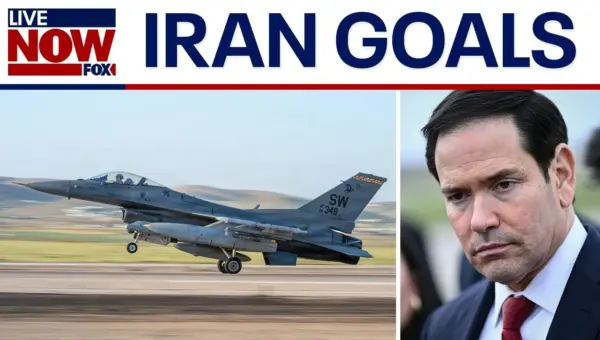
Senator Marco Rubio outlined a strategy to counter Iran without deploying U.S. ground troops, focusing on weakening the regime and enhancing maritime security. He also criticized Cuba's economic system and expressed concerns about West Bank violence.