Regime Change Fails: US Policy Fuels Iran’s Radicalization
The United States' long history of regime change interventions in the Middle East has consistently led to instability and radicalization. Recent actions involving Iran, particularly the targeting of the Supreme Leader's relatives, have exacerbated this trend, leading to spiking oil prices and a more extreme Iranian regime. This analysis explores the historical context, economic impacts, and human cost of these policies, arguing that a fundamental shift in approach is urgently needed.


The Perilous Path of Intervention: A Cycle of Escalation
The United States has a long and often fraught history of intervening in the Middle East, frequently employing regime change or the threat thereof as a foreign policy tool. The recurring outcome, as observed in numerous instances, is the destabilization of nations, leading to institutional collapse, civil war, the rise of militias, or the installation of even more problematic leaders. This cycle of intervention, rather than fostering stability, appears to perpetuate conflict and exacerbate existing tensions. The recent escalation involving Iran and the targeted killing of the Supreme Leader’s relatives serves as a stark, and perhaps irreversible, illustration of this dangerous pattern.
Libya and Iraq: Cautionary Tales of Intervention
Historical examples underscore the futility and detrimental consequences of such policies. The intervention in Libya, which led to the ousting and death of Muammar Gaddafi, was met with initial optimism that conditions would improve. Instead, Libya descended into protracted civil war, creating a power vacuum that facilitated horrific outcomes, including the emergence of open-air slave markets. Similarly, the capture and execution of Saddam Hussein in Iraq, while seen by some as a necessary step, did not resolve the underlying issues. It failed to bring lasting stability and instead contributed to a complex and violent landscape.
Iran: A New Front in a Failed Experiment
The current situation in Iran presents a particularly alarming development. The recent loss of the Supreme Leader’s father, wife, and children due to American-Israeli strikes has significantly altered the geopolitical calculus. Even before this tragedy, the individual in question was perceived as more radical than his predecessor. The implication is that this event has not neutralized the Iranian regime but has instead amplified its radicalization, potentially creating a more extreme and unyielding leadership. This is not a matter of loyalty to a single individual, as was the case with Gaddafi or Saddam Hussein; the Iranian regime commands loyalty from a vast network, including over a million radicalized troops in the IRGC, many of whom are deeply committed to its preservation.
Economic Repercussions: Spiking Oil Prices and Political Rhetoric
The immediate fallout from this escalation has been a significant spike in oil and gas prices. A review of average retail gas prices in the United States reveals a steady climb from the $3-$3.30 range, dipping briefly to around $2.80-$2.90, before surging to approximately $3.70 nationally. This economic strain, occurring against a backdrop of political messaging that evokes nostalgia for lower prices under the Trump administration, highlights the tangible impact of foreign policy decisions on everyday citizens. The contrast between past promises and present realities fuels political debate, with figures like JD Vance attributing current high gas prices to the Biden administration, while others point to the destabilizing effects of recent foreign policy actions.
This economic volatility is intrinsically linked to the strategic importance of choke points like the Strait of Hormuz. For decades, this narrow waterway has been recognized as critical, with 20-25% of the world’s daily oil supply passing through it. A lack of a robust contingency plan to ensure its passage, particularly amidst heightened tensions, demonstrates a significant oversight with global economic ramifications. The market’s interconnectedness means that disruptions in this region impact prices not only domestically but also across Europe and globally, contributing to widespread inflation.
Historical Context: The Long Shadow of Intervention
To understand the current trajectory, it is crucial to examine historical precedents. The U.S.-backed overthrow of Prime Minister Mohammad Mosaddegh in Iran in 1953, which installed the Shah, a more autocratic but pro-Western leader, serves as a potent example. While this move secured greater access to oil for the West, it came at the cost of alienating the Iranian populace. The resentment festered for decades, culminating in the 1979 Iranian hostage crisis, a direct consequence of the long-term repercussions of that intervention. This history illustrates how attempts to manipulate political landscapes can harden incentives towards animosity and escalation, even if short-term military capacity is diminished.
The Human Cost and the Call to Action
Beyond the geopolitical and economic implications, the human tragedy of these conflicts cannot be overstated. The report of a Kuwaiti soccer player killed by Iranian drone strikes serves as a poignant reminder of the civilian toll. Fahad Al-Mahmad’s death, mourned by hundreds, underscores the real-world consequences of escalating tensions. His brother’s words, expressing devastation alongside pride in his sacrifice for his country, highlight the profound personal losses experienced amidst these international conflicts.
In light of these events, there is a growing imperative to elect politicians who grasp the gravity of the situation and possess a steady hand in foreign policy. The current climate demands leaders who understand the interconnectedness of global security and economic stability, and who can navigate complex international relations without resorting to policies that predictably lead to further radicalization and conflict. The urgency is amplified by the need to ensure that power is not consolidated in ways that undermine democratic processes, particularly as elections approach.
Why This Matters
The repeated failures of regime change interventions in the Middle East, coupled with the recent escalation involving Iran, signal a critical juncture. The current path, marked by increased radicalization, economic instability fueled by oil price surges, and a growing sense of global isolation for the United States, suggests that the existing foreign policy approach is not only ineffective but actively counterproductive. The human cost, as evidenced by civilian casualties, adds a moral imperative to re-evaluate these strategies. The implications are profound: a more volatile global landscape, persistent economic challenges, and a potential erosion of international cooperation. The future outlook depends on a fundamental shift away from interventionist policies that create more problems than they solve, towards diplomacy and a recognition of the complex, long-term consequences of geopolitical actions.
Implications, Trends, and Future Outlook
The trend observed is a dangerous feedback loop where interventions breed resentment, which in turn fuels radicalism and necessitates further, often more aggressive, responses. This cycle is self-defeating, as it hardens political incentives towards animosity and escalation, regardless of short-term military gains. The current situation suggests a move towards a more multipolar and potentially more unstable world order, where regional powers are emboldened and traditional alliances are strained. The future outlook is one of continued volatility unless a significant course correction occurs. This necessitates a move towards de-escalation, robust diplomatic engagement, and a renewed commitment to international cooperation and liberal trade policies that have historically fostered global prosperity and stability.
Source: There is no going back.. (YouTube)

Related Articles

Iran’s Missile Threat Reduced by 90%, Analyst Says
An analyst reports that Operation Epic Fury has degraded Iran's missile launchers by 90%, despite challenges in targeting hidden sites. The conflict's duration and media coverage are also discussed, with implications for global energy markets and investor confidence.
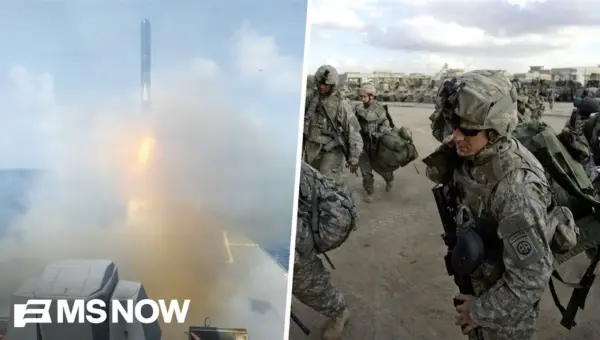
Iran Missile Strikes Injure US Troops, Raise War Concerns
Iranian missile strikes have injured U.S. service members, escalating tensions as the conflict nears one month. The attacks are raising concerns about the effectiveness of U.S. military strategy and the depletion of crucial missile stockpiles. Global oil prices have surged, impacting economies worldwide.

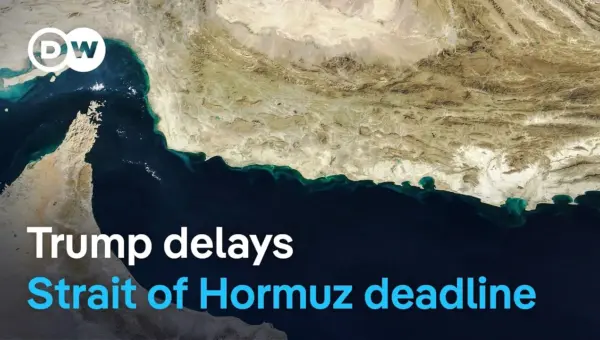
Trump Delays Iran Strike Deadline Amidst Shifting Diplomacy
President Donald Trump has extended his deadline for potential strikes on Iranian energy plants to April 6th, amid reports of U.S.-Iran diplomatic talks mediated by Pakistan. This move comes as Israel continues its strikes on Iran and the U.S. deploys additional military assets to the region. Analysts point to mixed signals, economic pressures, and strategic miscalculations as key factors shaping the evolving situation.