Trump’s Strait Gamble: Allies Needed After Iran’s Blockade
President Trump calls on allies to help secure the Strait of Hormuz, but the U.S. faces criticism for potentially underestimating Iran and a delayed approach to coalition building. The situation highlights the complex challenges of global trade security and international cooperation.

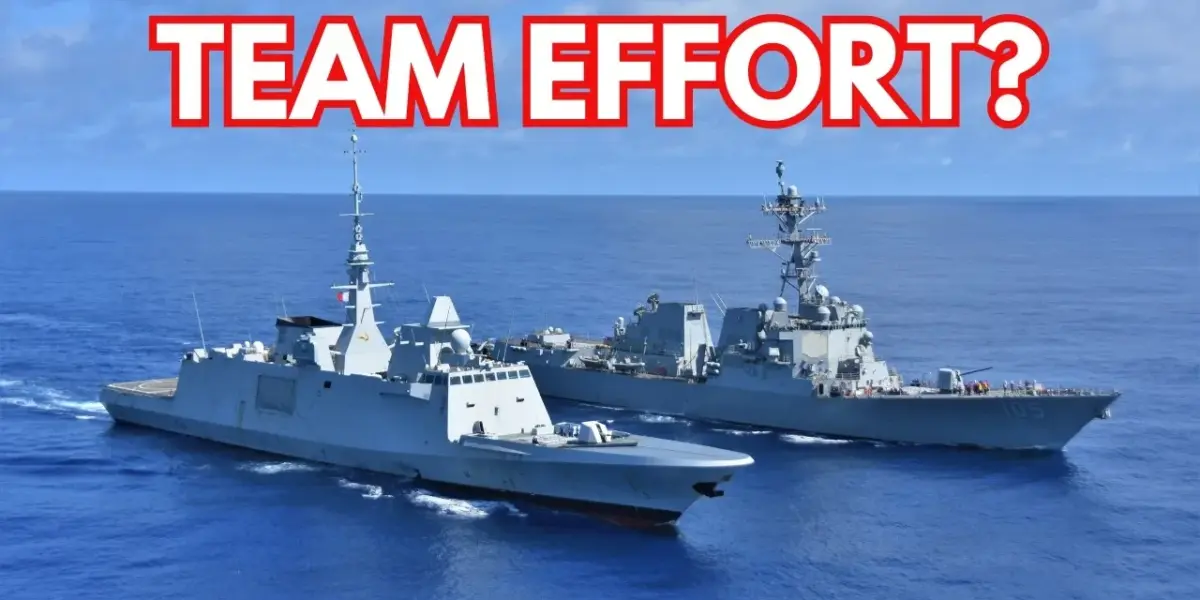
Trump’s Strait Gamble: Allies Needed After Iran’s Blockade
In the wake of escalating tensions in the Middle East, President Trump has issued a call to allies, urging them to join the United States in securing the vital Strait of Hormuz. This appeal comes on the heels of statements from the President asserting that Iran’s military capabilities have been “100% destroyed.” However, a closer examination of the situation reveals a complex reality, one that prompts the uncomfortable question: did the U.S. break it, and now expects others to help fix it?
A Somber Toll and Strategic Questions
The immediate context for this geopolitical maneuvering is a tragic one. The transcript notes the recent loss of six American service members in a KC-135 crash, identifying them as Major John Cler, Tech Sergeant Tyler Simmons, Tech Sergeant Ashley Puit, Captain Seth Kovville, Captain Curtis Angst, and Captain Ariana Ceino. Additionally, France lost Chief Warrant Officer Arnod Fion to an Iranian-backed militia attack. These sacrifices underscore the gravity of the ongoing operations and the human cost involved.
While public support for the troops remains strong, the transcript highlights a crucial distinction: criticism of the strategic outcome of military actions is not criticism of the soldiers executing them. It is an obligation of citizenship to ensure that the sacrifices made by these service members are not in vain, and that the objectives pursued are worthy of their ultimate price. This necessitates a rigorous evaluation of the strategic decisions made by civilian leadership, particularly in pairing tactical successes with tangible, long-term strategic victories.
The Strait of Hormuz: A Lifeline Under Threat
The Strait of Hormuz, a narrow waterway connecting the Persian Gulf to the open sea, is a critical chokepoint for global oil transit. Its closure or significant disruption has profound economic implications worldwide. The current situation, as described, is not one of physical blockade with mines or overt military occupation. Instead, it is the pervasive threat of drones, missiles, and mines that has effectively deterred most commercial shipping, leaving only Iranian vessels and those granted waivers able to pass freely.
President Trump’s assertion of Iran’s military being “100% destroyed” is directly contradicted by the ongoing reality. The transcript points out that while drone and missile launches may be down, they are far from zero, and for the strait to return to normal operations, these threats must be eliminated. The release of footage by CENTCOM showing continued strikes against Iranian military targets shortly after the President’s statement further erodes the credibility of the “100% destroyed” claim. This disconnect between rhetoric and reality raises concerns about the effectiveness of the current strategy and the potential for further American casualties.
Underestimating Iran’s Resolve and Capability
The transcript posits that the U.S. may have underestimated Iran’s willingness and ability to leverage the Strait of Hormuz as a strategic asset. The ability of Iran to disrupt shipping from its own territory, regardless of the state of its naval or air forces, is a critical factor. The mere threat of attacks is sufficient to make commercial shipping and their insurers deem passage too risky.
The argument is made that the U.S. government may have miscalculated Iran’s immediate reaction, perhaps believing that a decisive military strike would deter such a move. The transcript suggests that planning may have been flawed, possibly by assuming Iran would not act so quickly or by relying on the potential removal of leadership as a deterrent. This has led to a situation where the U.S. is now scrambling to gather the necessary resources and international support to reopen the strait.
Seeking an International Coalition: A Delayed Strategy
President Trump’s proposed solution involves a two-pronged approach: continued bombardment of Iranian targets and the formation of an international coalition to reopen the Strait of Hormuz. While the idea of an international coalition is presented as the “right move,” the transcript laments the missed opportunity to build this alliance from the outset, or even before military operations commenced.
The current approach, which emphasizes that “countries that receive oil through the Hormuz Strait must take care of that passage,” signifies a shift towards a team effort. However, this effort, the transcript argues, should have been a team effort from day one. The U.S. appears to have acted unilaterally, with the exception of Israel, failing to adequately court its allies and offer incentives for participation in a joint operation. This has led to a situation where the U.S. is now trying to build an alliance under pressure, making the task of reopening the strait more challenging.
Allied Responses: A Mixed Bag
The responses from potential allies to President Trump’s call have been varied:
- France: President Macron has indicated that France and its allies are preparing a defensive mission to escort container ships and tankers, aiming to reopen the strait after the “hottest phase of the conflict.” This aligns with President Trump’s recent rhetoric about the war being effectively over.
- Japan: While Tokyo has rejected the immediate deployment of mine sweepers, its Prime Minister has stated that operations could be considered after the conclusion of active hostilities. This, too, seems to be a response to the narrative of the conflict winding down.
- China: Beijing has expressed concerns, with its foreign ministry stating that U.S. and Israeli strikes lack UN Security Council authorization and violate international law. China’s support for reopening the strait would be beneficial, but the transcript expresses doubt about their willingness to assist the U.S. in a scenario that could improve America’s image, especially given the current geopolitical climate.
- South Korea and the United Kingdom: Little has been heard from these nations regarding President Trump’s specific call for assistance.
The transcript suggests that President Trump’s insistence on the war being over might be an attempt to create the conditions for allies to join the effort to reopen the strait, as they seem hesitant to engage while active hostilities continue. However, the ongoing drone and missile attacks across the region may undermine this narrative.
The Path Forward: Coalition vs. Unilateral Action
The transcript outlines a hierarchy of options for reopening the Strait of Hormuz:
- Negotiations with Iran: This is presented as the fastest and easiest way to open the strait, but it would likely require significant concessions from the U.S., which are deemed strategically unfavorable in the short or long term.
- Building a Coalition: This is considered the next best option, leveraging international cooperation to achieve the objective. The transcript strongly advocates for this approach, despite the late start.
- Unilateral U.S. Military Action: This is portrayed as the least desirable option, involving extensive U.S. naval and air force operations, constant sorties, and the risk of deeper entanglement, all while commercial shipping remains deterred.
Why This Matters
The situation at the Strait of Hormuz is a critical barometer of global stability and economic health. The U.S.’s actions and its ability to rally international support have far-reaching implications. The narrative surrounding the conflict, the credibility of U.S. pronouncements, and the effectiveness of its diplomatic and military strategies are all under scrutiny. The decision to act unilaterally versus building a coalition has significant consequences for U.S. influence and the long-term security architecture of the Middle East. The reliance on potentially inaccurate assessments of adversary capabilities and intentions, as suggested by the “100% destroyed” claim, highlights the dangers of strategic miscalculation.
Implications, Trends, and Future Outlook
The current situation points to a trend of increasing reliance on non-traditional warfare tactics, such as drones and missiles, which can be employed effectively even by nations with limited conventional military power. This necessitates a re-evaluation of deterrence strategies and the definition of military strength. The challenges in reopening the Strait of Hormuz also underscore the interconnectedness of global economics and geopolitics; disruptions in one region can have cascading effects worldwide.
The future outlook hinges on the U.S.’s ability to successfully forge a credible international coalition. Failure to do so could lead to prolonged instability in the region, continued economic disruption, and a potential deepening of U.S. military involvement without clear strategic gains. The effectiveness of President Trump’s diplomatic efforts in convincing allies to commit resources will be a key determinant of the outcome.
Historical Context
The Strait of Hormuz has been a focal point of international concern for decades. Throughout the Iran-Iraq War in the 1980s, both sides targeted shipping in the strait, leading to international efforts to protect maritime traffic. The U.S. Navy played a significant role in escorting tankers during that period. More recently, Iran has repeatedly threatened to close the strait in response to international pressure or sanctions, demonstrating its understanding of the leverage it holds. This history provides a backdrop against which current events should be understood, highlighting the recurring nature of these tensions and the enduring strategic importance of the waterway.
The current situation also echoes debates about the costs and benefits of U.S. military intervention and alliance-building. Past conflicts have shown that while unilateral action might be swift, it often lacks the broad legitimacy and burden-sharing that a coalition provides. The current administration’s approach, characterized by a strong emphasis on transactional relationships and a questioning of traditional alliances, is being tested in this critical moment.
Ultimately, the effective reopening of the Strait of Hormuz may depend less on the destruction of any single military capability and more on a comprehensive strategy that combines diplomatic engagement, economic pressure, and robust, internationally supported military deterrence. The current path, as analyzed, suggests a reactive strategy that is trying to play catch-up, a stark contrast to the proactive coalition-building that history suggests is often more effective.
Source: Trump Urges Allies: HELP Us Open the Strait of Hormuz (YouTube)

Related Articles


Trump’s Iran Claims: Shocked or Deluded by War Games?
Donald Trump claimed surprise over Iran's actions in the Strait of Hormuz, but experts suggest retaliation was inevitable. Military war games likely predicted such a scenario, raising questions about the advice given to the President.

Israel’s Strategy Against Iran Revealed
Israel's strategy to counter Iran's nuclear ambitions and regional influence centers on containment, utilizing a mix of covert military actions, intelligence operations, and diplomatic pressure. Analysts highlight the growing urgency due to Iran's nuclear advancements, while also noting the persistent risk of escalation in the volatile Middle East.


CPAC Crowd Cheers Impeachment, Stuns Trump Allies
At the recent CPAC conference in Texas, attendees surprised many by cheering for impeachment hearings, signaling potential divisions within the conservative base. The event also highlighted voter frustration over issues like ongoing wars and affordability, with some considering not voting.