UK May Join Allies in Strait of Hormuz Security Talks
Former MI6 chief John Scarlett discusses the 'serious' likelihood of UK talks to join allies in securing the Strait of Hormuz, a vital global oil route. The strategic waterway's potential closure carries significant global political and economic implications.

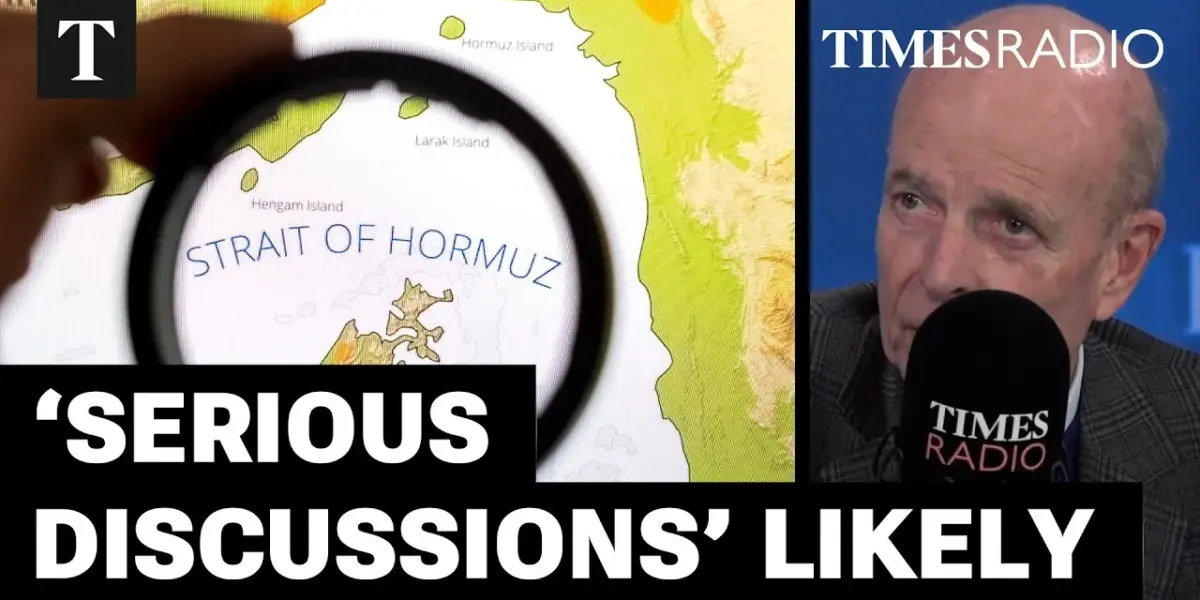
UK Considers Joining Allies Amid Strait of Hormuz Tensions
Serious discussions are reportedly underway regarding the United Kingdom’s potential involvement in multinational efforts to secure the vital Strait of Hormuz, a critical chokepoint for global oil trade. The potential closure of this strategic waterway is described as a “really, really big deal” with significant implications for international politics and global security.
Geopolitical Significance of the Strait of Hormuz
The Strait of Hormuz, a narrow waterway connecting the Persian Gulf to the Gulf of Oman, is a linchpin of global energy security. Approximately 30% of the world’s seaborne oil trade passes through this critical passage, making any disruption a major concern for international economies. The transcript highlights that the strait’s geography makes it susceptible to being “blocked off by one big regional power,” underscoring the inherent risks associated with its strategic location.
Context of Regional Tensions
The discussions surrounding the Strait of Hormuz emerge against a backdrop of heightened tensions in the Persian Gulf region. Many Arab states bordering Iran find themselves caught in the crossfire of escalating conflict. The transcript notes that while former US President Donald Trump’s administration sought regime change in Iran, this objective appeared increasingly out of reach as the Iranian government maintained a firm stance.
Intelligence Expert’s Perspective on the Conflict’s Unfolding
John Scarlett, former chair of the Secret Intelligence Service (MI6) and the Joint Intelligence Committee, shared his insights on the recent escalation of conflict. Scarlett admitted to being surprised by the timing and nature of recent military actions, despite having anticipated the possibility of increased US military deployment and potential engagement. “I confess that when I woke up on Saturday morning two weeks ago and heard what had happened I genuinely was surprised,” he stated.
He elaborated that this surprise stemmed from ongoing, albeit complex, negotiations that had been taking place in Muscat, Oman. Scarlett, drawing from his background, viewed these negotiations as a standard process of diplomatic maneuvering. “The US demands on the table were absolute regarding the nuclear program, regarding ballistic missiles, regarding the axis of resistance, even regarding the navy in Iran,” he explained, noting that he had anticipated some form of compromise or delay in the process.
Reasons Behind the Escalation
Scarlett discussed the lack of a clear, universally accepted reason for the sudden shift towards military action. He mentioned intelligence reporting that suggested a belief within the US administration that Iran intended to pursue nuclear weapons capability, a point of significant concern for Israel as well. “There is a suggestion out there in certain areas that it was maybe a misreading of the or possible misreading of the latest negotiating position put forward by the Iranians in Muscat,” Scarlett added, suggesting that Washington may have interpreted Iran’s conciliatory gestures as a flat rejection of US demands.
Resilience of the Iranian Regime and Regional Anger
Despite the military pressure, Scarlett pointed to the “resilience being shown by the Iranians and the Iranian regime.” He highlighted their continued capacity for aggressive attacks against Gulf states that have not directly engaged in offensive actions from the US. This sustained Iranian response has reportedly generated significant anger across the region, with long-term implications that are still unfolding.
UK’s Stance and the US Security Relationship
The transcript also touched upon the UK government’s initial position of not allowing the use of its bases for military operations. Scarlett noted that such disagreements are not unique in the historical context of the UK-US security relationship, citing the Suez Crisis and the Vietnam War as examples where the two nations did not act in unison. “We have to be careful. Obviously we have to look after our own national interests and be clear about what they are,” he emphasized.
Scarlett also addressed the fundamental importance of the long-standing security relationship between the UK and the US, which dates back to 1941. He stressed the deep history, trust, and mutual confidence that underpin this alliance, cautioning against hasty decisions to distance the UK from its key security partner.
Future Implications and the Path Forward
The potential involvement of the UK in securing the Strait of Hormuz signifies a recognition of the profound national interests at stake. Scarlett concluded that finding a “sensible and careful but very well thought through way through that with allies not just the United States of course is the right objective.” The ongoing situation in the Strait of Hormuz remains a critical focus for international diplomacy and security, with the world watching to see how these complex geopolitical dynamics will evolve.
Source: Strait of Hormuz: ‘Serious’ Talks Likely on UK Joining Allies to Keep Route Open | John Scarlett (YouTube)

Related Articles

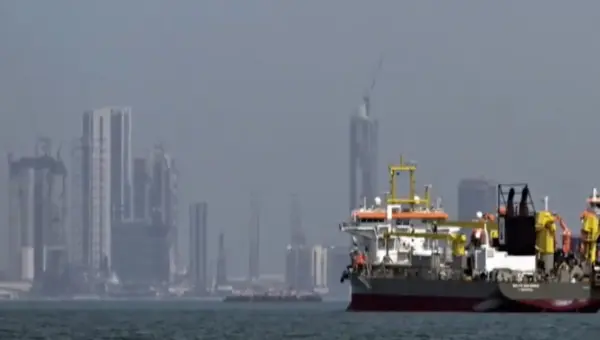
Iran Blocks China Ships, Exposing Beijing’s Weak Grip
Iran's recent decision to block Chinese ships at the Strait of Hormuz is exposing the limits of Beijing's influence in the Middle East. This action is causing delays and cancellations for Chinese manufacturers, turning a perceived geopolitical win into an economic strain.
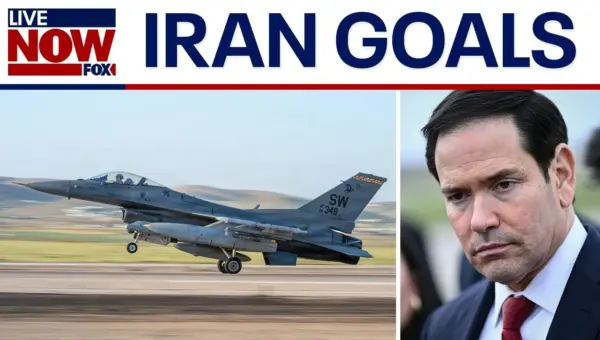
Rubio: US Can Achieve Iran War Goals Without Troops
Senator Marco Rubio outlined a strategy to counter Iran without deploying U.S. ground troops, focusing on weakening the regime and enhancing maritime security. He also criticized Cuba's economic system and expressed concerns about West Bank violence.


Israel Escalates Iran Strikes, Warns of Wider War
Israel has launched significant strikes inside Iran following continued missile fire, warning of further escalation. The conflict risks wider regional instability and economic disruption, especially concerning the Strait of Hormuz.