Trump Admin Mocks Iran War with Memes, Fundraises Off Fallen
The Trump administration is under fire for its use of memes to portray military actions and for fundraising off the recent dignified transfer of fallen service members. Critics argue these actions trivialize war and disrespect sacrifices, highlighting a broader concern about the erosion of standards in political communication.

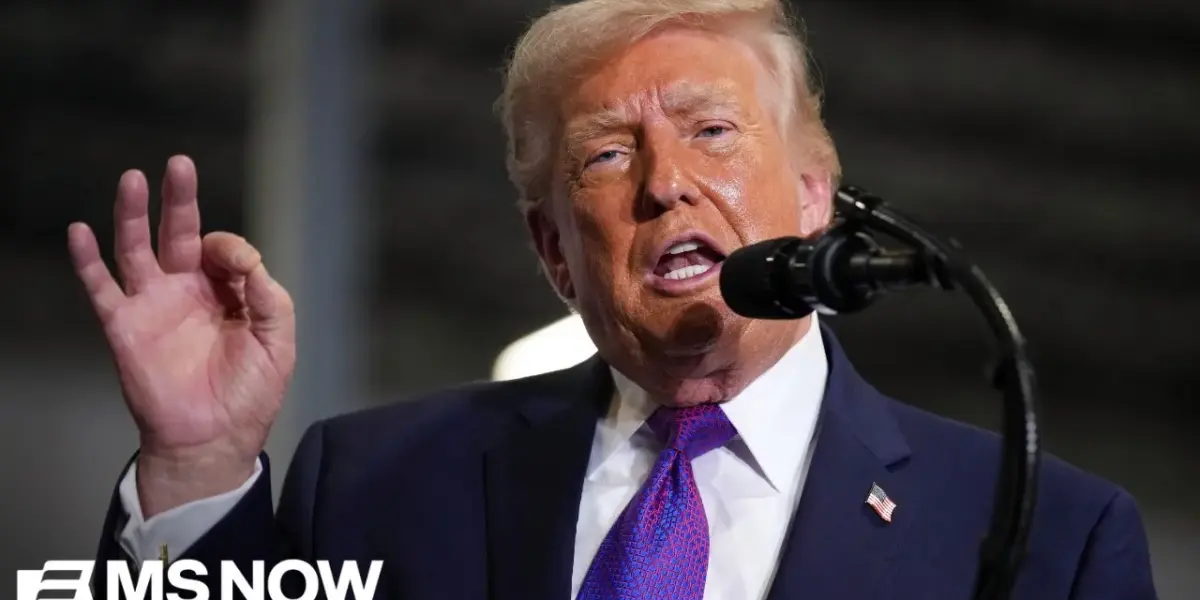
Trump White House Under Fire for ‘Bizarre Memeification’ of War
The Trump administration is facing intense criticism for its handling of the ongoing conflict, with critics decrying the “bizarre memeification” of military actions and the use of fallen service members for political fundraising. As the nation enters its third week of war, concerns over economic stability and rising gasoline prices dominate public discourse. However, President Trump’s focus appears divided, with a push for a restrictive voting bill and a refusal to sign other legislation until the “Save America Act” is passed—a bill that critics argue could disenfranchise millions of eligible voters.
Grave Acts Reduced to ‘Kid’s Video Game’
When the administration does address the conflict, which President Trump reportedly refers to as a “little excursion,” the messaging has been widely condemned as beneath the dignity of the White House. Evidence of this includes portraying grave military actions as akin to a “kid’s video game.” This approach has drawn sharp rebukes from commentators and the public alike, who question the seriousness with which the administration is treating the realities of war and the sacrifices made by U.S. service members.
Fundraising Off Fallen Heroes Sparks Outrage
In a particularly stunning and controversial move, President Trump’s political action committee (PAC) has been accused of fundraising off the war, and even off the recent “dignified transfer” honoring six fallen U.S. service members. A fundraising email sent out by the PAC featured a photograph from this solemn ceremony, promising donors “private national security briefings by the president himself.” The White House and Pentagon have not responded to inquiries about the nature or content of these promised briefings. This tactic has been widely condemned as exploitative and a profound disrespect to the memory of those who have made the ultimate sacrifice.
“Treating all the assets of the federal government as though they were assets of the Trump organization is impeachable behavior. It’s the kind of thing that’s not supposed to happen. But unfortunately, there have been no consequences for all of Trump’s actions thus far, which is why he feels like he could get away with brazen behavior like trying to fundraising off the corpses of dead American service members.” – Adam Serwer, The Atlantic
Has the Administration Crossed a Line?
The question of whether a line exists for this administration, particularly regarding its public communication and political strategies surrounding conflict, has become a central point of debate. David Drucker, senior writer at The Dispatch, noted that while presidents have historically made political cases for wars, including for re-election, the current methods are unprecedented. “What is new are email fundraising appeals, at least they appear new, because they seem so trite,” Drucker stated. He added that the meme videos, originating directly from the White House, are particularly troubling, suggesting a disconnect from the gravity of wartime.
Drucker also pointed out that Republican pushback is unlikely, as many appear to view these tactics as simply “part and parcel of the way the president communicates.” He noted that while presidents have sought novel ways to communicate war policies since at least Woodrow Wilson’s era, the current approach is perceived by many as “sophomoric” and ill-fitting for the solemnity of war.
The Erosion of Empiricism and Rise of Cynicism
Adam Serwer, staff writer at The Atlantic, connected these events to a broader trend of “gullible and cynical America.” In his recent piece, Serwer argued that the spread of conspiracy theories, such as anti-vaccine narratives, exemplifies a societal tendency to reject evidence in favor of absurd assertions. This, he explained, creates a fertile ground for the dissemination of falsehoods by various entities, including authoritarian governments.
Serwer applied this analysis to the context of war, suggesting that a pervasive cynicism can relieve individuals of the cognitive burden of distinguishing truth from falsehood. “The idea is that if you think, assume that everyone is corrupt, everyone is on the take, that relieves you of the cognitive burden of distinguishing when this is actually happening,” Serwer explained. He emphasized that while skepticism is healthy, unchecked cynicism can blur the lines between reality and deception, making it difficult to recognize genuine scams or exploitative behavior, such as presidents profiting personally from government assets.
“It’s important to be you know skeptical it’s important to take empiricism seriously but it’s not it’s important not to be so cynical uh that you essentially can’t tell the difference between a scam and reality.” – Adam Serwer, The Atlantic
Hypocrisy and the Erosion of Standards
The stark contrast between the current administration’s actions and the past outrage directed at President Obama for a seemingly minor infraction—saluting while holding a coffee cup—was highlighted. This inconsistency underscores, for some observers, the shallowness of political criticism often driven by partisanship rather than principle. Drucker remarked on the lack of consistency in political discourse over the past decade, stating, “People just switch jerseys.” He likened it to political maneuvering, where the majority complains about minority obstruction, only to adopt the same tactics when they are in the minority.
While Drucker acknowledged that hypocrisy is rampant in politics and perhaps unavoidable, he stressed that it exposes the superficiality of much political criticism. He echoed Serwer’s point about the need for contextual understanding, suggesting that politicians’ constant rhetoric about rigged systems contributes to a public perception that nothing can be believed, leading to a dangerous “you’re all the same” mentality that often overlooks critical distinctions.
What’s Next?
As the nation grapples with the implications of these communication strategies surrounding a serious international conflict, the focus will remain on the administration’s messaging and the public’s reaction. The long-term consequences of normalizing the “memeification” of war and the ethical boundaries of political fundraising in times of conflict will likely be subjects of continued debate and scrutiny. The degree to which political actors and the public can maintain a critical and empirical approach amidst pervasive cynicism will be crucial in navigating future crises.
Source: ‘Where is the line?’: Trump admin under fire for ‘bizarre memeification’ of Iran war (YouTube)

Related Articles

G7 Allies Clash Over Iran War Strategy, Urge Focus on Russia
G7 foreign ministers met in Paris, revealing deep divisions over the U.S. war with Iran. European allies urged the U.S. to pressure Russia, linking its actions to the conflict and fearing support for Ukraine will wane.

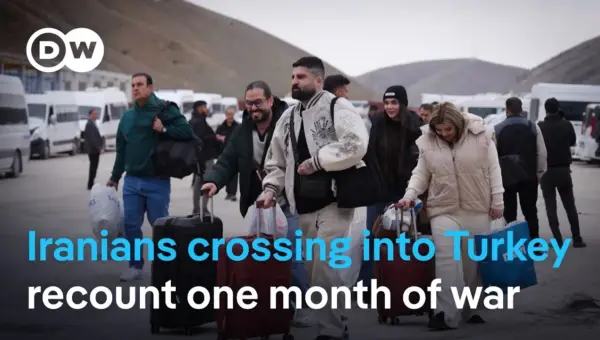
Iran War Exodus: Refugees Flee to Turkey Amidst Bombings
A train from Tehran brings refugees to Turkey, fleeing daily bombings and economic collapse. Many express deep fear for loved ones left behind, while some hold onto national pride and hope for victory. The conflict's impact is also felt economically in Turkey, with rising gas prices.
Trump’s Iran War Plans Criticized Amid Border Funding Standoff
Lawmakers and analysts are criticizing the Trump administration's handling of the Iran conflict and its approach to border funding, arguing that a lack of clear planning and a focus on political battles are making the U.S. less safe. Concerns are particularly high regarding the FBI's priorities and the potential impact of these issues on national security.