Mines in the Strait: Iran’s Bluff and America’s Alliance Dilemma
Iran's alleged mining of the Strait of Hormuz presents a strategic paradox, potentially hindering its own control. This situation exposes U.S. vulnerabilities in minesweeping and raises questions about alliance burden-sharing, as allies might be drawn into resolving maritime security issues.

Mines in the Strait: Iran’s Bluff and America’s Alliance Dilemma
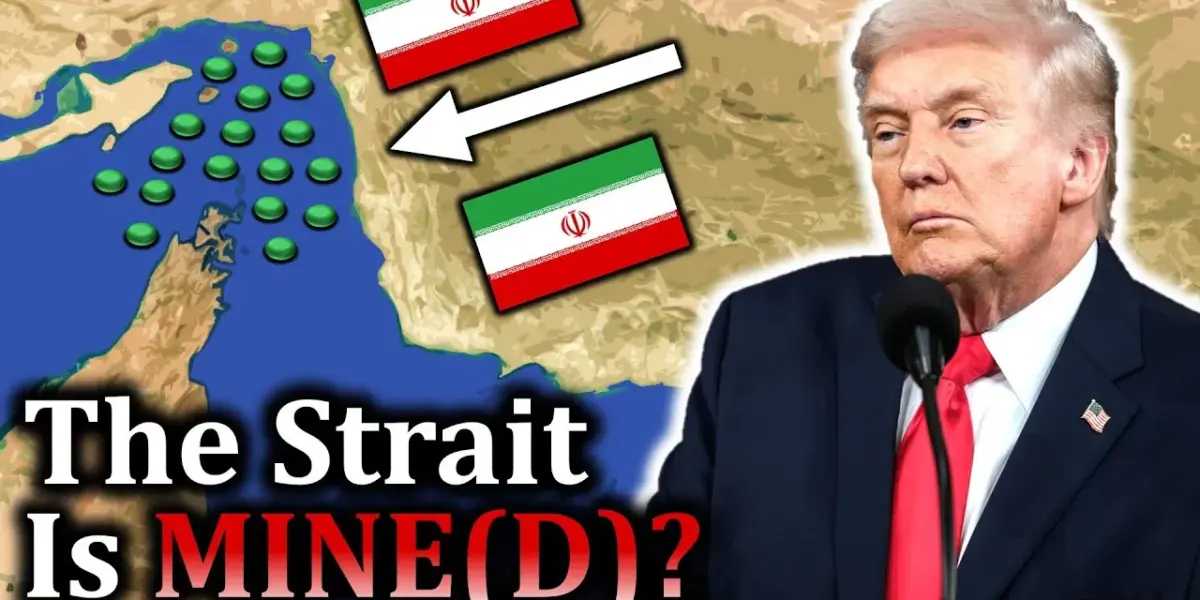
The strategic waters of the Strait of Hormuz have become the latest flashpoint in the ongoing conflict involving Iran. With reports of Iran potentially mining this vital chokepoint, a complex game of deterrence and consequence unfolds. While former President Trump has asserted U.S. control, Iran’s alleged mining operations present a starkly different narrative: not one of control, but of disruption and potential self-sabotage. This situation highlights not only the intricacies of modern warfare but also the perils of unilateral action in an interconnected world.
The Double-Edged Sword of Mine Warfare
The Strait of Hormuz, a narrow passage through which a significant portion of the world’s oil supply transits, offers Iran a potent, albeit risky, strategic advantage. The ability to disrupt shipping through the deployment of mines, even in small numbers, could compel international shippers to avoid the area. However, as the analysis suggests, this strategy carries a significant drawback for Iran: by mining the Strait, Iran effectively loses its own ability to control and utilize it. This creates a paradox where Iran’s attempt to wield power over the Strait could ultimately lead to its own isolation and hinder its economic lifelines.
The current situation is described as a “fog of war,” with uncertainty surrounding the exact extent of mining operations. While official statements from the U.S. maintain the Strait’s safety, reports indicate a reduced number of transiting ships and difficulties faced by tankers in the region. This dissonance between official assurances and on-the-ground realities underscores the challenges of assessing conflict dynamics in real-time.
War Termination and Bargaining Leverage
A crucial element in understanding the conflict’s trajectory lies in the concept of war termination. The transcript posits that in many conflicts, one party holds the ultimate power to end hostilities. In the context of the Iran conflict, the United States is presented as that party, capable of ceasing operations at any moment. Iran, while capable of continuing actions like bombing regional partners, faces the prospect of renewed U.S. strikes, a cost it appears unwilling to bear.
Iran’s stated preconditions for ending the war—recognition of rights, reparations, and international guarantees—are characterized as potentially unrealistic or lacking credible enforcement mechanisms. This suggests that diplomatic pronouncements may not fully reflect the underlying strategic calculus. The true path to ending the war, it is argued, lies in convincing the adversary that peace offers greater benefits than continued conflict.
Mining the Strait, however, complicates this calculus. It is likened to burning a bridge; while bridges can be rebuilt, the act itself creates immediate and lasting damage. The process of de-mining is time-consuming and costly, effectively prolonging the conflict’s impact. Counterintuitively, this prolonged disruption could increase the United States’ bargaining leverage. By saddling the U.S. with future losses and delaying the benefits of peace, Iran’s actions inadvertently make continuing the war less costly for the U.S. in the long run, as the costs to be paid by the U.S. decrease while the potential benefits of peace are postponed.
The Strategic Advantage of Naval Drones
The analysis contrasts the effectiveness of naval mines with that of naval drones. Iran’s use of naval drones is highlighted as a more tactically effective and controllable strategy, drawing parallels with Ukraine’s successful use of drones against Russian naval assets. Drones allow for precision targeting, enabling Iran to selectively permit friendly tankers to pass while still maintaining a disruptive presence. The transcript notes that there is direct evidence of Iran using naval drones to strike ships.
U.S. Strategy: Proactive Limitation and Post-Laying Mitigation
In response to the threat of mine-laying, the U.S. employs a two-pronged strategy: proactive limitation of mine-laying and post-laying mitigation. Proactively, the aim is to destroy mine-laying vessels at their source, thereby preventing the creation of minefields. However, the transcript acknowledges criticisms regarding the perceived delay in the U.S. response to mine-laying threats. It explains that military operations follow an order of priorities: first, anti-aircraft systems; second, ballistic missiles and drones; and only then, mine-laying ships and infrastructure. This prioritization is driven by the immediate threat posed by each category and the need to ensure safe operational airspace for subsequent missions.
A significant challenge in this proactive approach is Iran’s potential to distribute mines among a large number of vessels, including civilian craft, which would necessitate a far greater number of strikes for the U.S. to feel confident in neutralizing the threat. The former President’s assertion of having destroyed “just about all of their mine ships in one night” is presented as an oversimplification, as mines remain a persistent threat.
The U.S. Navy’s Minesweeping Deficit
The second part of the U.S. strategy involves post-laying mitigation—clearing mines once they are deployed. This reveals a critical vulnerability: a significant deficit in the U.S. Navy’s minesweeping capabilities. Despite a substantial defense budget, the U.S. has been phasing out dedicated minesweeping vessels, such as the Avenger-class ships, with only a few remaining and scheduled for decommissioning. Alternative platforms like the MH-53E Sea Dragon and MH-60S Seahawk are described as aging or having questionable reliability.
Historical Context and the Perception of Threat
This decline in minesweeping capacity stems from a post-Cold War perception that sea mines were a diminishing threat. Coupled with defense budget cuts, the decommissioning of specialized assets became a seemingly logical choice. The introduction of Littoral Combat Ships (LCS) was intended to provide multi-role capabilities, including mine countermeasures, but they have proven less effective than dedicated platforms. The Avenger-class ships, designed with wood to reduce magnetic signatures, are also aging, and reconfiguring LCS for mine clearance is time-consuming and less efficient.
The Role of Alliances and the Entrapment Dilemma
The transcript then pivots to the broader implications for U.S. alliance strategy, particularly within NATO. It argues that the U.S. has sometimes perceived NATO’s utility primarily as a provider of forward operating bases or specialized regional capabilities, rather than a fully integrated force multiplier for all contingencies. However, NATO countries also possess specialized Centers of Excellence, such as Belgium’s expertise in mine clearance, which the U.S. has historically relied upon.
This reliance on allied capabilities for specific threats, like mine clearance, creates a potential for “entrapment.” Entrapment, in alliance politics, occurs when one ally induces another to participate in a conflict it might otherwise avoid. While typically viewed as smaller states drawing larger ones into conflict, the dynamic can be reversed. The U.S. may be inadvertently inducing its allies to bear the costs of resolving a conflict it initiated or is heavily involved in.
The current conflict in the Middle East, while not directly invoking Article 5 of the North Atlantic Treaty, is seeing allied nations like France deploy assets. The transcript suggests that as the conflict escalates or impacts European economic interests (like oil markets), there could be a strong temptation for these allies to contribute to mine clearance, especially if a ceasefire is in place. This would effectively mean the U.S. passing on some of the war’s costs to its European partners, a scenario framed as ironic given the U.S. alliance strategy.
Why This Matters
The situation at the Strait of Hormuz and the U.S. response illuminate critical trends in contemporary geopolitics and military strategy. Firstly, it underscores the enduring relevance of traditional asymmetric warfare tactics, such as mine-laying, even in an era of advanced technology. Secondly, it highlights the potential strategic miscalculations that can arise from underestimating threats and the subsequent hollowing out of specialized military capabilities. The U.S. Navy’s deficit in minesweepers is a stark example of how evolving threat perceptions can lead to a loss of critical operational capacity.
Thirdly, and perhaps most importantly, the scenario raises profound questions about the nature and utility of alliances. While alliances are often lauded for their collective strength, this analysis points to the potential for burden-shifting and the complex dynamics of alliance politics. The U.S.’s reliance on NATO’s specialized capabilities, coupled with its unilateral tendencies, creates a situation where allies might be drawn into conflicts or compelled to shoulder costs due to shared interests or U.S. strategic maneuvering. The potential “entrapment” of European allies in resolving the maritime security issues arising from the Iran conflict demonstrates the delicate balance between collective security and individual national interests within alliances.
Implications, Trends, and Future Outlook
The implications of Iran’s alleged mine-laying and the U.S. response are far-reaching. If Iran continues to employ disruptive tactics, it could lead to further escalation and increased international pressure. For the U.S., the revealed deficiencies in minesweeping capabilities necessitate a serious re-evaluation of its naval assets and strategic priorities. The trend towards relying on multi-role platforms like the LCS, at the expense of specialized capabilities, may need to be revisited.
Looking ahead, the reliance on alliances for specialized tasks like mine clearance will likely persist. However, the political will of European nations to engage in such operations, especially amidst broader economic concerns and differing foreign policy objectives, will be a key determinant. The potential for increased European involvement in securing maritime chokepoints could signal a shift in burden-sharing within NATO, driven by shared economic interests rather than direct security threats under Article 5. The future outlook suggests a continued tension between unilateral power projection and the pragmatic necessity of leveraging allied capabilities, with potential risks of both entrapment and underutilization of collective strength.
Conclusion
The situation in the Strait of Hormuz serves as a potent case study in modern conflict. Iran’s alleged mining operations, while potentially self-defeating, highlight the persistent threat of asymmetric warfare. The U.S.’s response, marked by a strategic deficit in minesweeping and a reliance on alliance capabilities, exposes the vulnerabilities inherent in its own military posture and alliance management. The narrative of “mines in the sea” is not just about a physical threat to shipping; it’s a complex geopolitical maneuver that could inadvertently pull allies into the conflict’s orbit, thereby reshaping the burden of global security.
Source: Tables Turned: Why the U.S. Needs Allies to Counter Iran’s Hormuz Mine Play (YouTube)

Related Articles

G7 Allies Clash Over Iran War Strategy, Urge Focus on Russia
G7 foreign ministers met in Paris, revealing deep divisions over the U.S. war with Iran. European allies urged the U.S. to pressure Russia, linking its actions to the conflict and fearing support for Ukraine will wane.

Iran Blocks China Ships, Exposing Beijing’s Weak Grip
Iran's recent decision to block Chinese ships at the Strait of Hormuz is exposing the limits of Beijing's influence in the Middle East. This action is causing delays and cancellations for Chinese manufacturers, turning a perceived geopolitical win into an economic strain.
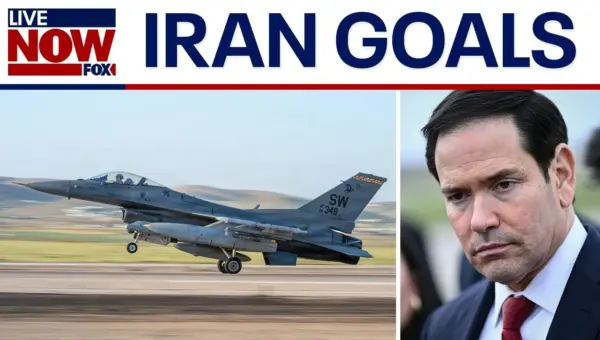
Rubio: US Can Achieve Iran War Goals Without Troops
Senator Marco Rubio outlined a strategy to counter Iran without deploying U.S. ground troops, focusing on weakening the regime and enhancing maritime security. He also criticized Cuba's economic system and expressed concerns about West Bank violence.