Iran War’s Ticking Clocks Dictate U.S. Strategy
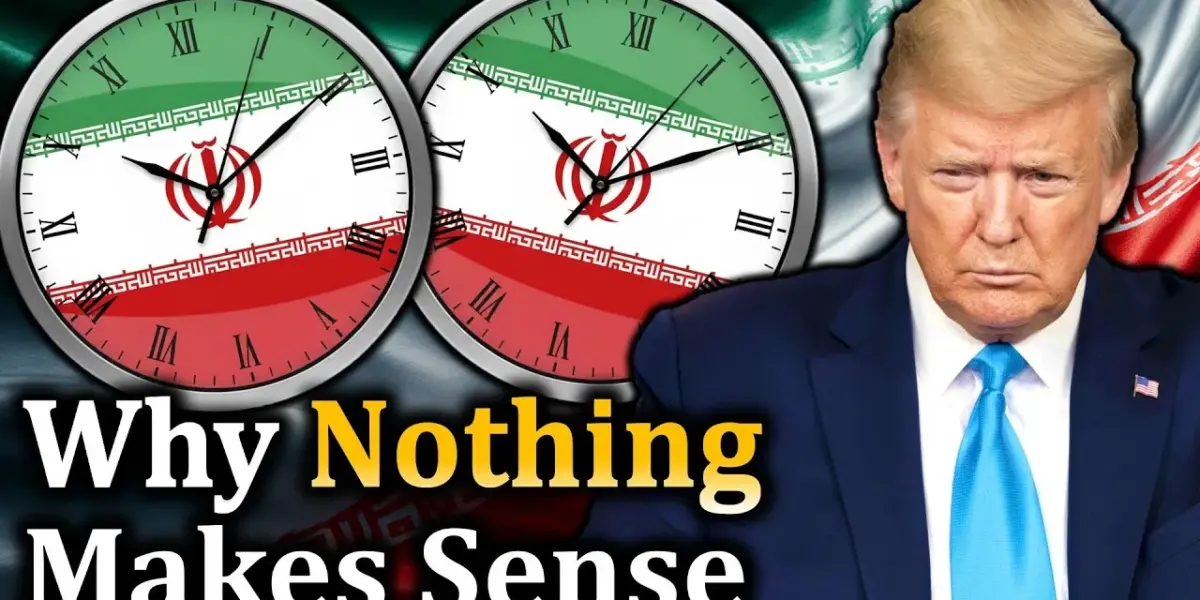
The Iran war's strategy is dictated by two critical "ticking clocks": the race to intervene amidst internal protests and the U.S.'s ability to sustain operations long-term. Understanding these temporal pressures reveals the complex trade-offs and challenges shaping the conflict.

Iran War’s Ticking Clocks Dictate U.S. Strategy
The current conflict in Iran, initiated by a U.S.-led intervention, is a complex tapestry woven with strategic calculations and unavoidable trade-offs. At its core, the war’s pace and the United States’ approach are dictated by two critical, interconnected “ticking clocks.” Understanding these temporal pressures is key to deciphering the puzzling aspects of the conflict and evaluating its initial justification.
The First Clock: The Race to Intervene
The initial phase of the war was heavily influenced by a race against time, driven by the need to support internal protests within Iran. In late 2025, the USS Gerald R. Ford Carrier Strike Group was repositioned from the Persian Gulf to the Caribbean for operations related to Venezuela. This geographical shift left the U.S. without immediate carrier support in the region. When significant protests erupted in Iran in January of the following year, the U.S. administration faced a dilemma: intervene immediately with limited assets or wait for repositioning and risk diminishing the protest movement’s momentum.
The decision to delay intervention until February 28th, despite the initial crackdowns, was a calculated response to these temporal constraints. Waiting too long posed significant risks. Firstly, the natural ebb and flow of protest movements meant that a prolonged delay could lead to a loss of coordination and public engagement, making subsequent mobilization difficult. Secondly, the longer the U.S. waited, the greater the risk of the Iranian government brutally suppressing dissent, thereby reducing the number of potential internal allies and creating a less favorable environment for intervention.
Conversely, an immediate intervention in January would have been strategically perilous. The U.S. lacked sufficient defensive capabilities, such as Patriot and THAAD missile systems, and patrol aircraft, to counter Iran’s ballistic missiles and drones, which remained in the region. Launching an attack under such conditions would have likely resulted in significant retaliatory strikes against U.S. bases and allied assets, potentially leading to an unmitigated disaster. Regional partners, aware of these vulnerabilities, had indeed lobbied for a delay.
The chosen delay, however, was also fraught with its own set of challenges. Waiting until September, for instance, would have rendered the protest movement largely irrelevant to the conflict’s dynamics. The imperative to maintain some level of internal pressure on the Iranian government, even if diminished, was a crucial factor in the timing of the intervention. The ongoing need for the government to allocate resources to suppress potential rebellion, a direct consequence of the lingering protest threat, is cited as a reason why the situation, while difficult, is not even worse for the U.S.
Strategic Trade-offs and Operational Realities
The intervention, when it finally occurred, was therefore an imperfect compromise, necessitated by the need to balance military readiness with support for the internal opposition. The repositioning of key assets, such as the USS Ford, which was diverted from routine maintenance, highlights the strain on U.S. naval capabilities. This diversion has had cascading effects, including the potential displacement of minesweepers at a time of heightened concern over the mining of the Strait of Hormuz, and the delayed deployment of THAAD systems from South Korea to the Persian Gulf.
The late-breaking news of strikes on Kharg Island, a critical hub for Iran’s oil operations, underscores the ongoing kinetic actions. While efforts were made to avoid directly targeting oil infrastructure, oil prices have nonetheless climbed, nearing $100 per barrel. The lack of robust ground-based air defense systems, similar to those employed by Ukraine, is another point of contention. The explanation for this deficiency is complex, involving broader geopolitical factors and the time required for implementation, but it further illustrates the difficult trade-offs inherent in the war’s planning.
The Second Clock: Sustaining Operations and Regime Change Ambitions
Beyond the immediate concerns of intervention timing, a second, more existential clock is ticking: the duration for which the United States can sustain its military operations given its own stockpiles. This clock is intrinsically linked to the longevity of the Iranian government itself.
While the Trump administration has been hesitant to explicitly state regime change as a goal, its success or failure is a clear metric by which the operation will ultimately be judged. However, early intelligence assessments suggest that the Iranian regime remains in control and is not facing an immediate existential threat. Leaked U.S. intelligence indicates a consistent analysis that the regime is not in danger and retains control of the public. Reports also suggest that Kurdish groups in the northwest, while present, lack the broad support to pose a significant threat.
This assessment raises questions about the effectiveness of U.S. strategy, particularly concerning the potential impact of perceived abandonment of Kurdish allies in Syria. The U.S. military’s focus on air defense, missiles, drones, and Strait of Hormuz security, rather than directly targeting Iranian security forces, might be a strategic choice, but it also means that the potential for internal destabilization through weakened security apparatus has not yet been fully realized.
The Supreme Leader Succession: A Wild Card?
A significant, albeit uncertain, factor in the second clock is the apparent absence of Iran’s new Supreme Leader. The lack of public appearances or even a video or audio statement, beyond a written speech, fuels speculation about his health. If the Supreme Leader is critically injured or incapacitated, it could lead to a succession crisis. Such internal instability could potentially destabilize the regime from within, creating an opening for the U.S. objectives.
The possibility that the Assembly of Experts and the IRGC knew of the Supreme Leader’s condition beforehand and appointed him as a stopgap measure to avoid publicizing internal uncertainty to both domestic and international audiences cannot be discounted. This scenario, if true, suggests a potential for internal political jockeying that could prove destabilizing.
However, until there are concrete indications of such internal unraveling, the focus remains on the second ticking clock: the depletion of U.S. stockpiles. The strain on Tomahawk missile stocks, for instance, is a tangible concern for military planners.
Why This Matters
The dual ticking clocks illuminate the intricate and often contradictory pressures shaping the Iran war. The first clock forced a compromise between timely intervention and military readiness, leading to an operation that is neither a swift decisive victory nor an immediate catastrophic failure. The second clock highlights the long-term sustainability of U.S. operations and the uncertain prospects of achieving broader strategic goals like regime change, contingent on internal Iranian dynamics.
The analysis presented challenges simplistic narratives often found in partisan debates. It suggests that U.S. military and intelligence leadership were likely aware of the strategic trade-offs, making the current situation a result of calculated, albeit imperfect, decision-making under pressure. The debate should therefore shift from whether the war was a good idea, to understanding the complex calculations that led to its initiation and the sustainability of its current trajectory.
Implications, Trends, and Future Outlook
The current approach, dictated by these ticking clocks, suggests a protracted conflict rather than a swift resolution. The U.S. faces the ongoing challenge of managing its own resource limitations while waiting for potential internal shifts within Iran. The effectiveness of the intervention will likely be judged not only on military achievements but also on its ability to foster conditions for internal change without incurring unsustainable costs.
The potential for a succession crisis within Iran adds a layer of unpredictability. If such a crisis materializes, it could significantly alter the conflict’s trajectory. Conversely, if the Iranian regime weathers internal dissent and external pressure, the U.S. will face the difficult question of resource depletion and the strategic value of a prolonged, costly engagement.
The historical context of U.S. interventions in the Middle East looms large. The lessons learned from previous protracted conflicts, characterized by shifting objectives and uncertain outcomes, are relevant here. The decision to intervene in Iran, therefore, must be continuously re-evaluated against the evolving realities on the ground and the sustainability of U.S. commitment.
Ultimately, the war in Iran serves as a stark reminder of the complexities of modern warfare, where temporal constraints, strategic calculations, and the internal dynamics of opposing nations converge to shape outcomes. The efficacy of the U.S. strategy will depend on its ability to adapt to these evolving pressures and to make difficult choices about the acceptable costs of achieving its objectives.
Source: Rush Job: The Iran War’s Two Ticking Clocks (YouTube)

Related Articles
Trump’s “Walk Away” Tactic Signals Tougher Stance on China
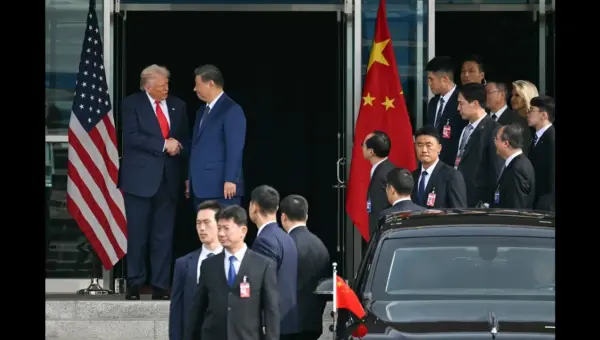
Retired Air Force Brigadier General David Stillwell believes President Trump's strategy of being willing to walk away from negotiations puts pressure on China. This tactic, combined with US global actions and strengthened alliances, signals a more assertive American foreign policy.

China Fights Back: Tariffs Loom Ahead of Trump Visit
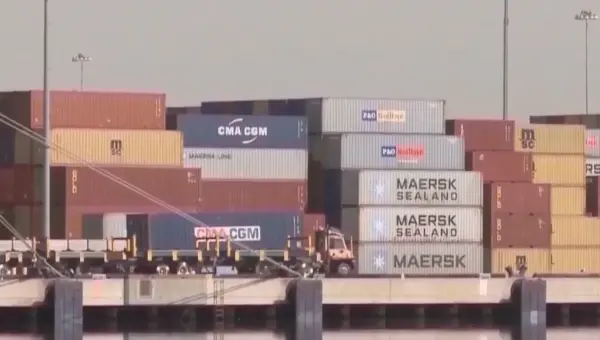
China is retaliating against US trade investigations that could lead to higher tariffs. This escalating trade tension occurs just before a planned visit by President Trump. The dispute involves accusations of unfair practices and impacts global supply chains.


Israelis Forge Resilience Amidst Constant Bomb Shelter Drills
Life in Israel is a blend of resilience and constant vigilance, with many families adapting to frequent bomb shelter drills and even sleeping in makeshift shelters. Despite ongoing missile attacks, Israelis strive to maintain normalcy, though businesses face disruption and emotional fatigue is a growing concern.