Iran’s Leader Gone: A Succession Crisis Ignites
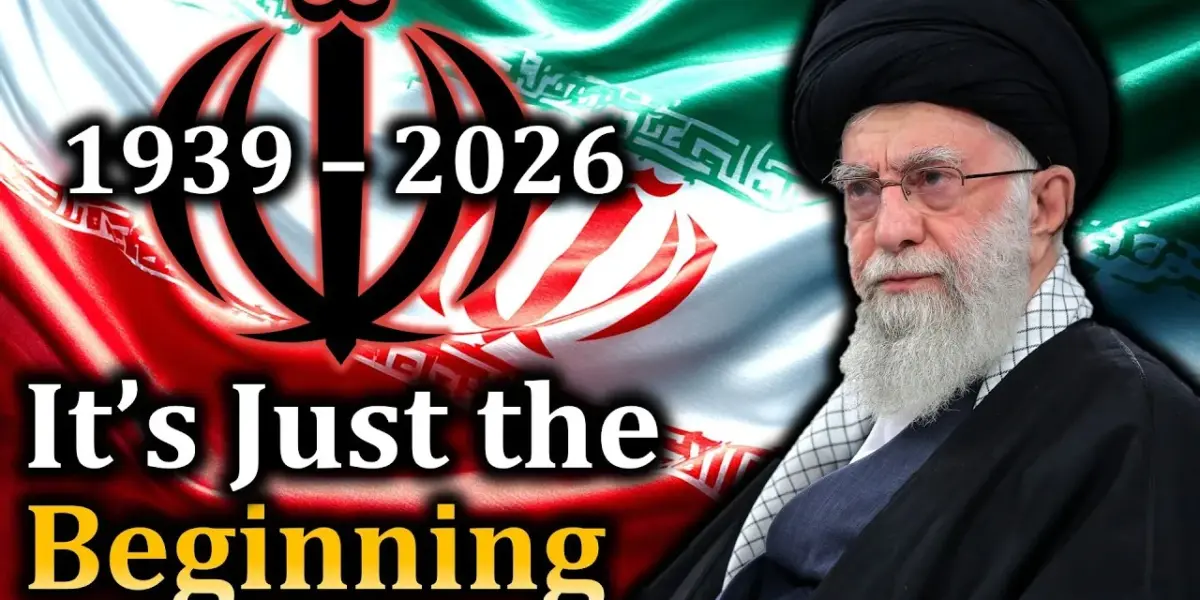
The targeted assassination of Iran's Ayatollah has triggered a profound succession crisis, marking day one of a more complex geopolitical struggle. This analysis delves into the strategic missteps that led to the event and explores the unpredictable future facing Iran.

Iran’s Leader Gone: A Succession Crisis Ignites
The swift and decisive elimination of Iran’s Ayatollah marks a pivotal moment, not an end, in the complex geopolitical landscape. While the speed of the operation itself is striking, particularly when contrasted with the prolonged evasions of figures like Saddam Hussein in Iraq or the ground-level pursuit of Muammar Gaddafi in Libya, it signals the dawn of a new, and potentially far more intricate, phase of regional conflict and political upheaval.
The Lightning Strike and its Unforeseen Timing
The operation, which concluded the Ayatollah’s life on February 28, 2026, defied typical military strategy. Historically, the United States has favored nighttime strikes to leverage technological advantages, limit enemy identification capabilities, and minimize civilian casualties. Operations like the special Maduro arrest in Venezuela or the bombing of Iran’s nuclear infrastructure were executed under the cover of darkness. The deviation from this norm suggests a compelling, immediate reason for action. The transcript points to a high-level meeting scheduled in Tehran that morning, combined with Iran’s refusal to halt its uranium enrichment program and fears of preemptive strikes against U.S. assets, as the catalysts for immediate action. U.S. intelligence identified the meeting, passed the information to Israel, and the Israeli Air Force launched an assault, reportedly targeting two buildings with 30 bombs. The confirmed casualties included not only the Ayatollah but also key figures such as the Minister of Defense, the commander of the Islamic Revolutionary Guard Corps, and the head of the Military Council.
Two Critical Missteps Leading to the Fall
The analysis identifies two primary strategic errors that contributed to the Ayatollah’s demise. The first, a proximate mistake, was the underestimation of the threat and the scheduling of a crucial, high-level meeting above ground. After surviving an assassination attempt in 1981, the Ayatollah, by some accounts, should have been more acutely aware of the risks. The decision to convene such a meeting, despite heightened regional tensions and the visible mobilization of military assets, suggests a misplaced confidence in operational security or an underestimation of the adversary’s resolve and intelligence reach. The transcript posits that foreign leaders must now operate under the assumption that their locations are not secret, given the remarkable capabilities of modern intelligence agencies.
The second, more underlying mistake, concerns Iran’s decades-long pursuit of a nuclear program. Contrary to some analyses that suggest the Ayatollah’s error was not accelerating this program, the argument presented is that the very pursuit was the fundamental miscalculation. The immense cost, estimated by one Iranian official at $2 trillion, could have been directed towards domestic infrastructure and social programs, potentially mitigating the widespread protests that preceded the current crisis. The transcript refutes the notion that the elimination of a leader or regime change would prompt a global surge in nuclear proliferation. It argues that nuclear weapons are prohibitively expensive, and the international repercussions, including sanctions and preventive actions, create significant opportunity costs that deter most nations.
The Looming Succession Crisis
The assassination has plunged Iran into a complex succession crisis, a challenge inherent in autocratic systems. Unlike democratic structures with clear lines of succession, such as the U.S. vice presidential role, Iran’s system lacks a designated heir. This ambiguity can foster instability, as potential successors may seek to hasten the current leader’s departure or face internal threats from rivals. Speculation had pointed towards the Ayatollah’s son as a potential successor, but his path is now significantly more uncertain without his father’s backing.
The process for selecting the Supreme Leader is managed by the Assembly of Experts, an ideologically driven body. The transcript draws a stark contrast with Venezuela, where a more pragmatic, albeit distorted, democratic system allowed for external influence to guide a compliant leader. In Iran, any future Supreme Leader attempting a pragmatic approach, similar to Venezuela’s Delcy Rodriguez, would likely face internal threats from the very establishment that appointed him. This creates a precarious situation, where the new leader could face assassination threats from external adversaries or from within his own power structure, a true no-win scenario.
Implications for Regional Stability and Global Markets
From a U.S. strategic perspective, the assassination is seen as a means to revolutionize the Iranian system, rather than co-opt a new leader. It serves a dual purpose: as a rallying cry for domestic protests, potentially reigniting the street demonstrations seen previously, and as a catalyst for the succession crisis. The ensuing internal power struggle is intended to weaken the government’s ability to resist popular uprisings.
However, this internal strife carries significant global economic implications. The potential for domestic unrest and the deterioration of Iran’s infrastructure, particularly its oil facilities, could lead to an oil shock and a subsequent rise in global energy prices, affecting consumers from the United States to China. For geopolitical observers, the disruption of Iran’s oil exports, especially to China, may be a more significant concern than the overall price of commodities.
Why This Matters
The assassination of Iran’s Ayatollah is not merely the removal of a leader; it is a calculated act designed to destabilize a nation and reshape its future. The event underscores the efficacy of targeted intelligence operations and the complex interplay of geopolitical strategy, internal politics, and international relations. The resulting power vacuum and the ensuing succession crisis present an unpredictable future for Iran, with potential ramifications for regional security and the global economy. The historical parallel to Iraq’s post-Saddam era serves as a potent reminder that while iconic moments of change can offer hope, the path forward is fraught with unforeseen challenges and possibilities, both positive and negative. The world watches to see if Iran can navigate this critical juncture towards stability or descend further into internal strife.
Future Outlook
The immediate future for Iran appears turbulent. The success of the U.S.-Israeli coalition in eliminating key leadership is a strong opening move, but the long-term outcome hinges on Iran’s internal dynamics. The succession process, whether informal jockeying for power or formal deliberations by the Assembly of Experts, will dictate the nation’s trajectory. A hardliner taking the helm could potentially consolidate power and prosecute a war with renewed vigor, while a protracted internal struggle could cripple the government’s capacity to act decisively. The potential for domestic upheaval and the impact on global energy markets remain significant concerns. The situation is fluid, and the possibility of a democratic transition, however distant, or a descent into prolonged instability, looms large.
Source: How Israel Assassinated the Ayatollah & Iran’s Upcoming Succession Crisis (YouTube)

Related Articles

G7 Allies Clash Over Iran War Strategy, Urge Focus on Russia
G7 foreign ministers met in Paris, revealing deep divisions over the U.S. war with Iran. European allies urged the U.S. to pressure Russia, linking its actions to the conflict and fearing support for Ukraine will wane.

Iran Blocks China Ships, Exposing Beijing’s Weak Grip
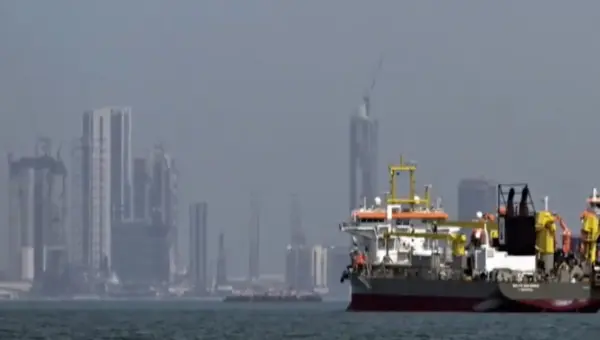
Iran's recent decision to block Chinese ships at the Strait of Hormuz is exposing the limits of Beijing's influence in the Middle East. This action is causing delays and cancellations for Chinese manufacturers, turning a perceived geopolitical win into an economic strain.
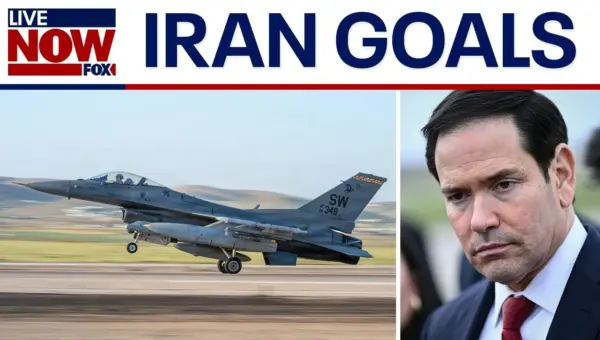
Rubio: US Can Achieve Iran War Goals Without Troops
Senator Marco Rubio outlined a strategy to counter Iran without deploying U.S. ground troops, focusing on weakening the regime and enhancing maritime security. He also criticized Cuba's economic system and expressed concerns about West Bank violence.