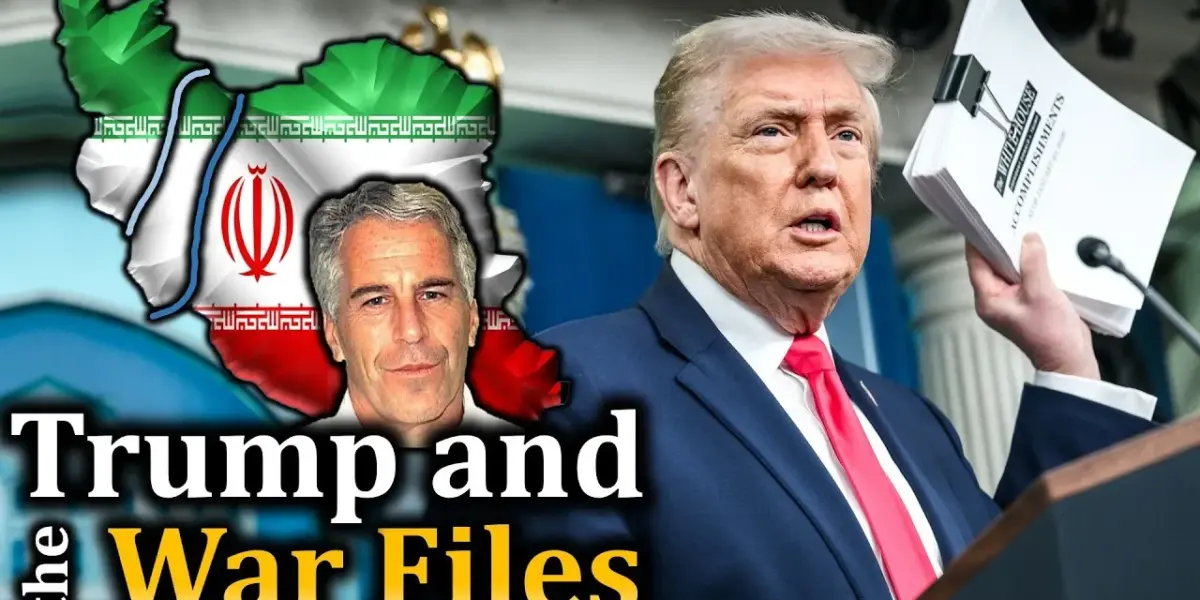
Epstein Files: The Real Reason for War with Iran
The popular theory that the Epstein files triggered a war with Iran as a distraction overlooks critical nuances. Insider skepticism about the files' true impact, paradoxically, creates incentives for conflict by fostering dangerous information asymmetries in international bargaining.

Epstein Files: The Real Reason for War with Iran
The persistent online narrative suggests a direct link between the release of the Epstein files and a potential military conflict with Iran, positing that the Trump administration initiated hostilities as a deliberate distraction. This theory, while compelling, overlooks crucial nuances in international relations and political strategy. The reality, as explored through the lens of crisis bargaining theory, is far more subtle and paradoxical: the prevailing insider skepticism about the Epstein files’ damaging potential actually creates incentives for conflict under certain conditions.
The Distraction Dilemma: Beyond the Surface Narrative
The core of the online speculation posits that the Epstein files contain politically damaging information about Donald Trump, necessitating a significant diversion to keep the public and media occupied. This line of reasoning, often amplified in social media comments and online discussions, suggests that an “air war” against Iran, or similar geopolitical maneuvers, serves as a convenient smokescreen. However, this perspective fails to account for the complexities of international bargaining and the internal calculations of political actors.
Two primary messages emerge when dissecting this claim:
- Political insiders, both domestically and internationally, largely do not believe the Epstein files will be as catastrophically damaging as popular online sentiment suggests.
- The very existence of this insider skepticism, contrary to intuition, can actually foster conditions conducive to war. If the widely perceived online threat were genuine, a conflict might be less likely.
Crisis Bargaining Theory: Understanding War’s Roots
To understand the dynamics at play, we can turn to crisis bargaining theory, a field that has been academically studied for decades. At its heart, this theory deals with how states negotiate under the shadow of potential conflict. Imagine a simplified territorial dispute: the United States wants to push a border as far east as possible, while Iran prefers it as far west as possible. If both sides can accurately predict the outcome of a war – including the costs incurred by each – a range of mutually acceptable settlements can emerge. These settlements typically fall within the predicted outcome of a war, offering a peaceful resolution that avoids the costs of actual combat.
The logic of peaceful settlement hinges on leaders internalizing the costs of war and not believing that fighting will create a private benefit.
This framework directly challenges the simplistic distraction narrative. While it’s plausible that Trump might seek a distraction from damaging information, the initiation of war isn’t a foregone conclusion, even if the leader perceives personal benefits outweighing the costs. The critical missing piece is the opponent’s willingness and ability to concede.
The Role of Private Benefits and Information Asymmetry
The argument that a leader might initiate war for private benefits, such as political distraction, is logically coherent but requires careful nuance. Even if a leader perceives personal gains from conflict that exceed the direct costs, war does not automatically ensue. This is because the opponent also incurs costs, and a bargaining range – a space for peaceful negotiation – typically still exists.
In the context of the Epstein files, the perceived private benefit for Trump would need to exceed not only his own costs but also Iran’s costs of war. Given that Iran is currently facing significant economic and social pressures, its costs of war are demonstrably high. Therefore, for the distraction motive alone to precipitate war, the private benefits would need to be extraordinarily large.
Insider Wisdom vs. Online Hype
The prevailing sentiment among political insiders in Washington and foreign capitals differs significantly from the online discourse. While there is ample discussion on Capitol Hill about the *political utility* of the Epstein files – how they can be used to score points against rivals – there is less conviction that they contain information that would lead to impeachment or arrest. This widespread skepticism is grounded in several observations:
- The Biden administration, which had access to the files for four years, did not release information damaging to its chief political rival.
- Similarly, Kamala Harris, as the presumptive 2024 candidate, saw no benefit in leveraging such information on her behalf.
- The notoriously leaky nature of Washington suggests that if truly impeachable or arrest-worthy information existed, it would have surfaced by now.
This leads to the conclusion that while the files might contain information Trump would prefer to keep private, it is unlikely to be a “game-over” scenario. Consequently, the distraction value of any potential conflict with Iran is likely not as substantial as online narratives suggest.
The True Bargaining Frictions: Information Asymmetry
If the distraction motive is less potent than believed, what then explains the conflict? The answer lies in information asymmetry. Trump, as the leader, possesses private information about the true contents of the Epstein files and his own private benefits from their non-disclosure. Iran, on the other hand, is left to guess the value of these private benefits and the expected outcome of a war.
This uncertainty creates a bargaining problem. Iran must decide on a settlement offer, knowing that its proposal is based on incomplete information about the US position. If Iran assumes the Epstein files are highly damaging (a belief aligned with online sentiment), it might make a more aggressive demand, maximizing its own potential gains in a peaceful settlement. However, if Trump’s private benefit is actually small, he would likely accept this offer, and no war would occur. The irony is that the very belief in devastating files could prevent war.
Conversely, if Iran assumes Trump’s private benefit from the files is minimal (aligning with insider wisdom), it might make a more conservative offer to ensure a peaceful resolution. But if Trump *does* have significant private benefits (i.e., he is genuinely worried about the files), he might reject this conservative offer, leading to war. In this scenario, Iran makes an unnecessary concession because it misjudged the situation.
The critical implication is that war becomes more likely when the opponent (Iran) believes the private benefit for the leader (Trump) is small, and this assessment is incorrect. The leader’s private information about the true extent of the damage creates the possibility of a bargaining failure.
Why This Matters
This analysis moves beyond simplistic explanations of political maneuvering and delves into the structural factors that can lead to international conflict. It highlights how misperceptions, driven by online narratives versus insider assessments, can create dangerous conditions for war. The belief that the Epstein files are a major threat to Trump, while popular online, might paradoxically make war *less* likely if Iran factored that into its bargaining strategy. Conversely, the more measured insider view, which suggests the files are damaging but not catastrophic, creates a scenario where Iran might miscalculate, potentially leading to conflict if it underestimates Trump’s private incentives to avoid their disclosure.
Implications, Trends, and Future Outlook
The scenario described underscores a broader trend in international relations: the impact of information asymmetry and private incentives on conflict. Asymmetric information, where one party has more knowledge than another, is a well-documented cause of bargaining failures and war. In the digital age, the rapid dissemination of information, both accurate and inaccurate, can exacerbate these issues. Online narratives, while reflecting public sentiment, may not align with the strategic calculus of state actors.
The future outlook suggests that understanding these subtle bargaining dynamics will become even more critical. Leaders are constantly weighing perceived private benefits against the costs of conflict, and their opponents are attempting to divine these calculations amidst a sea of information and misinformation. The ability of policymakers and analysts to distinguish between public perception and actual strategic incentives will be paramount in preventing unnecessary conflicts.
Historical Context
The concept of leaders using external conflicts to distract from domestic issues is not new. Throughout history, “diversionary war” has been a recognized, albeit often debated, phenomenon. Leaders facing domestic instability or unpopularity have sometimes initiated or escalated foreign conflicts to rally nationalistic support and shift public attention. However, the effectiveness and intentionality of such strategies are often complex and subject to interpretation. The Epstein files, in this context, represent a modern iteration of potential domestic vulnerabilities that could, theoretically, be leveraged or masked by international events.
The application of crisis bargaining theory, with its focus on rational actors, costs, benefits, and information, provides a more structured analytical framework than simply labeling an event as a “distraction.” It allows for a deeper understanding of *why* a particular situation might lead to war, even if the initial premise (the Epstein files) seems unrelated to the outcome (conflict with Iran).
Ultimately, while the notion of the Epstein files driving a war with Iran is a powerful narrative, a closer examination through the lens of international relations theory reveals a more complex interplay of insider skepticism, information asymmetry, and the inherent uncertainties of international bargaining. The war, if indeed linked, is likely a consequence of miscalculated risks and private incentives rather than a straightforward distraction tactic.
Source: The Epstein-Iran War Connection Is Way More Subtle Than It Seems (YouTube)

Related Articles

G7 Allies Clash Over Iran War Strategy, Urge Focus on Russia
G7 foreign ministers met in Paris, revealing deep divisions over the U.S. war with Iran. European allies urged the U.S. to pressure Russia, linking its actions to the conflict and fearing support for Ukraine will wane.


Iran Blocks China Ships, Exposing Beijing’s Weak Grip
Iran's recent decision to block Chinese ships at the Strait of Hormuz is exposing the limits of Beijing's influence in the Middle East. This action is causing delays and cancellations for Chinese manufacturers, turning a perceived geopolitical win into an economic strain.
Trump’s “Walk Away” Tactic Signals Tougher Stance on China
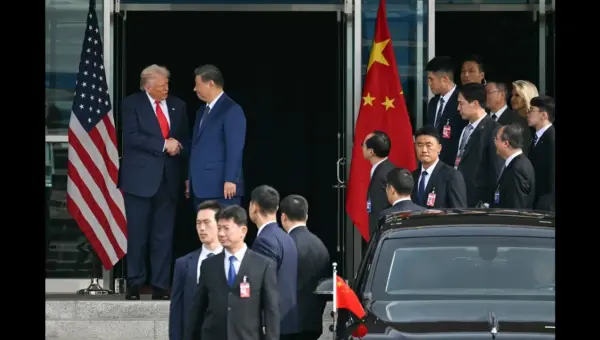
Retired Air Force Brigadier General David Stillwell believes President Trump's strategy of being willing to walk away from negotiations puts pressure on China. This tactic, combined with US global actions and strengthened alliances, signals a more assertive American foreign policy.