Epstein’s Shadowy Past: Arms Deals, CIA Ties, and Global Corruption
Newly unearthed evidence suggests Jeffrey Epstein's early career was deeply entangled with illegal arms deals and intelligence agencies, potentially explaining his rise and subsequent protection. The Al Yamamah arms deal and the Iran-Contra affair are central to this shadowy past.

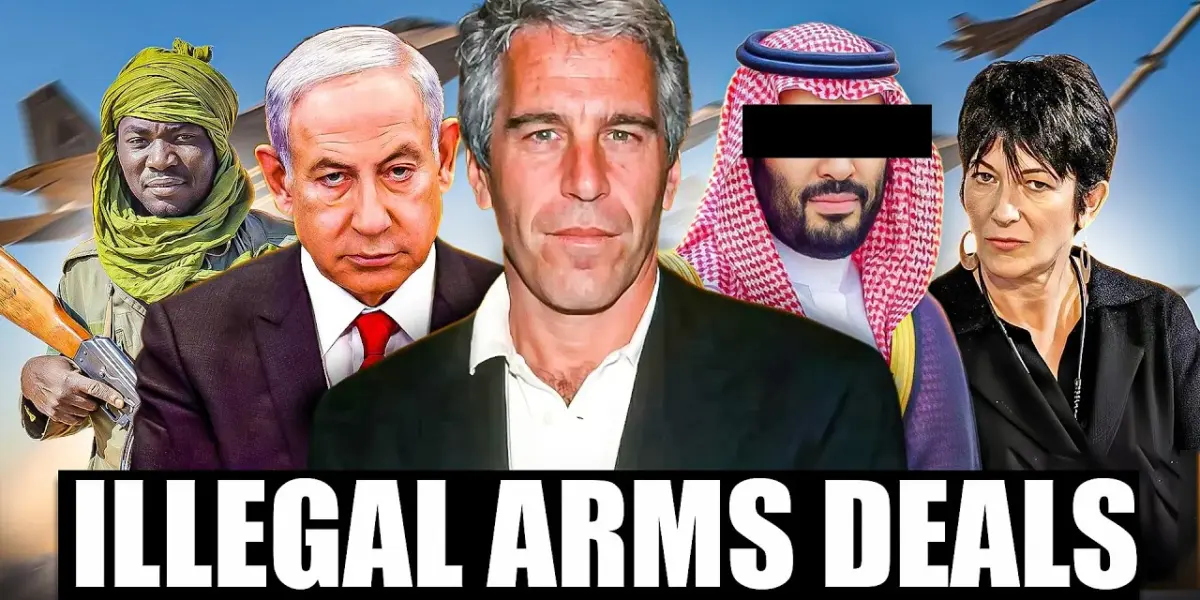
Epstein’s Shadowy Past: Arms Deals, CIA Ties, and Global Corruption
The name Jeffrey Epstein is now synonymous with horrific sex crimes and a sprawling network of powerful individuals complicit in his abuse. However, a closer examination of his early career suggests a far more complex and deeply troubling foundation for his rise to infamy: a history intertwined with illegal arms deals, intelligence agencies, and the shadowy world of global finance.
The Al Yamamah Arms Deal: A Crucible for Corruption
In the early 1980s, amidst the height of the Cold War, a then-unknown 30-year-old financier named Jeffrey Epstein found himself at the heart of one of the largest arms deals in British history: the Al Yamamah deal. This colossal agreement between Britain and Saudi Arabia involved the sale of nearly a hundred advanced Tornado fighter jets and thousands of missiles, worth an estimated $80 billion. Beyond the staggering financial implications, the deal promised to reshape the Middle East’s balance of power and create 100,000 jobs in the UK.
However, such massive international transactions, particularly in regions governed by royal families and princes, often involved significant bribery. As the transcript states, “One man’s corruption was another man’s way of doing business.” This is where Epstein allegedly entered the picture, working for Douglas Lee, a well-connected British defense contractor and arms dealer. Lee, widely believed to be an intelligence asset for MI6, reportedly mentored Epstein, teaching him the intricacies of creating shell companies, smuggling weapons, and moving vast sums of money into offshore accounts. Investigations later revealed over a billion dollars in hidden commissions, bribes, and kickbacks associated with the Al Yamamah deal, facilitated by complex offshore financial structures designed to obscure the money trail.
Evidence of Intelligence Connections
The transcript presents several pieces of evidence suggesting Epstein’s involvement was more than just financial facilitation. An FBI raid on his New York apartment in 2019 uncovered a fake Austrian passport from the early 1980s. The travel stamps on this passport align with the timeline of the Al Yamamah deal, indicating travel between Europe and Saudi Arabia. Intelligence analyst Thomas Hamson posits that obtaining and using such a passport would likely require “official government backing and cover,” suggesting the involvement of intelligence services.
Further fueling these suspicions is the alleged connection of Douglas Lee to intelligence agencies. Court filings described Lee’s activities as involving “highly sensitive and confidential information, some of which are believed to be classified by the Department of Defense.” The rationale for intelligence agencies potentially facilitating Epstein’s involvement in the arms deal is rooted in geopolitical strategy. MI6 and the CIA had a vested interest in ensuring the deal went through to contain Soviet influence, provide Saudi Arabia with air dominance over Iran, and stabilize global oil markets by keeping Saudi Arabia aligned with the Western bloc.
Broader Network and Iran-Contra
Epstein’s alleged involvement didn’t stop with Al Yamamah. Through Douglas Lee, Epstein was introduced to Adnan Khashoggi, a billionaire arms dealer at the center of the Al Yamamah deal. By 1987, Epstein reportedly became Khashoggi’s personal money manager. Khashoggi himself was a central figure in the Iran-Contra affair, a covert operation that involved shipping arms to Iran in violation of US law, with the proceeds diverted to fund Contra rebels in Nicaragua. Steven Hoffenberg, Epstein’s former business partner, alleged that Epstein was involved in the financial side of these weapons deals, helping Khashoggi move and hide commissions through shell companies and overseas accounts.
Adding another layer of complexity, Ari Ben-Menashi, a former Israeli intelligence officer, claimed Epstein was directly selling US weapon systems from Israel to Iran in separate covert arms deals. This period saw a dramatic rise in global black market arms sales, fueling proxy wars across continents. The transcript highlights that this illicit trade operated through a complex network of dealers, financiers, and fixers, often using shell companies and front organizations, all designed to provide global governments with plausible deniability. This environment demanded middlemen with loose morals and allegiances, a description that fittingly aligns with figures like Khashoggi, Lee, and Epstein.
The Safari Club and Financial Laundering
Khashoggi was also a principal foreign agent of the United States and a founder of the Safari Club, a covert alliance of intelligence services from various nations, including Iran, Egypt, Saudi Arabia, Morocco, France, the United States, and Israel. This club engaged in clandestine operations globally. The transcript notes that cartels, criminals, terrorists, and intelligence services alike utilized the Bank of Credit and Commerce International (BCCI) to launder illicit funds, a bank that operated in this shadowy world of arms deals and offshore accounts.
Epstein’s alleged expertise in this realm, coupled with his association with figures like John Stanley Pottenberg, a former Justice Department official who, under CIA direction, advised an Iranian banker on shipping embargoed arms to Iran, further solidifies the narrative of his deep entanglement. Pottenberg’s work on “tax avoidance strategies” with Epstein at the same time raises serious questions about the nature of their collaboration.
A Tool for Intelligence Agencies?
The transcript argues that Epstein demonstrated himself to be a “reliable asset who had no morals,” precisely the kind of individual sought by intelligence agencies. His alleged role in facilitating deals involving Chinese weapons to Iran, as suggested by Hoffenberg, and his ability to make millions in commissions while hiding the money, could explain the origins of his vast fortune. He is described as operating outside the law to enrich himself, gain power, and become untouchable.
The mid-1980s saw Epstein allegedly bragging about working for intelligence agencies and being untouchable. The distinction between an intelligence officer and an intelligence agent is crucial here; Epstein is characterized as an “asset” – someone providing value through information, access, or services. Such an asset, particularly one embedded in high society with connections to influential figures, could afford significant protection, potentially shielding him from scrutiny for his burgeoning criminal activities.
Honey Traps and Compromising Material
The narrative takes a darker turn with the mention of Ghislaine Maxwell, who became Epstein’s second-in-command after her father, Robert Maxwell, a man with suspected ties to Mossad, MI6, and the KGB, died. According to Ari Ben-Menashi, Epstein and Maxwell allegedly ran a honey trap operation for Mossad, using sexual entrapment to blackmail global elites. This tactic, known as “compromat” or compromising material, has a long history as an intelligence tool. The CIA’s Operation Midnight Climax, involving drugging men with prostitutes to develop blackmail tactics, is cited as a parallel example.
Multiple victims testified that Epstein recruited underage girls, instructed them to bring friends, and trafficked them to wealthy and powerful individuals, including politicians, royalty, and businessmen. The existence of records, photos, and personal details kept by Epstein is believed to have been used for control and intimidation, fitting the pattern of intelligence-driven blackmail operations.
The Light Sentence and Continued Intelligence Ties
The leniency of Epstein’s 2007 plea deal – just 18 months of work release for charges involving a minor – remains a glaring anomaly. The former US Attorney who prosecuted the case, Alex Acosta, was reportedly told that Epstein “belonged to intelligence and was above his pay grade.” Although Acosta later denied making this statement officially, the implication is that his prosecution was curtailed due to Epstein’s alleged intelligence connections. This echoes historical patterns of individuals tied to intelligence operations, like Whitey Bulger and Barry Seal, receiving protection from prosecution.
Even after his prosecution, Epstein’s ties to intelligence communities appear to have persisted. He reportedly became close friends with Ehud Barak, former Prime Minister of Israel and head of its military intelligence. A confidential human source to the FBI claimed Epstein was spying for Mossad, though the FBI did not independently verify this information. Furthermore, an email exchange with Sergey Bellov, Russia’s deputy minister of economic development and an FSB spy, shows Epstein seeking advice on dealing with a blackmailer, with Bellov providing a dossier and suggesting harsh treatment. Bellov also assisted Epstein with Russian visas and discussed his work in the Russian government.
A Legacy of Secrecy and Protection
In his later years, emboldened by his apparent ability to evade serious consequences, Epstein boasted about influencing foreign affairs, making fortunes from arms deals and diamonds, and possessing compromising information on powerful individuals. His death in a New York prison cell in 2019, officially ruled a suicide, remains a subject of intense speculation, particularly given the context of his alleged intelligence connections.
Crucially, Epstein’s lawyers, in their pursuit of information during the 2026 file release, requested records from the NSA and CIA regarding any potential affiliation. The CIA’s response – neither confirming nor denying the existence of records – is telling. It suggests that if such connections existed, they were, and likely remain, classified. The Epstein files, therefore, reveal not just the depravity of one man, but the existence of a hidden system that services illicit demands for weapons and intelligence, a system that appears to protect the powerful, regardless of their destructive actions.
Why This Matters
The allegations surrounding Jeffrey Epstein’s early career as a facilitator of illegal arms deals and a potential intelligence asset are profoundly disturbing. They suggest that his later horrific crimes may have been enabled, or at least overlooked, due to his perceived value to intelligence agencies. This raises critical questions about accountability, oversight, and the extent to which powerful individuals can operate above the law when deemed useful by state actors. The transcript implies a pattern where individuals with questionable morals and extensive networks become tools for geopolitical aims, potentially leading to a blind eye being turned towards their other transgressions. Understanding these connections is vital for comprehending the systemic nature of corruption and the mechanisms by which powerful individuals can evade justice, even when their actions cause immense harm.
Implications and Future Outlook
The information presented suggests a disturbing synergy between illicit global finance, the arms trade, and intelligence operations. Epstein’s alleged ability to navigate these intersecting worlds highlights the profound lack of transparency and accountability in international dealings. The use of shell companies, offshore accounts, and intermediaries, while facilitating legitimate business, also provides fertile ground for criminal enterprises and covert operations. The potential protection afforded to individuals like Epstein by intelligence agencies, even when they are involved in heinous crimes, erodes public trust and undermines the rule of law. Moving forward, greater transparency in financial transactions, stricter oversight of arms deals, and robust mechanisms for holding intelligence agencies accountable are crucial. The Epstein case, viewed through this lens, serves as a stark reminder of the hidden systems that can operate beneath the surface of global affairs, demanding continued scrutiny and reform.
Source: Jeffrey Epstein Smuggled Weapons for the CIA (YouTube)

Related Articles


Epstein Survivors Sue DOJ, Google Over Data Leak
Survivors of Jeffrey Epstein have filed a class-action lawsuit against the U.S. Justice Department and Google, alleging the improper release of private information. The suit claims that despite the DOJ's efforts to retract the data, survivors' personal details remain accessible online, causing renewed trauma and threats to their safety. This legal action seeks accountability and aims to prevent future data disclosures.


US Spy Agency Seeks Hollywood Influence
A U.S. intelligence officer reportedly offered producers inside information in exchange for specific narrative inclusions in their shows. This alleged quid pro quo, discussed in relation to the TV series 'Dark Skies,' suggests a new strategy for intelligence agencies to influence public perception through popular culture.

Polls Show Trump Losing Core Base: A Political Earthquake?
New polls reveal a sharp decline in Donald Trump's support among his core base of non-college white men. This, combined with strong Democratic performances in recent special elections, suggests a potential shift in the political landscape. Meanwhile, ongoing scrutiny of the Epstein case and accusations of government secrecy continue to fuel public demand for transparency.