US Strikes Iran: Geopolitical Chessboard Realigned
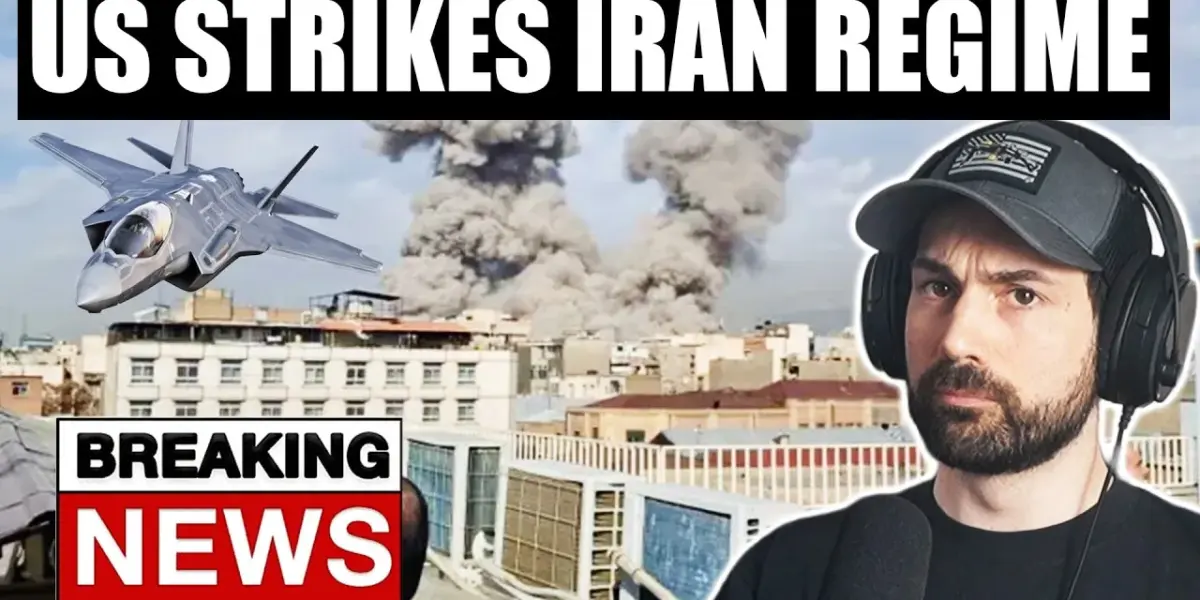
The United States has launched significant air and missile strikes against Iran, aiming for strategic destabilization to counter China's influence and deter aggression in the Pacific. The strikes target Iran's internal repression apparatus, with implications for regional power dynamics and global security.

US Strikes Iran: Geopolitical Chessboard Realigned
In a move that has sent ripples through the global geopolitical landscape, the United States, in coordination with Israel, has launched significant air and missile strikes against Iran. While the immediate triggers and justifications are complex, the underlying strategic objectives appear to be multifaceted, ranging from containing Iran’s nuclear ambitions to disrupting its regional influence and, crucially, recalibrating the global balance of power in favor of the United States, particularly in its strategic competition with China.
Destabilization as a Strategic Goal
A key insight emerging from the analysis of these strikes is the potential strategic aim of mere destabilization, rather than outright regime change. The argument posits that by sufficiently weakening or disrupting the Iranian regime, the United States can achieve significant strategic benefits without the burden of rebuilding a new government. Pragmatically, destabilizing Iran could severely curtail China’s access to vital, low-cost oil supplies. Given the perceived threat of a potential Chinese invasion of Taiwan in the coming years, this move could place China at a significant disadvantage, forcing it to rely on more expensive energy sources, such as those from Russia, thereby potentially deterring aggressive actions in the Pacific.
The Nuclear Question: Breakout Time Explained
The long-standing concern over Iran’s nuclear program remains a central element. The concept of “breakout time” is crucial to understanding this issue. While Iran has been reported to be weeks away from acquiring weapons-grade uranium for years, this refers to the time it would take to enrich uranium to 90% once the decision is made. Iran is currently enriching to 60%, meaning they are technically about three weeks away from reaching that 90% threshold. However, the further step of converting that enriched uranium into an actual nuclear weapon is estimated to take an additional three to six months. This distinction often leads to confusion and can make pronouncements about Iran’s proximity to a bomb sound like “crying wolf.” The current strikes, therefore, can be seen as an attempt to preemptively address this escalating threat, accepting the inherent risks involved.
Internal Dynamics and Popular Discontent
The narrative surrounding the strikes also highlights internal dissent within Iran. It is argued that a significant portion of the Iranian population remembers a time before the 1979 revolution, with a higher GDP and greater opportunities. Many are reportedly dissatisfied with the current clerical regime, evidenced by past protests where thousands were reportedly killed. The idea of “regime change” in this context is framed not as an imposition of democracy from the outside, but as a response to the desires of the Iranian people themselves. This perspective suggests a potential for internal support for external actions that weaken the ruling elite.
Targeting the Apparatus of Repression
A crucial aspect of the strike strategy appears to be the targeting of Iran’s internal security apparatus, particularly the Basij militia and the Thral headquarters. A detailed research paper, reportedly shared with U.S. policymakers and military planners, outlines specific locations crucial for toppling the regime. The Basij, a ground-level militia of 100,000 to 300,000 strong, and the Thral headquarters, described as the state apparatus responsible for systematically repressing dissent, are identified as key targets. These entities have been instrumental in quelling numerous protests, including those in 1999, 2009, 2017, 2019, and 2022. The strategy appears to involve decapitating these centers of repression to dismantle the regime’s ability to control its population.
The Role of Technology and Information Warfare
The conflict also involves a sophisticated information warfare component. The use of technology to surveil and control communications, reminiscent of Chinese methods, has been employed by the Iranian regime to suppress protests. Conversely, the U.S. has reportedly been smuggling Starlink terminals into Iran to maintain open communication channels, creating a battle over the control of information flow. This highlights the evolving nature of modern conflict, where cyber capabilities and information control are as critical as kinetic military action.
Broader Geopolitical Implications and the China Factor
The strikes are deeply embedded within a larger U.S. grand strategy aimed at deterring China. The United States’ primary objective, as articulated, is to prevent a war in Europe so that its focus can shift to the Pacific and countering China’s growing assertiveness. By “taking the Middle East off the board” through the destabilization of Iran and controlling energy flows in regions like Venezuela, the U.S. seeks to ensure it has the capacity to respond to a potential Chinese invasion of Taiwan. The argument is that the U.S. military has the capacity to effectively fight in only one major theater at a time. Therefore, neutralizing potential conflicts in the Middle East and Europe is seen as a prerequisite for addressing the primary challenge posed by China.
Historical Context and Potential Outcomes
Drawing parallels to past interventions, the current approach appears to differ from the post-invasion nation-building efforts in Iraq. The focus on air and missile strikes, with no immediate indication of ground troop deployment, suggests a strategy of “decapitation strikes” aimed at crippling the regime’s command structure. Potential outcomes range from the collapse of the government and ensuing civil war, similar to Libya, to a more controlled destabilization that serves U.S. strategic interests. The role of proxy forces, such as Iranian Kurdish resistance fighters, is also being considered as a potential element of a ground-level strategy, though this remains speculative.
Iran’s Response and Retaliation
Iran has vowed decisive retaliation, framing the strikes as a violation of the UN Charter. The nature and scale of Iran’s response will be a critical factor in the unfolding situation. The military operations are described as potentially multi-day events, requiring extensive targeting of missile bases and command structures. The possibility of Iran utilizing its enriched uranium in a dirty bomb scenario, while not explicitly stated as a primary concern in the transcript, remains an underlying risk in such a high-stakes confrontation.
Why This Matters
The current strikes against Iran represent a significant escalation with far-reaching consequences. They underscore a shift in U.S. foreign policy, prioritizing strategic competition with China and a willingness to employ more aggressive tactics to achieve geopolitical objectives. The potential destabilization of a major regional power carries inherent risks, including regional escalation, humanitarian concerns, and unforeseen blowback. The success of this strategy hinges on its ability to achieve its stated goals without triggering wider conflicts or creating power vacuums that could be exploited by other actors. The world is watching as the geopolitical chessboard is actively being rearranged, with Iran at the center of a critical juncture.
Future Outlook
The immediate future will likely involve continued military exchanges, heightened tensions, and a global scramble to assess the strategic ramifications. The effectiveness of the strikes in achieving their objectives, Iran’s capacity for retaliation, and the broader impact on regional stability and the U.S.-China dynamic will be crucial determinants of the long-term outcome. The narrative of “taking the Middle East off the board” suggests a determined effort by the U.S. to consolidate its strategic position, particularly in anticipation of future confrontations in the Pacific. Whether this bold strategy leads to a more stable global order or precipitates further chaos remains to be seen.
Source: US Launches Massive Air-Strikes to Topple Iran (YouTube)

Related Articles

US Forces Iran’s Hand in Strait of Hormuz Showdown
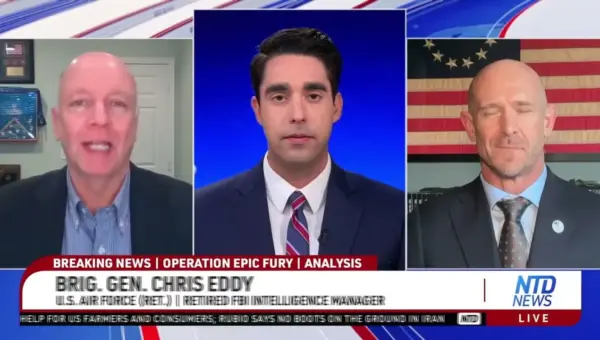
Iran's attempt to impose tolls on the Strait of Hormuz has sparked international concern and a strong U.S. response. Experts discuss the need for allied cooperation and sustained security operations to keep vital shipping lanes open. The situation highlights the complex geopolitical dynamics and the U.S. strategy of using force to back negotiations.
Iran Conflict: US Faces New Phase, Talks Stall Amidst Stalemate
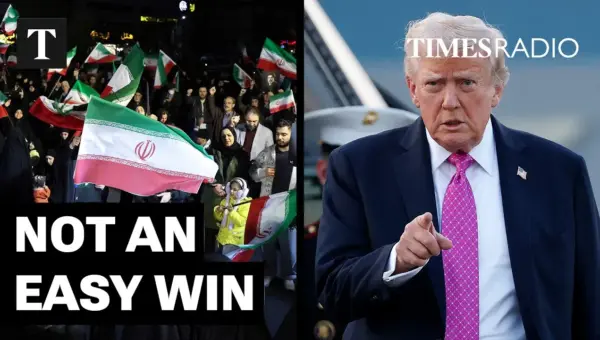
The U.S.-Iran conflict has entered a critical new phase focused on pressuring Iran's military infrastructure, with diplomatic talks showing little progress. Despite potential military gains for the U.S. and Israel, Iran may view the situation as a victory, potentially leading to increased regional aggression. The conflict also highlights global opportunity costs, impacting support for Ukraine and broader geopolitical strategies.


US Boosts Arctic Fleet: $8.6B Plan to Counter Russia, China
The U.S. is investing $8.6 billion to build 11 new polar icebreakers, aiming to counter Russia and China's growing Arctic presence. This initiative addresses the aging U.S. fleet and the increasing strategic importance of the Arctic as melting ice opens new trade routes.