Air Force Shatters Iran in 12 Minutes: A New Era?
Operation Epic Fury saw the US and Israel launch a swift, devastating offensive against Iran with the stated goal of regime change. The analysis explores the rapid strikes, Iran's retaliation, and the broader geopolitical implications of this bold, unconventional military action.

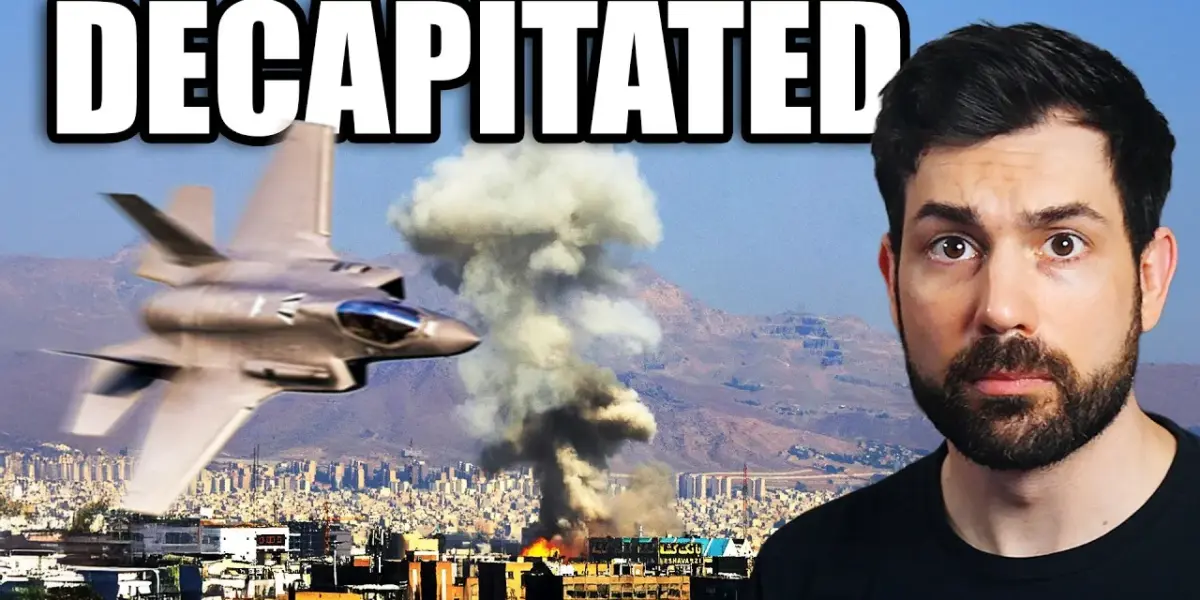
Air Force Shatters Iran in 12 Minutes: A New Era?
In a move that has sent shockwaves through the geopolitical landscape, the United States and Israel launched a swift and devastating offensive against Iran on February 28th, 2026. Dubbed ‘Operation Epic Fury,’ the coordinated strike reportedly targeted over a thousand sites in its opening wave, with the stated objective of regime change. This analysis delves into the execution of this audacious operation, Iran’s subsequent retaliation, and its broader implications for global strategy.
The Lightning Offensive: Operation Epic Fury
The attack commenced at 9:00 a.m. local time in Iran, initiating a high-stakes race against time. The core strategy revolved around the rapid dismantling of Iran’s ballistic missile capabilities before the regime could retaliate with its own missile storm. The choice to strike in broad daylight, a seemingly counterintuitive move, was apparently a calculated decision to maximize the effectiveness of air power against a concentrated population and leadership center.
The Iranian capital, Tehran, bore the brunt of the initial assault. Eyewitness accounts described scenes of chaos as massive explosions rocked the city, a critical hub for both population density and the regime’s command structure. The visual evidence emerging from the city painted a stark picture of the scale of destruction.
Simultaneously, a striking phenomenon occurred across the region: the airspace over Iran and large swathes of the Middle East effectively went dark. Commercial air traffic vanished, creating visible gaps in global flight patterns – a stark reminder of the interconnectedness of current global conflicts.
Precision Strikes and Naval Degradation
The offensive involved a massive deployment of air and naval assets. US forces reportedly conducted nearly 900 strikes in the first 12 hours alone. Footage revealed Tomahawk cruise missiles flying at extremely low altitudes, employing ‘nap-of-the-earth’ tactics to evade Iranian radar and missile defenses. The launch of 21 such missiles in close proximity highlighted the sheer scale and coordination of the operation.
F-35 and F/A-18E Super Hornets launched from US aircraft carriers targeted key Iranian assets, including drone platforms and ballistic missile launch sites. Notably, naval facilities near Chabahar, which were left untouched in previous strikes, were also hit. Satellite imagery depicted the aftermath, with a burning Iranian frigate at the moorings, marking the first confirmed loss of an Iranian warship since the 1980s.
The deployment leading up to the attack was significant, though the focus was clearly on air power rather than a ground campaign. The stated American objective was to annihilate Iranian naval forces, a move reminiscent of past operations but with a renewed intensity.
A Bold Declaration: Regime Change as Overt Goal
Perhaps the most surprising element of Operation Epic Fury was President Trump’s explicit declaration of regime change as the overt goal during an 8-minute address to the nation. This transparency, while strategically unconventional and potentially risky if objectives are not met, was interpreted by some as a move to assure the Iranian populace that the US would support any internal revolt with air power.
This strategy, however, is not without its skeptics. Drawing parallels to past regime change operations in the Middle East, the long-term efficacy and potential for unforeseen consequences remain points of concern.
Iran’s Retaliation and the ‘Doomsday Plan’
In response, Iran launched dozens of ballistic missiles across the region. Targets included Bahrain, Iraq, Israel, Kuwait, Saudi Arabia, Qatar, and the UAE, with 14 American bases also reportedly hit. The missile launches appeared to intensify as darkness fell over the Middle East, suggesting a strategy to leverage nighttime for operational cover.
US Patriot missile systems were deployed to intercept the incoming threats, with evidence showing multiple salvos. Despite these efforts, some Iranian drones and missiles reportedly penetrated air defenses, hitting targets such as a radar station in Bahrain and a clinic at Al Udeid air base in Qatar. The incident underscored that while air defense can mitigate, it cannot completely neutralize such attacks.
Intelligence suggested Iran may have been operating under a ‘doomsday plan,’ designed to unleash its entire missile arsenal in the event of a decapitation strike. However, prior strikes on Iranian missile sites and warehouses reportedly depleted their inventory and launchers, potentially limiting the scale of their retaliation.
The Geopolitical Chessboard: Weakening Adversaries
Operation Epic Fury is viewed by some analysts as part of a broader American grand strategy aimed at weakening adversaries like Russia and China. The pressure on Iran, a key ally of Russia and a significant oil supplier to China, is seen as a move to disrupt their economic and strategic positions.
The simultaneous US-Mexico operation against a major cartel leader is also seen as linked to this strategy. By securing North American supply chains and reducing reliance on China, the US aims to build resilience against potential conflicts in the Pacific or elsewhere.
However, this strategy is not without its risks. Critics argue that higher oil prices resulting from such actions could inadvertently benefit Russia and strain relationships with European and Asian allies.
The Future Outlook: Uncertainty and Shifting Alliances
The immediate aftermath of Operation Epic Fury has seen reports of significant damage to Iran’s military infrastructure and leadership. The confirmed death of Supreme Leader Ali Khamenei, architect of the October 7th plan according to Israeli Prime Minister Netanyahu, marks a pivotal moment. The CIA reportedly assessed that this could lead to IRGC hardliners taking control, potentially altering Iran’s approach to its nuclear program and regional relations.
Alternative leadership scenarios include the potential return of Reza Pahlavi, the son of the former Shah, who has called for the Iranian people to reclaim their nation. The targeting of IRGC security forces suggests an effort to empower internal dissent and provide an opportunity for popular uprising.
The legality of President Trump’s unilateral decision to launch the attack is also a subject of debate, with some arguing it violated constitutional bounds. However, the prior designation of the IRGC as a terrorist organization provides a counterargument for the authorization of strikes.
Operation Epic Fury represents a bold and potentially transformative shift in American foreign policy. Whether it ushers in an era of decisive geopolitical realignment or triggers unforeseen blowback remains to be seen. The coming months will be crucial in assessing the long-term impact of this lightning offensive on Iran and the global order.
Why This Matters
This operation signifies a dramatic escalation in geopolitical conflict and a potential pivot in US foreign policy towards more assertive, regime-change-oriented strategies. The speed and scale of the attack, coupled with the overt declaration of its objectives, challenge traditional diplomatic norms. The implications are far-reaching, potentially reshaping alliances, energy markets, and the balance of power in critical regions. Understanding the strategic calculus, the potential for unintended consequences, and the shifting dynamics of international relations is paramount in navigating this new and uncertain geopolitical landscape.
Source: How the Air Force Toppled Iran in 12 minutes Flat (YouTube)

Related Articles
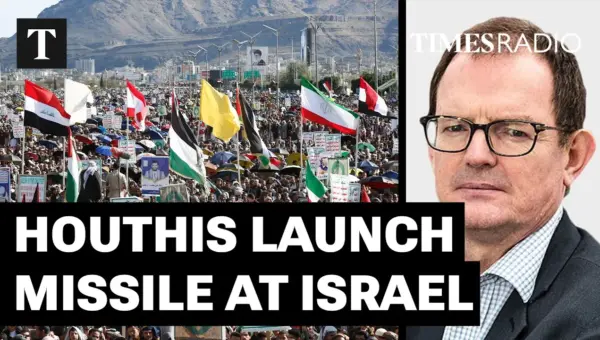
Houthis Fire Missile at Israel, Iran’s Guard Takes Center Stage
Yemen's Houthi group has fired a missile at Israel, signaling a potential escalation of the regional conflict. Meanwhile, Iran's powerful Islamic Revolutionary Guard Corps (IRGC) appears to be consolidating its control over the country's leadership following reported strikes. This shift places hardline figures at the forefront of decision-making.


Stocks Ignore War Risks, Focus on “Taco Moments”
Stock markets appear to be overlooking the severe supply chain risks stemming from the Iran conflict, focusing instead on potential diplomatic de-escalations. While the S&P 500 shows resilience, bond and commodity markets signal deep concern over disruptions to critical resources like LNG, helium, and fertilizers.

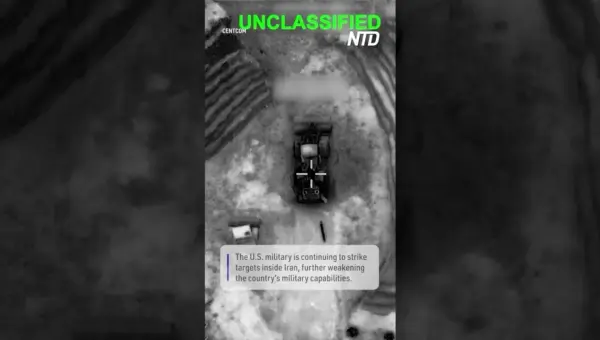
US Strikes Cripple Iran’s Military Might, CENTCOM Reports
U.S. Central Command reports ongoing strikes inside Iran are significantly weakening its military power. This direct action aims to reshape regional security dynamics, but carries risks of escalation. The long-term impact depends on Iran's response and ability to adapt.