OpenAI CEO’s Utility Analogy Sparks AI Backlash
OpenAI CEO Sam Altman's analogy of AI as a metered utility like electricity has triggered widespread public backlash. Critics argue the comparison ignores AI's lack of regulation, its contribution to rising energy costs, and the potential for corporate monopolization of intelligence.

OpenAI CEO’s Utility Analogy Sparks AI Backlash
Sam Altman, the CEO of OpenAI, recently ignited a firestorm of online criticism with remarks comparing artificial intelligence to essential utilities like electricity and water, suggesting people would eventually ‘buy it from us on a meter.’ The comments, made in a widely circulated interview, have drawn sharp rebukes from a public increasingly wary of AI’s societal and economic implications.
The Controversial Statement
In the interview, Altman elaborated on OpenAI’s business model, stating, ‘Fundamentally, our business and I think the business of every other model provider is going to look like selling tokens… We see a future where intelligence is a utility like electricity or water and people buy it from us on a meter and use it for whatever they want to use it for.’ He further argued that this approach would prevent intelligence from becoming prohibitively expensive or subject to potentially detrimental government central planning regarding compute resource allocation.
Public Outrage and Key Criticisms
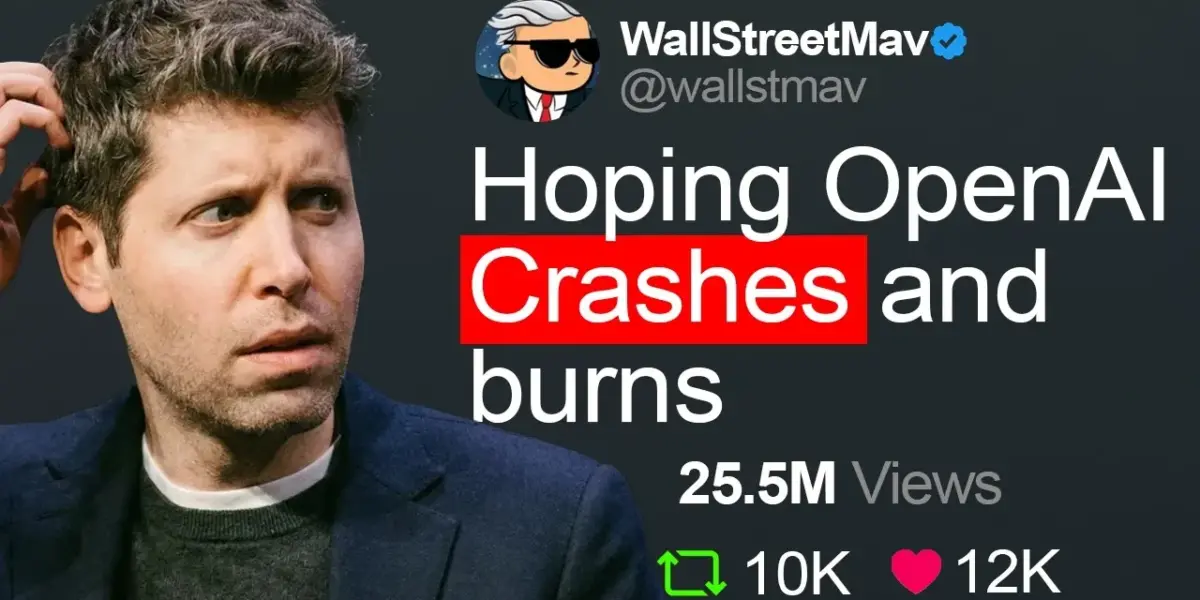
The reaction on social media platforms, particularly Twitter (now X), was swift and overwhelmingly negative. Viral posts highlighted sentiments such as, ‘We stole all your knowledge and art and we’re now going to put it on a meter and sell it back to you. You’re welcome,’ and ‘A proper society would have thrown this guy in a pit full of spikes 3 years ago.’ Many interpreted Altman’s remarks as a declaration of intent to monopolize a fundamental aspect of future human progress and commodify it for private profit, drawing parallels to concerns about corporate control over essential resources.
Several key criticisms emerged from the backlash:
- Monopoly Concerns: Unlike public utilities such as electricity and water, which are often heavily regulated, government-owned, or subsidized with universal access rules and price caps, AI is envisioned by Altman as a privately controlled commodity. Critics argue that a private company controlling access to intelligence, a fundamental necessity, creates a dangerous power imbalance and echoes historical antitrust concerns.
- Rising Energy Costs: A significant point of contention is the substantial energy consumption of AI data centers, which are already contributing to rising electricity prices. Reports indicate that data centers accounted for a significant portion of electricity demand growth, with prices in some areas near data centers increasing dramatically. Critics found it tone-deaf for Altman to suggest AI as a utility when the infrastructure powering it is already driving up costs for consumers.
- Nature of AI vs. Utilities: A core argument against the analogy is that AI is not a true commodity like electricity. While a kilowatt of electricity from any source functions the same, AI models differ significantly in their capabilities, outputs, and underlying values, which are shaped by their developers. OpenAI, like other providers, can alter model behavior, change prices, or restrict access at will, without the standardization or regulatory oversight present in traditional utilities.
- Public Perception of AI: Broader anxieties about AI’s impact on employment and society are fueling the negative reaction. Polling data suggests a significant portion of the public views AI negatively, with favorability ratings lower than those for established political figures or controversial topics. The growth of anti-AI online communities further illustrates this sentiment.
Why This Matters
Altman’s remarks, regardless of his intended meaning, tap into deep-seated public anxieties about the rapid advancement of AI. The comparison to utilities, while perhaps intended to convey accessibility and abundance, inadvertently highlighted fears of corporate control over a transformative technology. The backlash underscores a growing disconnect between AI developers and the general public, who are concerned about job displacement, ethical implications, and the concentration of power in the hands of a few tech giants.
The situation is further complicated by existing negative sentiment towards AI and, for some, towards Altman himself, whose leadership has faced scrutiny. The perception of AI as a technology that could lead to mass unemployment and increased living costs creates fertile ground for such comments to be interpreted in the most dystopian light. As one commentator noted, the public is increasingly viewing AI through the lens of its potential to disrupt livelihoods and exacerbate existing societal problems, making pronouncements about its commodification particularly sensitive.
Context and Nuance
While the immediate reaction focused on the perceived arrogance and dystopian vision, some analyses suggest the clip may have been taken out of context. In wider discussions, Altman has spoken about the need for AI to be affordable and accessible, drawing parallels to the internet’s transformative impact. However, the specific framing of AI as a metered utility, coupled with the current climate of AI skepticism, proved to be a significant misstep in public relations.
The debate also touches upon the strategic messaging around AI. There’s a recognized need within the tech industry to counter negative narratives, particularly concerns about job losses and energy consumption. However, the approach taken in this instance appears to have backfired, reinforcing rather than alleviating public fears. The challenge for companies like OpenAI lies in communicating the benefits and accessibility of AI without appearing to disregard the profound societal changes and potential downsides that accompany its development.
Ultimately, Altman’s comments serve as a stark reminder of the delicate balance required in communicating the future of AI. As the technology becomes more integrated into daily life, the way its leaders frame its development, accessibility, and societal role will be critical in shaping public trust and acceptance.
Source: Sam Altman Just Triggered A Massive AI Backlash — Was He Wrong? (YouTube)

Related Articles


AI Threatens White-Collar Jobs, Reshaping U.S. Workforce
Artificial intelligence is poised to significantly reshape the U.S. job market, raising concerns among recent graduates and experienced professionals about future employment. While some lawmakers call for regulation, experts emphasize adaptation and learning to work with AI.

AI’s Dual Future: Hope and Hazard for Humanity
Artificial intelligence presents humanity with both immense potential and significant risks. 'The AI Doc' explores this dual nature, highlighting AI's ability to solve global problems while warning of dangers like job loss and existential threats. The film aims to spark crucial conversations about shaping AI's future to align with human values.


NJ Teacher Uses AI Chatbot to Boost Student Writing Scores
A New Jersey teacher has developed an AI chatbot to help students improve their writing skills, leading to a 22% increase in pass rates. The tool provides instant feedback and targeted guidance, acting as a valuable supplement to traditional instruction. The teacher emphasizes that AI is a tool to assist educators, not replace the crucial human element in teaching.