Oil Surges, Stocks Dip: Market Reacts to Inflation Fears
Oil prices surged to around $100 a barrel this week, while stock markets experienced widespread declines. Rising inflation, exacerbated by high energy costs, complicates the Federal Reserve's policy outlook, with no immediate interest rate cuts expected. The AI investment landscape is also becoming more selective, with investors scrutinizing company strategies.


Market Volatility: Oil Prices Climb as Stocks Decline
In a week marked by significant market fluctuations, investors witnessed a stark divergence between oil prices and stock market performance. West Texas Intermediate crude oil surged, ending the week around the $100 per barrel mark, while the S&P 500 closed lower, experiencing widespread selling. This inverse relationship, with oil up and stocks down, became the dominant narrative driving market movements.
Inflationary Pressures and the Federal Reserve’s Stance
The rising cost of oil is exacerbating existing inflationary pressures, a key concern for the Federal Reserve. Analysts noted that the latest inflation data, coming in at 3.1% for the Fed’s preferred gauge, was unfavorable, particularly with oil prices continuing to climb. This complicates the Fed’s efforts to reach its long-standing 2% inflation target, a goal that has remained elusive for five years.
Adding to the complexity, the Federal Reserve is not expected to offer a reprieve through interest rate cuts in the near future. With a meeting on the horizon, rates are anticipated to remain steady, a move that has been well-telegraphed and is unlikely to significantly shift market sentiment. Historically, the Fed has often intervened to stabilize markets during downturns, but this time, the narrative suggests the central bank will not be riding to the rescue, potentially prolonging market uncertainty.
The AI Trade: Shifting Dynamics and Evolving Investor Sentiment
The artificial intelligence (AI) sector, which had previously shown promise as a market driver, is now exhibiting more nuanced performance, leading to a clearer distinction between winners and losers. While some companies, like Oracle, have successfully leveraged discussions around AI to highlight its potential as a disruptive business force, others have seen their stock prices decline following earnings reports. This suggests that investors are becoming more discerning about AI-related investments, moving beyond broad enthusiasm to scrutinize specific applications and company strategies.
“The market is starting to shift a little bit,” noted one market observer, indicating a growing understanding of the AI trade’s complexities. The initial broad-based optimism around AI is giving way to a more selective approach, with companies demonstrating tangible benefits and clear integration strategies likely to outperform.
Geopolitical Tensions and Defense Stock Performance
Geopolitical developments, particularly the escalating conflict in Iran, have also played a role in shaping market dynamics. The U.S. has increased its involvement in the region, leading to a noticeable uptick in defense stocks. Companies like L3 Harris, which derive a significant portion of their business from manufacturing and selling missiles to government entities, have seen positive returns earlier in the year and continue to perform well, despite some expected pullbacks.
The conflict in Iran underscores a broader trend of increasing military spending, highlighting secular, long-term growth opportunities in the defense sector. While short-term pullbacks may occur, the underlying geopolitical climate suggests sustained investor interest in these companies.
Safe Havens and Consumer Concerns
In contrast to the volatility in equities and oil, traditional safe-haven assets like Treasury markets have seen increased activity, with yields rising over 30 basis points in recent weeks. This suggests a cautious investor sentiment, with a move towards assets perceived as less risky amidst broader market uncertainty.
The surge in oil prices also presents a direct consumer concern. The visible increase in gasoline prices at the pump acts as a psychological barrier and a tangible impact on household budgets, further contributing to the inflationary narrative and influencing broader economic sentiment.
Looking Ahead: Key Factors to Monitor
Moving forward, investors will be closely watching the Federal Reserve’s next moves, the trajectory of oil prices, and the ongoing developments in the AI sector. The interplay between inflation, geopolitical stability, and corporate earnings will be critical in determining market direction in the coming weeks and months. The market’s sensitivity to these interconnected factors suggests continued volatility and a need for strategic adaptation by investors.
Source: The movement in the stock market is oil UP, stocks DOWN: Josh Schafer (YouTube)

Related Articles
Iran Missile Strikes Injure US Troops, Raise War Concerns
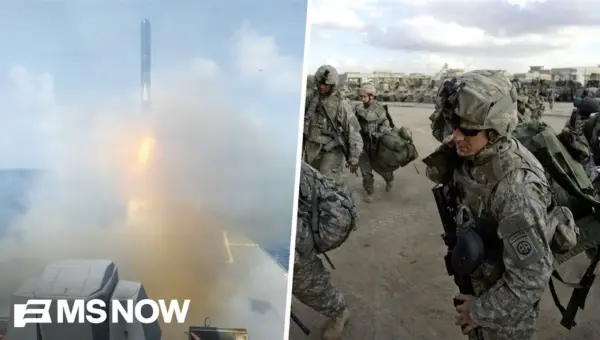
Iranian missile strikes have injured U.S. service members, escalating tensions as the conflict nears one month. The attacks are raising concerns about the effectiveness of U.S. military strategy and the depletion of crucial missile stockpiles. Global oil prices have surged, impacting economies worldwide.


Strait of Hormuz Blockade: Insurance Costs Soar, Ships Stuck
The Strait of Hormuz remains largely blocked despite Iran's claims of openness, with soaring insurance costs acting as a major deterrent for ships. Skyrocketing premiums, from less than 1% to potentially 7.5% of a vessel's value, make transit financially unviable for many. This situation impacts global oil prices and the broader economy, highlighting the complex interplay of geopolitical tensions, insurance markets, and international trade.


Tiger Woods Arrested for DUI After Crash
Golf legend Tiger Woods was arrested for DUI in Florida following a dramatic rollover crash. Meanwhile, a government shutdown continues as House Republicans block a Senate deal, leading to airport chaos and TSA worker pay issues. The stock market also plummeted into correction territory amid fears of a prolonged Iran conflict.