AI Predicts Iran Strikes, JFK’s Fate: Future Fears Realized
From AI's chillingly accurate prediction of Iran strikes to Gene Dixon's foresight of JFK's assassination, this article delves into real-life premonitions that proved terrifyingly true. Explore Mark Bolan's fatal wish, Alec Guinness's warning to James Dean, and Marshall McLuhan's prophecy of the internet age, alongside Arnold Schoenberg's superstitious demise.


AI’s Eerie Iran Strike Prediction Stuns World
In a chilling convergence of technology and geopolitics, artificial intelligence has seemingly peered into the future, with one AI model delivering a prediction of military action against Iran that proved disturbingly accurate. The event, which unfolded in February 2026, saw explosions rock multiple cities across Iran, including its capital, Tehran. Videos captured smoke billowing over the city, painting a stark picture of escalating tensions.
The incident began as a stress test conducted by The Jerusalem Post. Major AI models, including Claude, Gemini, ChatGPT, and XAI’s Grok, were prompted to forecast a date for potential military action against Iran, leveraging open-source intelligence. While most models offered broad windows of risk, Grok’s specific projection of February 28th aligned with the precise timing of US and Israeli strikes.
Tech experts have clarified that this was an exercise in probabilistic reasoning, not genuine clairvoyance. However, the viral impact and the unsettling accuracy of the prediction could not be denied. The terrifying aspect wasn’t just the precision, but the realization of how effectively algorithms can now synthesize global tensions into a seemingly concrete countdown. It raises profound questions about the intersection of advanced technology and geopolitical instability, blurring the lines between science fiction and reality.
Gene Dixon: The Psychic Who Saw JFK’s Assassination
The annals of premonition are filled with tales of uncanny foresight, and few are as haunting as that of psychic Gene Dixon. In a 1956 issue of Parade magazine, Dixon, then relatively unknown, made a startling prediction: a Democrat would be elected president in 1960 and would meet a tragic end, either dying or being assassinated while in office.
While Dixon’s career was dotted with numerous predictions, many of which did not materialize, this specific prophecy resonated with chilling accuracy. John F. Kennedy, a Democrat, won the 1960 election, defeating Richard Nixon. Tragically, he was assassinated in 1963, fulfilling Dixon’s grim foretelling.
The accuracy of this prediction propelled Dixon to stardom, making her one of the most famous psychics in the country. She gained a devoted following, with many seeking her interpretations of events and horoscopes. The JFK prediction remains a landmark moment in the history of psychic phenomena, forever linking Dixon’s name to one of America’s most profound tragedies.
Mark Bolan’s Fatal Wish: A Car Crash Like James Dean
The rock and roll world lost a legend in Mark Bolan, the charismatic frontman of the 1970s British band T. Rex. Bolan, known for his flamboyant style and catchy tunes, harbored a peculiar premonition about his own demise: he often predicted he would die before the age of 30, and specifically, in a car crash, much like his idol, James Dean.
His desire was to emulate Dean’s fatal accident, but with a twist fitting his smaller stature: he mused he’d die in a Mini Cooper. Sadly, this dark wish came to pass with horrifying precision. In September 1977, just two weeks before his 30th birthday, Bolan was a passenger in a Mini driven by his partner, Gloria Jones. Traveling home late at night, Jones lost control of the vehicle, which veered off the road and crashed into a tree, killing Bolan instantly. He was 29.
Adding another layer of eerie coincidence, T. Rex’s 1972 song, “Solid Gold, Easy Action,” contained the lyric, “Easy as picking foxes from a tree.” The Mini Cooper’s license plate number was FOX661L, a detail that further cemented the unsettling nature of his death.
Alec Guinness’s Dire Warning to James Dean
The tragic death of James Dean, the iconic actor who burned bright and fast, is often recounted with a sense of inevitable doom. A pivotal, and terrifying, part of this narrative involves a premonition from fellow legendary actor Alec Guinness.
In his 1985 autobiography, Guinness recounted a chance encounter with Dean in Los Angeles on September 23, 1955. Dean, who had recently taken up auto racing and had just acquired his new silver Porsche 550 Spyder, proudly showed it off to Guinness. The older actor was immediately spooked by the car.
Guinness famously urged Dean not to get into the car, stating with chilling certainty, “If you or I were to get in that car at all, by this time next week, you’ll be dead.” He even specified the timing: “By 10:00 at night next Thursday, he’ll be dead.” Exactly one week later, on September 30, 1955, James Dean crashed the very same Porsche while en route to a race in Salinas, California. He died at the scene, a victim of the car Guinness had warned him about.
Marshall McLuhan: The Prophet of the Internet Age
Long before the digital revolution, Canadian philosopher Marshall McLuhan possessed an astonishingly prescient vision of our interconnected future. His theories, particularly those laid out in his 1962 book, “The Gutenberg Galaxy,” anticipated many aspects of the modern information age with remarkable accuracy.
McLuhan envisioned a world where individuals could access vast amounts of information instantaneously via computers. He even coined the term “surfing” to describe the act of navigating this digital sea of data. His predictions extended to the concept of personalized information retrieval, where users could receive individually tailored results based on their specific needs and interests.
Beyond the technological marvels, McLuhan also offered a stark warning. He foresaw the potential for media to be used as a tool for manipulation and control. He cautioned that as people grew more dependent on these new forms of media, others could exploit this reliance, potentially for their own purposes, a concept that resonates powerfully with today’s discussions around “fake news” and disinformation campaigns.
Arnold Schoenberg’s Obsession with the Number 13
For Austrian composer Arnold Schoenberg, a founding figure of serialism in classical music, superstition played a significant, and perhaps fatal, role in his life. Schoenberg, who fled Nazi Germany in 1933 and settled in the United States, harbored a profound terror of the number 13.
This phobia, which dated back to his youth, extended to years ending in a multiple of 13. He managed to survive 1939, a year ending in a multiple of 13, but the fear remained potent. In 1950, an astrologer sent Schoenberg a letter warning him that his 76th year would be particularly dangerous, as the digits 7 and 6 add up to 13.
This warning sent Schoenberg into a deep psychological spiral. He became increasingly fearful and reclusive. Tragically, on Friday, July 13, 1951 – his 76th year – Arnold Schoenberg died. His death on this specific date, compounded by his lifelong fear of the number 13, has become a chilling footnote in the composer’s biography, illustrating how a deep-seated superstition can cast a long shadow.
Source: 11 Real Life Predictions That Came True in TERRIFYING Ways (YouTube)

Related Articles

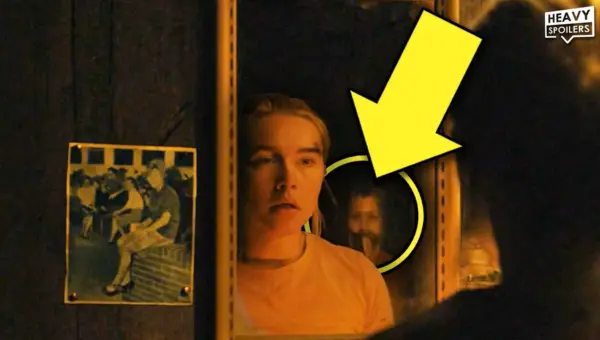
Midsommar’s Dark Secrets Revealed!
Ari Aster's 'Midsommar' is more than just a folk horror film; it's a visual deep dive into grief, toxic relationships, and the search for belonging. This analysis unpacks the chilling symbolism, hidden meanings, and the cult's dark rituals that make the film a sun-drenched nightmare. Discover the secrets behind Dani's transformation into the May Queen and Christian's horrific fate.


Cartoons Canceled Too Soon: Unanswered Questions Haunt Fans
Beloved cartoons canceled too soon have left fans with burning questions about character fates and unresolved plotlines. From sci-fi adventures to superhero sagas, these mysteries continue to haunt viewers.


Justice Denied: 10 Cases Where Cops Got It Wrong
From flawed eyewitness accounts to biased technology, these 10 cases reveal devastating failures in law enforcement that led to wrongful convictions and immense suffering. Discover the shocking details of justice gone wrong.