Trump’s Iran Strategy Criticized Amidst Shifting Goals and Civilian Casualties
Former CIA Director John Brennan and NYT's Charlie Savage discuss President Trump's Iran strategy, criticizing shifting objectives and potential implications of relaxed rules of engagement following a deadly strike on an Iranian school. The experts highlight concerns over civilian casualties and the damage to U.S. global reputation.

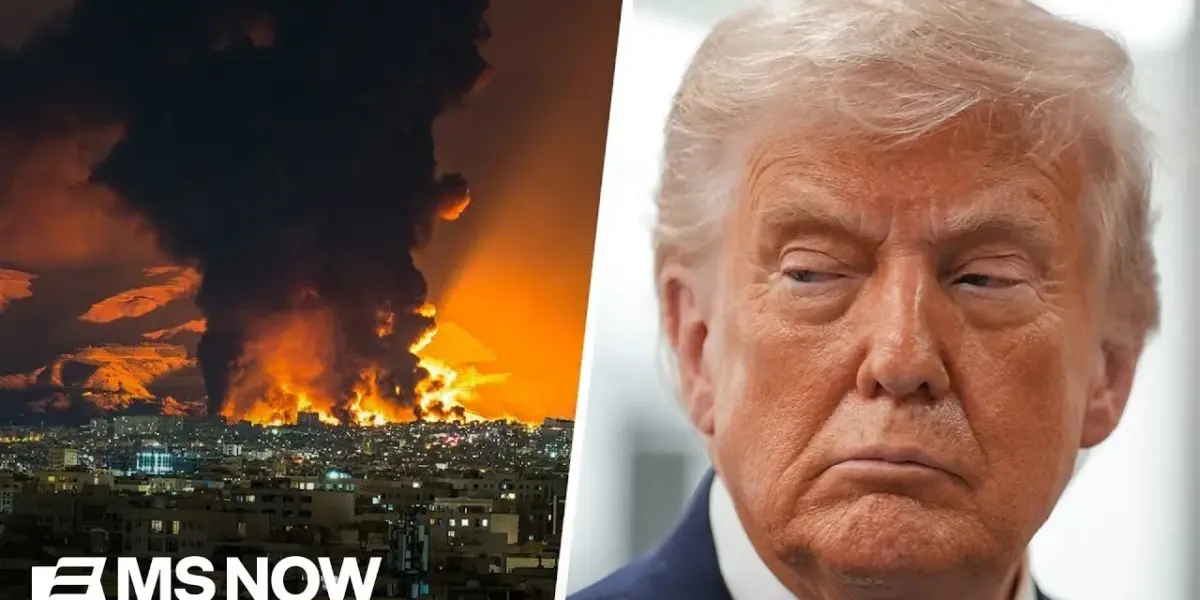
US Policy on Iran Under Fire: Shifting Objectives and Escalating Concerns
In a rapidly evolving geopolitical landscape, the United States’ military actions and strategic objectives concerning Iran have come under intense scrutiny. Following recent military operations, President Trump has shifted focus to maritime security in the Strait of Hormuz, announcing plans for a multinational naval presence to ensure safe passage for oil tankers. This development comes after the U.S. conducted bombings on an Iranian oil hub, with further threats to Iran’s oil infrastructure if shipping traffic is disrupted. The administration’s approach has drawn sharp criticism, with former CIA Director John Brennan and New York Times correspondent Charlie Savage discussing the complexities and potential consequences of the U.S. policy.
Intelligence vs. Policy: A War of Choice
John Brennan, former Director of the CIA and national security analyst, argued that the current conflict with Iran is a “war of choice” that falls squarely on the shoulders of policymakers, particularly President Trump. He refuted claims of an intelligence failure, stating that intelligence agencies had previously warned that a military campaign would not lead to the toppling of the Iranian regime. Brennan highlighted that the intelligence community was aware of potential repercussions, especially concerning Iran’s ability to disrupt oil flow through the Strait of Hormuz during hostilities.
“No, I don’t think this is an intelligence failure at all. I do think it clearly is a failure on the part of the White House, and Donald Trump in particular, to understand just how complicated and complex issue this is, and that a military campaign against Iran is not going to lead to the collapse of the regime.”
Brennan noted Iran’s continued defiance in the initial weeks of the conflict, underscoring the administration’s apparent lack of foresight regarding the complexity of engaging militarily with Iran.
Shifting Goalposts and Misrepresented Facts
The discussion also addressed President Trump’s apparent reversal on the idea of regime change in Iran. Earlier statements suggesting that the Iranian populace lacked the capacity for regime change due to the lack of weapons and the strength of security forces were contrasted with previous assumptions that U.S. military action would facilitate such a change. Brennan criticized the President’s tendency to “greatly misrepresent the facts” and highlighted a pattern of “180s” that suggest a lack of clear objectives.
“The objectives clearly keep moving. And he doesn’t really know which way to go at this point, and I think he’s throwing things out,” Brennan stated. He expressed concern over the devastating impact of the conflict, not only on Iran and the Gulf region but also on Lebanon and Israel, and its destabilizing effect on the global economy and oil markets. Brennan concluded that President Trump likely recognizes the predicament he is in and is resorting to ad-hoc strategies to find a way out.
Scrutiny Over Rules of Engagement and Civilian Casualties
Charlie Savage of the New York Times brought attention to the language used by Defense Secretary Pete Hegseth regarding “maximum engagement” and its potential connection to recent deadly strikes on a girls’ school in Iran, which preliminary investigations suggest were U.S. fault. Savage explained the critical role of rules of engagement (ROE) in warfare, which dictate the limits and conditions under which military personnel can open fire to protect civilians.
Savage detailed Hegseth’s public stance, which has consistently disparaged strict ROE, labeling them as “stupid,” “woke,” and “politically correct.” Hegseth’s views stem from his experiences in Iraq, where stricter ROE were implemented to prevent civilian casualties. In contrast, he has promoted a policy of “maximum engagement” with “minimal rules of engagement” to “unleash American power, not shackle it.”
The incident at the school, where over 100 children were reportedly killed, raises serious questions about whether Hegseth’s relaxed ROE contributed to the tragedy. Savage elaborated:
“So the question is now that we see that there was apparently a terrible mistake in the United States. Someone put the coordinates of a school building into a Tomahawk missile… over 100 children, apparently, have been killed. So that raises the question, there’s always mistakes in war, unfortunately, but was the rules of engagement that Hegseth says he imposed a factor here?”
Even if the ROE were not formally changed, Savage suggested that Hegseth’s repeated statements might have fostered a culture within the Pentagon that encourages a more permissive and less cautious approach to target review.
Impact on Military Culture and Global Reputation
Savage further discussed how Hegseth’s politically influenced approach might clash with the military leadership. He cited past instances, such as the planning for operations against drug-carrying boats from South America, where political officials, aligned with Hegseth, pushed for broader engagement, while the Joint Chiefs of Staff advocated for more restrictive rules.
John Brennan echoed these concerns, emphasizing the devastating effect such actions have on the U.S. global reputation. He stated that America’s standing has been severely damaged compared to its past. Brennan agreed with Savage that the Trump administration and Hegseth seem willing to accept significant civilian casualties in their pursuit of “winning at any cost,” a mindset he likened to that of some Israeli military leaders.
Brennan contrasted this with the Obama administration’s policy, where counterterrorism strikes required “near certainty” that no civilians would be harmed. He concluded that the current approach, championed by Hegseth, is akin to an aggressive but uncontrolled platoon leader focused solely on achieving the objective. This, he believes, is causing even previously sympathetic Iranians to question U.S. actions and the cost being imposed on their people.
Looking Ahead
As the situation in Iran continues to unfold, attention will remain fixed on the clarity and consistency of U.S. objectives, the adherence to international humanitarian laws in military operations, and the long-term consequences for regional stability and America’s global standing. The effectiveness of the multinational naval presence in the Strait of Hormuz and the potential for de-escalation or further conflict will be critical factors to monitor in the coming weeks and months.
Source: Trump’s ‘throwing things at the wall’, moving goalposts in Iran war: Fmr. CIA Director (YouTube)

Related Articles


Iran Blocks China Ships, Exposing Beijing’s Weak Grip
Iran's recent decision to block Chinese ships at the Strait of Hormuz is exposing the limits of Beijing's influence in the Middle East. This action is causing delays and cancellations for Chinese manufacturers, turning a perceived geopolitical win into an economic strain.
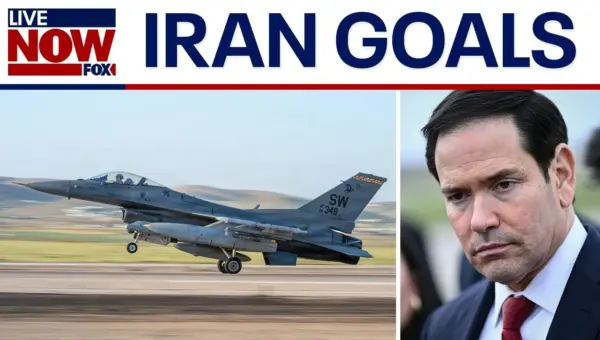
Rubio: US Can Achieve Iran War Goals Without Troops
Senator Marco Rubio outlined a strategy to counter Iran without deploying U.S. ground troops, focusing on weakening the regime and enhancing maritime security. He also criticized Cuba's economic system and expressed concerns about West Bank violence.


Israel Escalates Iran Strikes, Warns of Wider War
Israel has launched significant strikes inside Iran following continued missile fire, warning of further escalation. The conflict risks wider regional instability and economic disruption, especially concerning the Strait of Hormuz.