Soldier Fights WWII 29 Years After War’s End
Three chilling true stories unfold: a Japanese soldier fighting for decades after WWII, a tragic accident on a coastal cliffside, and a death linked to the infamous King Tut's curse. These narratives explore duty, fate, and the unexplained.

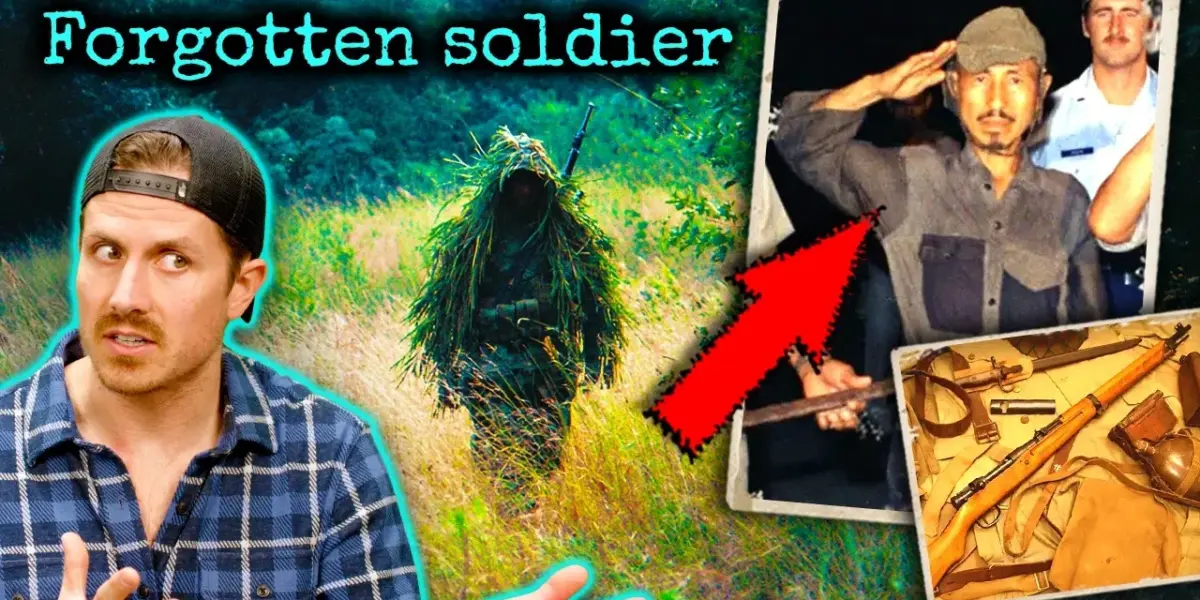
Decades Lost in War: The Unyielding Soldier of Lubang
The annals of history are replete with tales of unwavering duty, but few are as extraordinary and poignant as that of Japanese Lieutenant Hiroo Onoda. For nearly three decades after the conclusion of World War II, Onoda remained in the dense jungles of the Philippines, a phantom soldier fighting a war that had long ceased to exist. His story is a stark testament to the psychological grip of military duty and the profound isolation that can accompany it.
A Mission Unfinished
In late 1944, as World War II raged on, Lieutenant Onoda and his comrade, Private Kinichi Kozuka, were dispatched to the small island of Lubang in the Philippines. Their mission was to disrupt the enemy’s operations by destroying the island’s airfield. However, the tide of war shifted rapidly. Allied forces launched an offensive, forcing a Japanese evacuation. In the chaos, Onoda and Kozuka were inadvertently left behind, unaware that their comrades had departed and that the war was rapidly drawing to a close.
Cut off and with no clear indication of the war’s status, the two soldiers clung to their orders. Their existence became a cycle of sabotage and survival. They would launch attacks on the local population and infrastructure, targeting resources destined for the Allied forces, and then retreat into the jungle to evade capture. Their primary targets included harvested rice, which they believed would feed the enemy. In a particularly striking incident recounted, Onoda and Kozuka used torches to set fire to an entire field of harvested rice, an act that drew enemy fire.
A Solitary Battle
The harrowing reality of their situation intensified in October, as Onoda recounted. During one such sabotage mission, while setting fire to rice bundles, they were spotted. As they retreated into the jungle, gunfire erupted. Onoda heard Kozuka cry out and fall. Weeks later, Onoda was alone. Kozuka had been killed, and Onoda was now, as far as he knew, the last Japanese soldier on Lubang Island. The death of his companion, coupled with the overwhelming isolation, plunged Onoda into a state of exhaustion and depression. He survived on a meager diet of stolen food and whatever the jungle provided.
The Allied forces, aware of Onoda’s continued presence, intensified their efforts to find him. They learned his name and would patrol the jungle near his hidden cave, calling out to him, urging him to surrender. Onoda, deeply entrenched in his belief that he must continue fighting, retreated further into an underground cave for safety. Even in this sanctuary, the sounds of fighter jets and enemy patrols served as constant reminders of the war he was still fighting.
One day, while on patrol, Onoda encountered three enemy soldiers. Despite his exhaustion and perhaps a part of him longing for the war to end, he reacted instinctively. He raised his rifle and fired, a grim confirmation of his ongoing commitment to his mission.
The Return of the Unyielding Soldier
Months turned into years. Onoda, by then in his underground cave, was reading a letter from home when he heard his name called from above. To his astonishment, the voice belonged not to an enemy, but to his commanding officer. The officer, along with other friendly soldiers, had finally located him. On March 9th, 1974, nearly 29 years after the end of World War II, Lieutenant Hiroo Onoda emerged from the jungle, laid down his sword, and surrendered.
The revelation of Onoda’s continued combat operations cast a long shadow. While he had believed he was acting honorably, his nearly three-decade-long fight had resulted in the deaths and terrorization of Filipino farmers, villagers, and police officers whom he had mistaken for enemy combatants. The Japanese government, which had presumed Onoda and Kozuka dead, had sent search parties after Kozuka’s body was recovered. Onoda, however, had viewed these searchers as enemies until the appearance of his commanding officer.
A Complex Legacy
Upon his return to Japan, Onoda received a hero’s welcome, but it was a reception tinged with the somber reality of the innocent lives lost and the fear he had inflicted. The event was highly sensitive, a stark reminder of the psychological toll of war and the difficulty of re-acclimating to a world that had moved on. Onoda himself wrote an autobiography titled “No Surrender.” He later moved to Brazil, where he became a rancher and lived until his death from heart failure in 2014.
Onoda’s story, while unique in its duration, touches upon broader themes of duty, psychological resilience, and the aftermath of conflict. It highlights how deeply ingrained military training and a sense of mission can become, potentially overriding an individual’s perception of reality even in the absence of active warfare. The case serves as a powerful, albeit extreme, example of the psychological challenges faced by soldiers and the long, often difficult, road to reintegration after prolonged periods of intense conflict.
When Fate Takes a Sharp Turn: The Perilous Cliffside Ledge
The California coast, with its dramatic cliffs and crashing waves, offers breathtaking vistas. But for Frank Isco and his friends on April 19th, 1958, the allure of West Cliff Drive became a scene of terror and a stark reminder of how quickly fortune can turn.
A Night Drive Gone Wrong
Twenty-two-year-old Frank Isco was driving his pickup truck along the unlit coastal road, his two friends dozing in the passenger seats. Exhausted from a day at the beach, all three were eager to return home. Frank, particularly anxious to get back to his pregnant wife, Margaret, pressed the accelerator. However, darkness obscured a sharp curve in the road. Despite braking, the truck was traveling too fast.
Frank jerked the wheel in a desperate attempt to avoid disaster. The truck spun out of control, the screams of his friends piercing the night. As the vehicle careened towards the cliff’s edge, Frank braced for the inevitable plunge into the ocean below. The truck slammed into the metal barrier, a brief, jarring impact before it lurched over the precipice.
A Miraculous, Yet Deceptive, Landing
To their astonishment, the fall was not into the churning sea. Instead, the truck came to an abrupt, hard stop. Disoriented but miraculously alive, Frank and his friends found themselves lodged on a narrow ledge, roughly 20 feet below the road. Relief washed over Frank; they had survived a potentially fatal fall.
His two friends, after assessing the precarious situation, cautiously climbed out of the truck onto the rocky ledge. Frank, intending to join them, decided to exit through his driver’s side door. However, it was stuck. He opted to roll down his window and climb out that way.
Vanished into the Earth
As Frank began to emerge from the window, his friends turned to watch. In the dim light, they saw his shadowy form. But the moment he cleared the truck, Frank seemed to vanish. His friends called out, confused, and then horrified as they investigated the space where Frank should have landed.
The ledge, which had appeared solid, was in fact porous. A hidden hole, directly outside the driver’s side of the truck, lay concealed. This was not a mere crevice, but the entrance to an underwater cave. Frank, having survived the initial fall, had plunged into this unseen abyss. Though the cave had some water, it was not deep enough to prevent him from becoming disoriented and lost within its labyrinthine tunnels. His friends’ calls for help and the arrival of rescuers were ultimately futile. As the tide rose hours later, Frank, unable to reach the exit, drowned in the darkness of the underwater cave.
The Pharaoh’s Curse: A Curator’s Fatal Decision
In the bustling heart of Cairo, a diplomatic negotiation over ancient artifacts took a fateful turn, leading to a death that some attribute to a curse centuries in the making.
A Sacred Trust
On December 19th, 1966, Dr. Muhammad Ibrahim, the Director General of Egyptian Antiquities, found himself in a tense conference room. For four months, he had been in discussions with two French representatives regarding the loan of sacred artifacts from an ancient Egyptian pharaoh’s tomb for an exhibition in Paris. Dr. Ibrahim was deeply reluctant. He, along with many others, believed these artifacts were imbued with spiritual significance and should not be removed from Egypt, viewing such an act as profoundly disrespectful to the pharaoh.
During this particular meeting, Dr. Ibrahim reiterated his stance, explaining that he could not agree to the loan, as it felt disrespectful. This was the first time he had explicitly stated this core objection. The French representatives, initially taken aback, appeared to shift from negotiation to sympathy upon realizing the sincerity of his beliefs.
An Uneasy Agreement and a Tragic End
They argued that loaning the artifacts would, in fact, honor the pharaoh by allowing people worldwide to appreciate his legacy. Hours of discussion ensued, and Dr. Ibrahim began to see their perspective. He conceded, perhaps against his better judgment, and agreed to loan the artifacts. The meeting adjourned, and Dr. Ibrahim, feeling a sense of relief, walked out of the government building towards the parking lot.
As he crossed the street, a loud blaring noise and screeching tires filled the air. Then, everything went black. Dr. Ibrahim was struck and killed by a truck.
The Shadow of King Tut
The artifacts in question were from the tomb of Pharaoh Tutankhamun. For years, rumors of a curse had surrounded these objects, with at least eleven deaths attributed to individuals connected to the artifacts. Many believed that disrespecting the relics would invoke the wrath of King Tut.
While authorities and some observers dismissed Dr. Ibrahim’s death as a tragic accident, others pointed to the timing and the circumstances as evidence of the Pharaoh’s curse. His death, occurring mere minutes after agreeing to the loan of sacred artifacts, became another grim chapter in the legend of King Tut’s curse, leaving a lingering question of whether fate, or something more ancient, played a role in his untimely demise.
Source: This soldier fought in the trenches for 30 years… (YouTube)

Related Articles


Justice Denied: 10 Cases Where Cops Got It Wrong
From flawed eyewitness accounts to biased technology, these 10 cases reveal devastating failures in law enforcement that led to wrongful convictions and immense suffering. Discover the shocking details of justice gone wrong.


Gilgo Beach Killer Nears Confession, Ending Long Wait
Rex Heuermann, accused in the Gilgo Beach serial killings, is reportedly expected to plead guilty to seven murders. This potential confession could bring long-awaited closure to the victims' families after years of investigation and uncertainty.


Killer Admits Long Island Murders After Decades of Fear
Accused Gilgo Beach killer Rex Heuermann is reportedly expected to plead guilty to seven murders. This potential confession could finally bring closure to families who have waited decades for justice. The case has haunted Long Island since the early 1990s.