Trump’s Hormuz Red Line: A Risky Gamble of Escalation
President Trump has drawn a 'red line' for Iran, demanding the reopening of the Strait of Hormuz or facing strikes on its oil infrastructure. This high-stakes gamble tests the efficacy of coercive diplomacy amidst complex geopolitical pressures and potential global economic fallout.

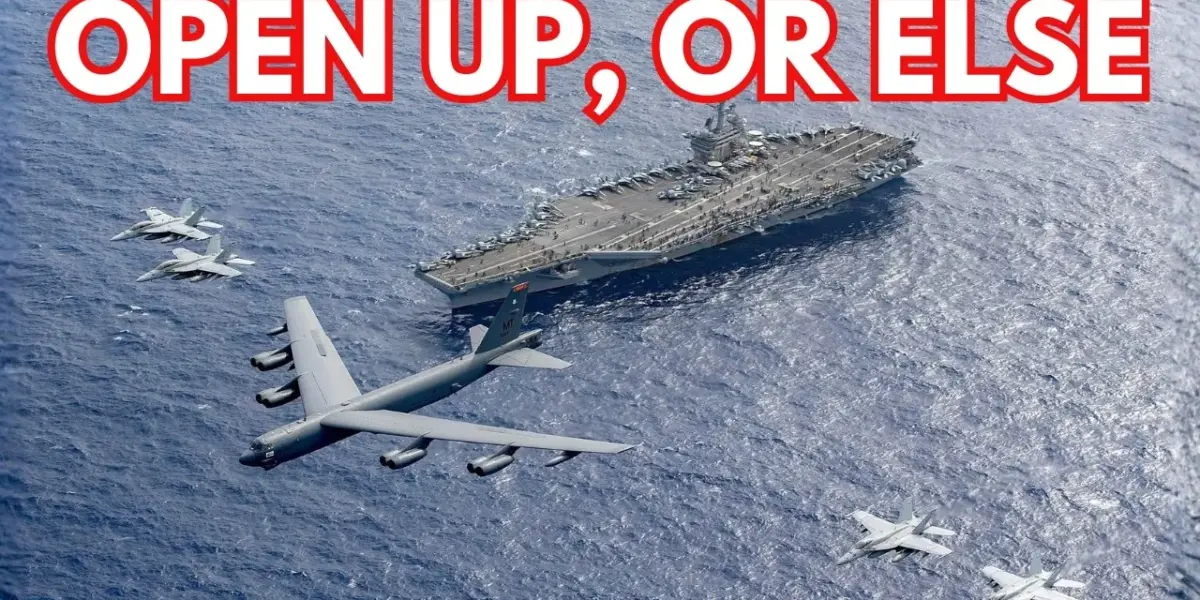
Trump Draws a Line in the Strait: A High-Stakes Ultimatum
In a dramatic escalation of tensions, President Trump has declared a new “red line” for Iran: the free passage of ships through the Strait of Hormuz. The ultimatum is stark: allow maritime traffic to resume, or face targeted strikes on Iran’s vital oil infrastructure. This move, underscored by a significant US military strike on Kar Island, signals a dangerous potential for global economic shockwaves.
The Strategic Chessboard of Hormuz
The Strait of Hormuz, a narrow, strategically vital chokepoint, represents one of Iran’s few significant leverage points against the United States and its Gulf allies. For Iran, controlling or disrupting passage through this waterway offers a potent strategic advantage. The recent US strike on Kar Island, a critical hub for Iranian oil exports, aimed directly at this advantage. US Central Command reported the destruction of naval mine storage, missile bunkers, and other military sites, hitting over 90 targets while ostensibly preserving oil infrastructure.
“Our weapons are the most powerful and sophisticated that the world has ever known, but for reasons of decency, I have chosen not to wipe out oil infrastructure on the island.”
However, should Iran or anyone else do anything to interfere with the free and safe passage of ships through the Strait of Hormuz, I will immediately reconsider this decision.
The effectiveness of this strike, and indeed the entire strategy, remains uncertain. As of the recording, there was no indication that Iran was considering opening the strait voluntarily, nor had any significant change in maritime traffic been observed. The threat is clear: continued disruption will invite more severe retaliation, potentially targeting Iran’s economic lifelines.
Historical Echoes and Escalating Risks
This confrontation is not occurring in a vacuum. The history of US-Iran relations is fraught with tension, and the concept of “red lines” has a complex and often debated legacy, particularly in the context of the Obama administration’s approach to Syria. Drawing a red line, only to have it crossed without significant consequence, erodes credibility. The concern is that the US risks repeating this pattern, potentially emboldening adversaries rather than deterring them.
The current situation echoes previous instances where Iran has faced severe pressure. The killing of significant Iranian leadership in earlier waves of strikes, alongside Israeli actions targeting storage and refining facilities, suggests a regime already operating under duress. The question remains whether further threats of bombing will compel Iran to back down, especially when they perceive their very survival as being at stake.
Iran’s Counter-Moves and Asymmetrical Warfare
Iran’s response thus far has been to signal an intent to retaliate against ports, docks, and hidden American locations within the United Arab Emirates. This highlights a key asymmetry: while the US possesses overwhelming military superiority, Iran’s strategy may involve inflicting costs through less conventional means, potentially targeting civilian and economic infrastructure. The narrative Iran presents – that the US strike damaged civilian and oil infrastructure – serves to justify its own retaliatory actions, regardless of the precision of US strikes.
Experts like James Acton of the Carnegie Endowment describe the US strategy as “compellance” – attempting to coerce Iran into a specific action through the threat of force. However, Acton and others suggest this approach is unlikely to succeed. Iran’s “theory of victory” appears to be rooted in blocking the Strait of Hormuz to drive up oil prices and inflict costs on adversaries. This goal, they argue, is more valuable to the regime’s survival than protecting its own oil infrastructure, especially in what is perceived as an existential conflict.
The Unclear Path Forward and Credibility Challenges
The US faces a significant credibility challenge. If Iran believes that the US will not follow through on its threat to strike oil facilities – perhaps due to the global economic fallout of rising oil prices – it may continue to block the Strait. This presents a dilemma: striking Iranian oil infrastructure could alienate the international community and drive up domestic gas prices, potentially undermining public support for the policy. Conversely, failing to act decisively could signal weakness.
Adding another layer of complexity is the deployment of approximately 2,200 Marines to the Middle East. While some speculate these forces could be used to seize Kar Island, such an operation is deemed unlikely due to its difficulty and questionable strategic value. A more plausible role, suggested by analysts, is the seizure of Iranian oil vessels attempting to transit the Strait, an effort to exert further pressure.
Why This Matters
The standoff in the Strait of Hormuz is a critical juncture with far-reaching implications. It tests the efficacy of “red line” diplomacy in an era of heightened geopolitical tension. The potential for miscalculation and rapid escalation is immense, with direct consequences for the global economy through oil supply disruptions and price volatility. For the Iranian regime, the stakes are existential, potentially leading to more desperate and unpredictable actions. The US, in turn, must navigate the delicate balance between projecting strength and avoiding a conflict that could destabilize the region further and incur significant economic and human costs.
Implications, Trends, and Future Outlook
This situation highlights a growing trend of asymmetrical conflict where economic leverage, particularly through control of vital energy chokepoints, is used as a primary weapon. The reliance on “compellance” strategies, which are inherently dependent on the target’s perception of threat credibility, is being tested. The future outlook suggests a continued period of high tension, with a persistent risk of escalation. Iran’s calculus appears to be survival-driven, suggesting a willingness to endure significant economic pain to achieve strategic objectives. The US, on the other hand, faces the challenge of applying pressure without triggering a wider, more destructive conflict. The success of Trump’s strategy hinges on Iran believing that the cost of defiance – the destruction of its oil infrastructure – outweighs the benefit of controlling the Strait, a belief that appears unlikely given the current dynamics.
The ultimate outcome remains uncertain, but the current trajectory suggests a prolonged period of strategic brinkmanship, with the global economy held hostage by the volatile relationship between the US and Iran.
Source: Trump's NEW Red Line: Iran & the Hormuz Showdown (YouTube)

Related Articles


Iran Targets US With Cyberattacks, Escalating Digital Warfare
Iran is increasingly using cyberattacks to challenge the U.S., as seen in a recent hack of the FBI director's account. Experts say this is a strategic shift due to Iran's limitations in conventional warfare. The U.S. needs to strengthen its digital defenses, focusing on encryption and cloud computing, rather than solely relying on traditional security measures.


Iran Hacks FBI Chief, Exposing U.S. Cyber Vulnerabilities
A recent hack of FBI Director Kash Patel's personal email by an Iran-linked group highlights Iran's growing cyber threat to the U.S. Experts explain how simple security oversights are exploited, emphasizing the need for basic defenses like two-factor authentication to protect against propaganda and potential infrastructure attacks.
Ukraine Strikes Russian Oil Refinery, Eyes Iran Threat
Ukrainian forces struck a key Russian oil refinery, disrupting Moscow's war capabilities. Meanwhile, Finland's president urged continued U.S. support for Ukraine, as Kyiv shares its air defense expertise globally amid growing geopolitical complexities involving Iran and potential sanctions against Hungary.