The End of Nuclear Treaties: World Enters Dangerous New Arms Race Era
The expiration of the New START treaty between the US and Russia in February 2024 has ended five decades of nuclear arms control, with no replacement agreement in sight. China's rapid nuclear buildup, coupled with the collapse of verification mechanisms, has prompted experts to warn of a dangerous new arms race.

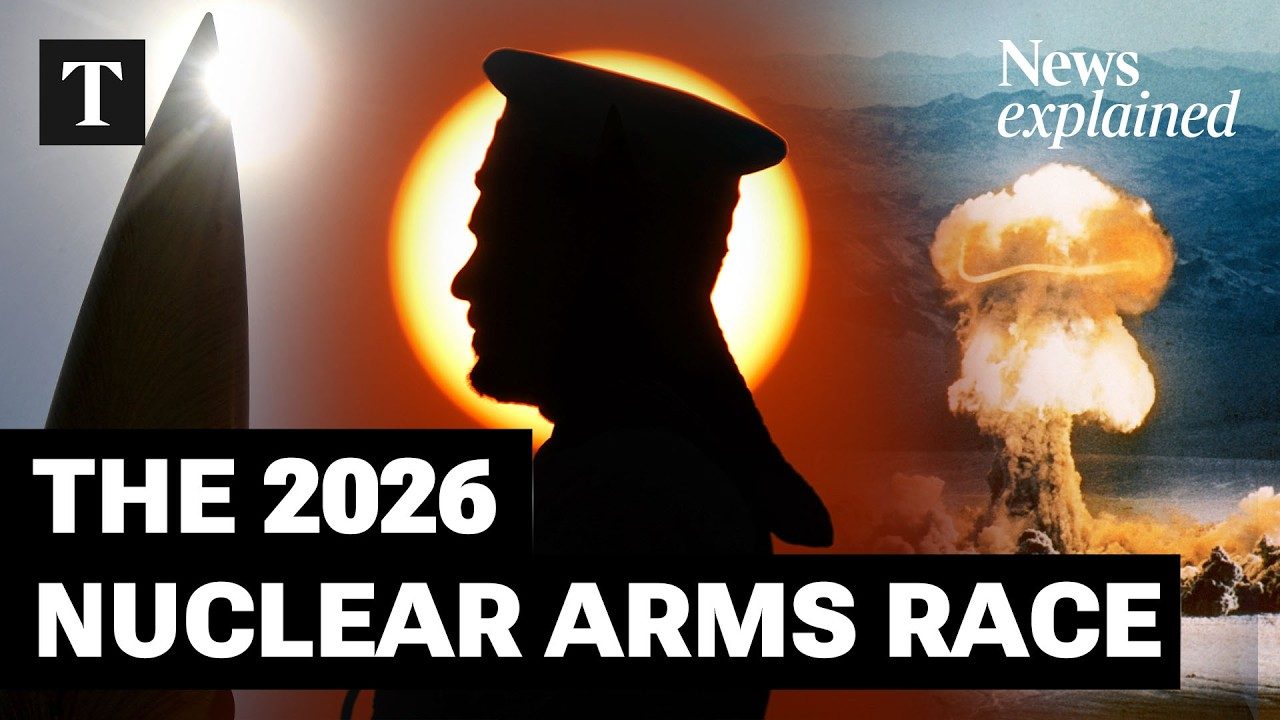
For the first time in over five decades, the world finds itself without legally binding limits on the nuclear arsenals of its two largest nuclear powers. The expiration of the New START treaty between the United States and Russia in February 2024 has effectively ended decades of nuclear arms control diplomacy, raising alarming concerns about a new global arms race.
The Collapse of Nuclear Diplomacy
The Strategic Arms Reduction Treaty (START) framework, which has governed nuclear weapons limitations since 1991, has officially come to an end. The original START treaty was signed by President George H.W. Bush and Soviet leader Mikhail Gorbachev, marking a pivotal moment in post-Cold War diplomacy by limiting nuclear warheads and intercontinental ballistic missiles.
The most recent iteration, New START, was negotiated by President Obama and Russian President Dmitri Medvedev in 2010. This agreement capped deployed nuclear warheads at 1,550 for each nation and established a robust verification system allowing up to 18 in-person inspections annually. As Obama stated at the time, it represented “the most comprehensive arms control agreement in nearly two decades.”
While the treaty received a five-year extension under President Biden, that extension expired on February 5, 2024, with no replacement in sight.
The Ukraine War’s Nuclear Fallout
The beginning of the end for New START came in 2023 when President Putin suspended Russia’s participation amid escalating tensions over the war in Ukraine. This decision effectively dismantled the treaty’s verification mechanisms, with the United States responding by ceasing to share data about its missile locations with Moscow.
The timing is particularly troubling given Ukraine’s unique position in nuclear history. Ukraine voluntarily gave up its nuclear weapons following the Soviet Union’s collapse, becoming one of the few nations to ever relinquish such capabilities. The current conflict raises profound questions about the wisdom of nuclear disarmament when facing existential threats.
China’s Nuclear Ambitions Transform Global Dynamics
Perhaps the most significant development in the current nuclear landscape is China’s rapid arsenal expansion. Intelligence assessments suggest China is on track to possess approximately 1,000 nuclear weapons by 2030, representing a dramatic increase from its historically modest nuclear force.
This expansion has complicated arms control negotiations, as former President Trump had advocated for a trilateral treaty including China alongside the US and Russia. However, Chinese officials have shown little interest in such arrangements, preferring to build up their capabilities to match those of the established nuclear superpowers.
A senior US official emphasized this challenge: “The president wants to have our nuclear experts work on a new, improved, and modernized treaty that can last long into the future. And that’s what the United States will continue to discuss with the Russians.” However, without Chinese participation, such efforts face significant limitations.
Global Warning Signs and Expert Concerns
The deteriorating nuclear landscape has prompted stark warnings from international observers. UN Secretary-General António Guterres described the New START expiration as marking “a grave moment in international peace and security,” noting that “this dissolution of decades of achievements could not come at a worse time.”
The Bulletin of the Atomic Scientists has responded by advancing the Doomsday Clock to 85 seconds to midnight – the closest it has ever been since its inception in 1947. This symbolic timepiece, designed to represent humanity’s proximity to global catastrophe, reflects expert assessment of nuclear proliferation dangers.
Even architects of previous arms control agreements have expressed alarm. Former President Obama, who negotiated New START, warned that the treaty’s expiration would “pointlessly wipe out decades of diplomacy and could spark another arms race that makes the world less safe.” Notably, Dmitri Medvedev, who signed the agreement with Obama, has stated that New START’s end should “alarm everyone.”
The Proliferation Domino Effect
Security experts are increasingly concerned about what they term “friendly proliferation” – the possibility that US allies currently protected by America’s nuclear umbrella might seek to develop their own weapons. Countries like Poland and Germany, facing renewed Russian threats, could potentially reconsider their non-nuclear status.
Turkey presents another concerning case study. Despite being a signatory to the Non-Proliferation Treaty, Turkish officials have expressed interest in acquiring nuclear weapons, highlighting how geopolitical tensions can undermine long-standing non-proliferation commitments.
A World Armed to the Teeth
Currently, nine nations possess approximately 12,500 nuclear weapons – more than sufficient to destroy civilization multiple times over. These arsenals are distributed among the United States, Russia, China, France, the United Kingdom, Pakistan, India, Israel, and North Korea.
In the current uncertain international environment, experts predict this number will only increase. The absence of binding treaties, combined with heightened global tensions and technological advances, creates conditions ripe for nuclear expansion.
The Path Forward
The collapse of nuclear arms control occurs at a particularly dangerous moment in international relations. With major powers engaged in proxy conflicts, alliance structures under strain, and emerging technologies revolutionizing warfare, the need for nuclear restraint has never been more critical.
As one historical voice reminds us: “Total war makes no sense. I speak of peace, therefore, as the necessary rational end of rational men.” Yet without the diplomatic frameworks that have prevented nuclear catastrophe for decades, the world edges closer to a precipice that could define humanity’s future.
The international community now faces a stark choice: rebuild the arms control architecture that maintained relative stability during the Cold War, or accept a world where nuclear weapons proliferate unchecked among an growing number of nations with competing interests and grievances.
Source: Are We Entering a New Nuclear Arms Race? (YouTube)

Related Articles
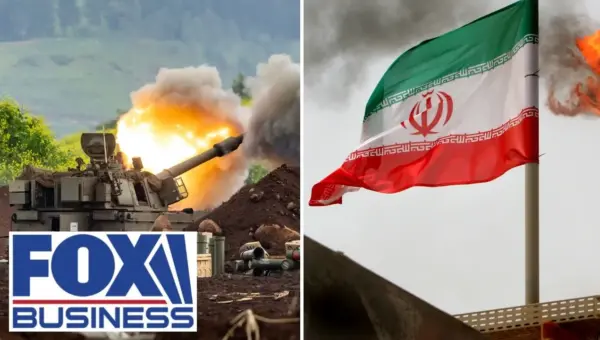
Iran Nuclear Deal: 20 Years Not Enough, Says Ex-Pentagon Official
Former Pentagon official Brent Sadler insists Iran must never obtain nuclear weapons, rejecting a 20-year deal. He argues that economic pressure on Iran's regime may not be enough to deter its nuclear ambitions, emphasizing regime survival as the key driver. The discussion also revisits criticisms of the previous Iran nuclear deal.


Hungary Ousts Putin Ally, Shifting EU-Russia Dynamics
Hungary has elected a new prime minister, signaling a significant geopolitical shift away from its close ties with Moscow. The departure of Viktor Orbán's pro-Russian government is seen as a major setback for Russian influence in Europe. The new leadership is expected to align more closely with EU and NATO policies concerning Russia and Ukraine.

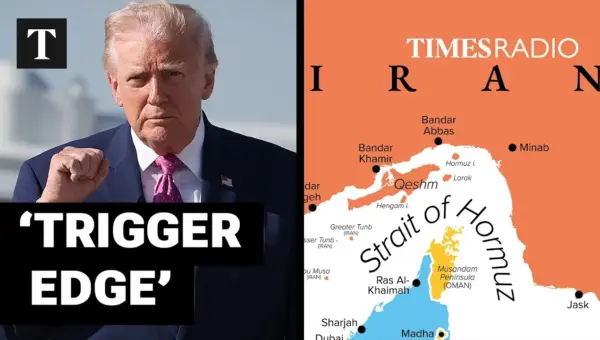
US Blockades Iranian Ports, Strait of Hormuz Access Maintained
The US Navy has begun blockading Iranian ports, aiming to increase economic pressure while allowing international vessels continued access through the Strait of Hormuz. Analysts express concerns about potential escalation risks despite the move being seen as a step back from broader threats.