Congress Funds War Over Border Security: A Nation Divided
Congress is reportedly poised to fund foreign wars while Homeland Security agencies, including Border Patrol and TSA, face potential unfunded status. This raises critical questions about national priorities and fiscal responsibility.


Congress Prioritizes Foreign Conflicts Over Domestic Security
In a stark display of misplaced priorities, a significant segment of the Republican party in Congress appears poised to approve substantial funding for foreign military operations while simultaneously neglecting the essential needs of domestic security agencies. This juxtaposition highlights a deep-seated ideological divide and raises critical questions about national resource allocation and the very definition of fiscal responsibility.
The Unfunded Border and the Unpaid Agent
The immediate crisis at hand is the reported inability of Congress to secure funding for Homeland Security. This means that the very individuals tasked with protecting the nation’s borders and ensuring domestic safety – Border Patrol, ICE, and TSA agents – are facing the prospect of not being paid. The irony is palpable: while these essential workers grapple with financial uncertainty, lawmakers are reportedly gearing up to allocate billions towards foreign conflicts, specifically mentioning a potential supplemental bill for war operations in Iran.
A Costly War, A Neglected Homeland
The financial implications are staggering. The transcript suggests a supplemental bill could amount to $50 billion or more, a figure that pales in comparison to the daily operational costs of ongoing wars, estimated at $1 to $2 billion per day. This massive expenditure on foreign engagement stands in sharp contrast to the underfunding of critical domestic services. The speaker explicitly criticizes this, stating, “It is despicable how the Republicans are treating our taxpayer dollars.”
The Affordable Care Act: A Fiscal Benchmark?
Further underscoring the perceived hypocrisy, the analysis draws a parallel between the proposed war funding and the cost of the Affordable Care Act (ACA) subsidies. Republicans, who previously cited fiscal irresponsibility as a reason to shut down the government, are now contemplating spending a similar amount – around $50 billion, or perhaps $60 billion for an additional year – on foreign military intervention. These ACA subsidies, which provide healthcare to tens of millions of Americans, were deemed too expensive by some, yet the funding for war appears to be a lower hurdle.
Historical Context: The Neoconservative Influence
The sentiment that certain political factions “love the war” points to a historical debate within American foreign policy, often associated with neoconservative ideologies. This perspective typically favors assertive military action and the projection of American power abroad, sometimes at the expense of domestic concerns. The current situation, where funding for military engagements seems to take precedence over the salaries of national security personnel, can be seen as a contemporary manifestation of this long-standing foreign policy debate.
The Economic Strain on Americans
Beyond the security agencies, the transcript also notes that “Americans are still struggling.” This broader economic hardship amplifies the perceived injustice of prioritizing foreign wars over the well-being of citizens and the stability of domestic institutions. The allocation of vast sums of money to overseas conflicts, while Americans face economic challenges and essential government functions are jeopardized, creates a disconnect that fuels public frustration.
Why This Matters
This situation is more than just a budgetary dispute; it’s a reflection of core national values and strategic priorities. The decision to fund foreign wars over essential domestic security functions sends a clear message about what Congress deems important. It raises questions about accountability, the responsible stewardship of taxpayer money, and the government’s fundamental duty to protect its own citizens and infrastructure. The apparent willingness to spend billions on military action abroad while domestic agencies face potential shutdowns erodes public trust and highlights a critical failure in governance.
Implications, Trends, and Future Outlook
The trend of prioritizing foreign military spending, particularly in the wake of perceived global threats, is not new. However, the current juncture, where domestic needs are so visibly unmet, suggests a potential tipping point. If this pattern continues, it could lead to further erosion of public confidence in government institutions, increased domestic instability, and a growing sense of alienation among citizens who feel their needs are being ignored. The future outlook depends on whether lawmakers can find a more balanced approach, one that adequately addresses both national security threats abroad and the foundational needs of the nation at home. A failure to do so risks a deepening of the political and social divides that already plague the country.
Conclusion
The current congressional deadlock over funding Homeland Security, juxtaposed with the readiness to allocate substantial resources to foreign wars, presents a critical juncture for American governance. It forces a national conversation about priorities, fiscal responsibility, and the government’s primary obligations to its citizens. The decisions made in the coming days and weeks will not only impact the immediate financial well-being of dedicated public servants but also signal the nation’s commitment to its own safety and the economic stability of its people.
Source: MTG Rants While Homeland Security Goes Unfunded #politics #fyp #new (YouTube)

Related Articles


House Funds DHS Short-Term, Senate Stalemate Looms
The House has passed a short-term bill to fund the Department of Homeland Security, but the Senate is expected to reject it. This temporary measure highlights ongoing political divisions and the challenges in reaching long-term budget agreements in the U.S. Congress.


Protesters Challenge Presidential Power, Ignite Debate
Millions are protesting nationwide under the "No Kings" banner, challenging presidential authority and policies they deem unconstitutional. Organizers emphasize First Amendment rights while debating foreign policy, immigration, and the balance of power.

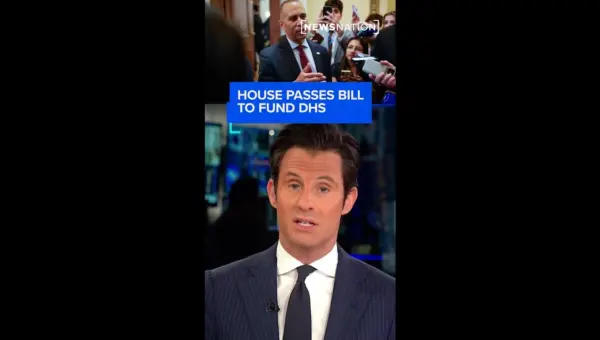
Congress Stalemate Threatens Border Security Funding
The U.S. House passed a temporary funding bill for the Department of Homeland Security, but Senate Democrats are expected to block it. This recurring stalemate highlights deep divisions over border policy and funding, potentially impacting national security and international perceptions of U.S. stability.