Attacks Expose Counter-Terror Gaps Amid DOJ Personnel Cuts
Recent violent attacks, including a university shooting and a synagogue arson, have heightened concerns over the U.S. counterterrorism capabilities. These incidents occur as the FBI faces significant personnel losses and a reported shift in priorities towards immigration enforcement, raising questions about national security readiness.

Two Violent Incidents Highlight National Security Vulnerabilities
A series of alarming incidents this week, including a deadly shooting at Old Dominion University and an arson attack on a Michigan synagogue, have ignited concerns about the United States’ counterterrorism capabilities. These events, occurring against the backdrop of escalating global tensions and a significant exodus of experienced personnel from the Department of Justice (DOJ) and the FBI, are raising critical questions about the nation’s ability to defend against evolving threats.
University Shooting and Synagogue Arson: A Disturbing Pattern
On Thursday, a gunman opened fire in an ROTC classroom at Old Dominion University in Virginia, resulting in one fatality and two injuries. The suspect, identified as a U.S. citizen, had previously pleaded guilty in 2016 to attempting to aid the terror group ISIS. Less than two hours later, a separate, harrowing incident unfolded in West Bloomfield Township, Michigan, where an armed man drove a vehicle into Temple Israel, the largest reform synagogue in the state, and set it ablaze. The suspect, a naturalized citizen from Lebanon, died of a self-inflicted gunshot wound, according to the Department of Homeland Security.
DOJ and FBI Face Critical Personnel Shortages
These violent acts come at a time when counterterrorism agencies are reportedly experiencing a significant loss of experienced personnel. Since the start of the Trump administration’s second term, an estimated 300 FBI agents, many of whom specialized in national security matters, have departed the bureau. Alarmingly, 45 of these agents were reportedly fired.
“The American people should absolutely be concerned about what I would term as the deterioration of our national security apparatus,” stated Michael Feinberg, a national security and intelligence analyst and former FBI Assistant Special Agent in Charge. “The intelligence community, instead of being focused on external threats and domestic vulnerabilities, is instead doing things like pursuing election conspiracies that have no basis in fact.”
Shifting Priorities and Diminished Resources
Feinberg elaborated on the challenges facing the FBI, noting that the organization has not seen an increase in personnel or resources for some time. He expressed concern that a directive from the White House, largely influenced by former advisor Stephen Miller, has forced the FBI to prioritize immigration operations—a task it has not historically undertaken to such an extent.
“If you take an organization that is not getting more resources, add a huge new task to its plate, by definition other things are going to fall through the cracks,” Feinberg explained. He emphasized that while the FBI is still capable of performing its duties, this shift in focus requires leadership to advocate for a balanced approach.
Concerns Over “Sleeper Cells” and Political Agendas
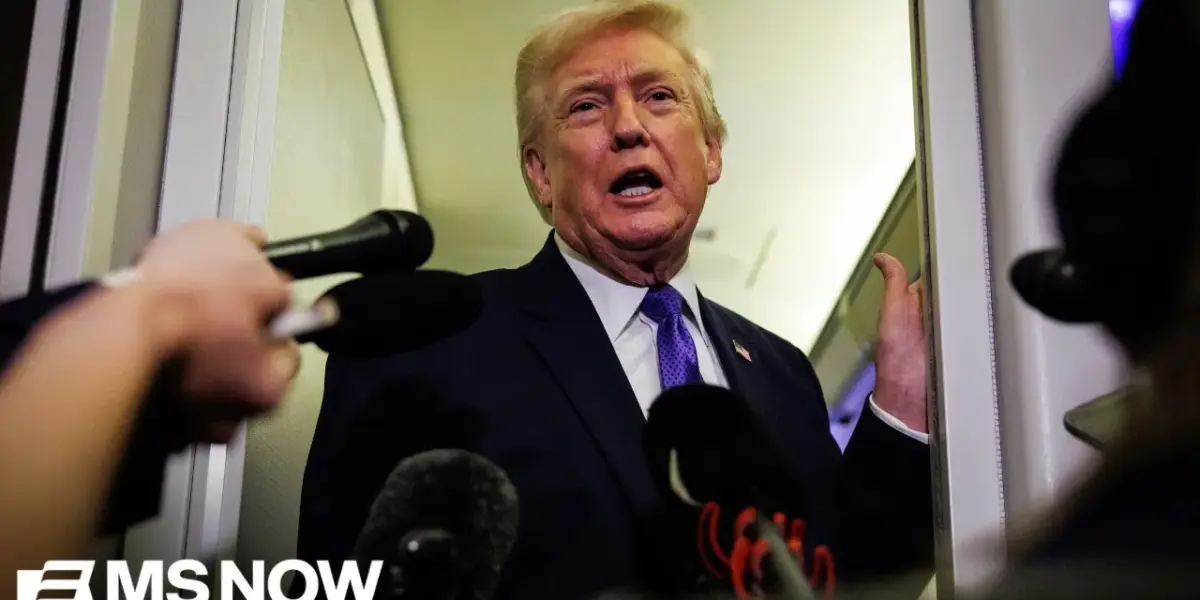
The specter of foreign threats looms large, particularly with ongoing conflict in Iran. When questioned about potential Iranian sleeper cells in the U.S., former President Trump made remarks that Feinberg found concerning. Trump stated, “We know where most of them are. We’ve got our eye on all of them, I think.”
Feinberg questioned the logic of such a statement, suggesting that if the President knew the location of sleeper cells, immediate action should be taken. He added, “If we knew, if the president knew where sleeper cells were in this country, wouldn’t we go and make them not sleeper cells?”
The analyst criticized the current focus of intelligence agencies, suggesting that resources are being diverted from genuine national security threats to address politically motivated issues. “They’re focusing on cartels and immigration, which you can make an argument that both of those things in some form or fashion threaten national security. But they’re not blowing up buildings. They’re not driving into synagogues, they’re not shooting up colleges,” Feinberg observed. “So the American people need to demand of their president and his appointees that resources be expended on real national security threats, not just the ones that help the president politically.”
Frustration Among Law Enforcement Professionals
Feinberg shared insights from his former colleagues, describing widespread frustration within the FBI. Agents who joined the bureau with the intention of combating terrorist groups or dismantling large-scale criminal enterprises are now finding themselves increasingly involved in immigration enforcement and perimeter security for ICE raids.
“This is insane,” Feinberg stated. “Speaking of deterioration and resources being expended in places where they shouldn’t be… You have individuals who are concerned about state-sponsored spies stealing American secrets and they now spend a good portion of their days doing perimeter security for ICE rates.”
Unconventional Training Methods Under Scrutiny
Adding to the discourse on resource allocation and operational focus, a recent report highlighted that FBI agents are undergoing training with UFC fighters. While the FBI stated the training aims to enhance skills in hand-to-hand combat and defensive tactics for safe apprehension, Feinberg expressed skepticism about its necessity and focus.
“FBI agents are among the best-trained, highly qualified people to do the jobs that they do. Um, UFC fighters? Is it, why shouldn’t I think that those jokers are no shade, but they’re entertainment, they’re they’re not about law enforcement,” Feinberg questioned. He emphasized that the goal of law enforcement training is not to incapacitate or subdue through brute force, but to safely take individuals into custody. He also suggested that ICE agents might benefit more from such training, a point with which he agreed.
Looking Ahead: A Call for Prioritization
As the nation grapples with these recent attacks and the ongoing challenges within its counterterrorism apparatus, the focus remains on whether leadership will prioritize genuine national security threats over political agendas. The effectiveness of the FBI and other intelligence agencies in safeguarding the homeland will depend on their ability to retain experienced personnel and direct resources towards the most critical dangers, both foreign and domestic.
Source: 'People should be concerned’: Iran war exposes counter-terrorism gaps amid Trump’s DOJ cuts (YouTube)

Related Articles


FBI Director’s Hacked Emails Expose Personal Life, Security Failures
FBI Director Cash Patel's personal email account was reportedly hacked by Iranian-linked hackers, exposing sensitive personal information and raising serious questions about his security practices and competence. The breach includes details about his private life, finances, and alleged visits to adult websites.


Iran Hackers Target FBI Director; US Weighs Troop Buildup Amid Tensions
Iran-linked hackers claim to have breached FBI Director Kash Patel's personal emails, publishing sensitive documents. This comes as the U.S. extends a deadline for Iran to reopen the Strait of Hormuz, while the Pentagon reportedly considers sending thousands more troops to the Middle East amid escalating tensions. Experts express concern over Iran's cyber capabilities and the strategic direction of U.S. policy.


Trump’s ‘Loser’ Comments Reveal Deep Insecurity, Risky Foreign Policy
Donald Trump's controversial "loser" comment reveals a deep insecurity driving his foreign policy, leading to poorly planned actions like the escalating Iran crisis. This pattern of surrounding himself with less capable individuals, rather than challenging experts, poses significant risks for international stability and suggests a dangerous approach to critical global decisions.