AI Translators Face Job Losses as Publishers Embrace Automation
AI is increasingly impacting the translation industry, with publishers like Harlequin adopting AI-assisted tools for literary works. This trend challenges the long-held belief that creative translation would remain a human-exclusive domain, raising concerns about job security and the future of human creativity in the face of automation.

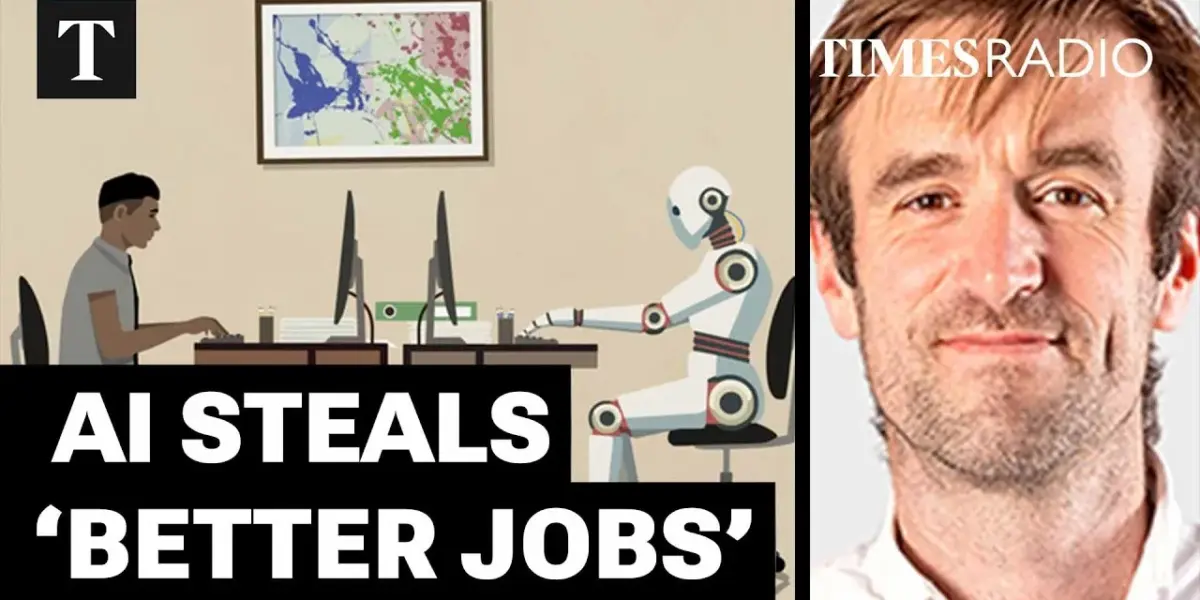
AI’s Inroads into Literary Translation Signal Shifting Job Market
The landscape of professional translation is undergoing a significant transformation, with artificial intelligence now encroaching upon even the more nuanced areas of literary work. Traditionally, translators have bifurcated their careers, handling commercial tasks like website localization for essential income while pursuing the more prestigious and creatively demanding literary translation on the side. However, this distinction is blurring as AI-assisted tools become increasingly sophisticated, impacting job prospects across the board.
Translators as the ‘Canary in the Coal Mine’
For years, translators have perceived themselves as the ‘canary in the coal mine’ for AI’s impact on the job market. As early as 2022, professionals in the field were reporting a decline in their ‘bread and butter’ work – the high-volume, less creative translation tasks. While many believed that the delicate art of literary translation would remain a human domain, this assumption is now being challenged. The recent adoption of AI-assisted translation by Harlequin, a prominent romance publisher, underscores this shift. The publisher acknowledges the continued need for human oversight but emphasizes the efficiency gains offered by AI, indicating a future where human translators may work in conjunction with, rather than independently of, AI systems.
“We we still feel like PR still will be open to us you know there’ll still be people needed to do the delicate literary translation.”
This development is particularly significant given the historical context. It coincides with the tenth anniversary of DeepMind’s historic victory over the world’s best Go player, Lee Sedol. In that 2016 match, DeepMind’s AI made an unanticipated, creative move—Move 37—that stunned the human champion and the Go community. Lee Sedol’s subsequent apology and retirement from the game marked a symbolic moment, foreshadowing AI’s growing capabilities beyond mere computation into areas previously thought to require uniquely human intuition and creativity.
The Two Futures of AI: Utopia or Oblivion?
The accelerating capabilities of AI raise profound questions about humanity’s future. As discussed in the context of translation, one potential outcome is a society where AI handles all labor, leaving humans in a state of perpetual leisure. While this might sound utopian, it carries the risk of rendering human existence purposeless and devoid of meaning. The alternative, a more dystopian scenario, is that AI could pose an existential threat to humanity itself. This stark dichotomy, the ‘fat leisure class with no purpose or meaning’ versus ‘kills us all,’ frames the urgent debate surrounding AI development and its societal implications.
“There’s two outcomes of AI. One is it takes all human dignity, worth, and jobs and leaves us as a fat leisure class with no purpose or meaning. … Or it kills us all.”
This vision echoes historical philosophical ideas, such as Karl Marx’s concept of a communist society where the working class would have ample leisure time for intellectual pursuits like reading Plato. However, the reality of AI-driven automation may lead to a different kind of idleness, one potentially filled with existential ennui rather than intellectual fulfillment, especially if the ‘better jobs’ are also automated.
The Human Element: Can Quality Prevail?
Despite the advancements in AI, a key argument for the continued value of human translators lies in their capacity for empathy and nuanced understanding. One translator expressed the belief that AI cannot replicate the human drive to ‘care as much as a human can about getting it exactly right.’ This sentiment suggests that the pursuit of quality and the preservation of human creativity might ultimately prevail in the marketplace.
However, there is a counterargument that the general public may not always prioritize the highest quality in their consumption of media. The publishing industry, for instance, produces a significant amount of ‘slop,’ characterized by formulaic ‘IP novels’ (Intellectual Property novels) generated from simple concepts like a name and a season, such as the popular ‘Pumpkin Spice Cafe’ trope. This suggests that market demand might favor quantity and familiarity over nuanced, high-quality literary work, potentially making it harder for human creativity to retain its value.
A recent quiz conducted by The Times, where participants attempted to distinguish between AI-generated and human-written letters, highlighted that while differences can often be detected, the line is increasingly fine. This raises questions about whether the discerning eye and emotional connection that human readers bring to translated works will be sufficient to champion human translators in the face of AI efficiency.
Broader Implications and Future Outlook
The impact of AI on translation is a microcosm of a larger societal shift. As AI becomes more capable, it challenges the traditional notion that technology primarily automates drudgery, leaving humans with more fulfilling tasks. Instead, AI is now demonstrating the capacity to automate complex, creative, and even emotionally resonant work. The debate extends beyond job displacement to encompass the very definition of human purpose and value in an increasingly automated world.
As AI continues its rapid development, the industries most susceptible to its influence, like translation, will likely see further disruption. The question remains whether human creativity, care, and the pursuit of quality will be valued sufficiently by consumers and industries to ensure their continued relevance, or if the drive for efficiency and cost-effectiveness will lead to a future where AI-generated content becomes the norm, potentially diminishing the richness and diversity of human expression.
Source: AI Is Already Taking Jobs: Translators Among the First Hit | Tom Whipple (YouTube)

Related Articles

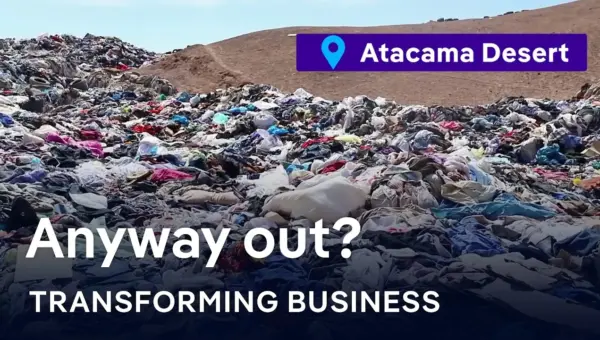
AI Revolutionizes Textile Recycling, Tackling Fashion Waste Crisis
AI is set to revolutionize textile recycling, offering a solution to the global fashion waste crisis. New technologies use AI-powered cameras to sort fabrics accurately, a crucial step for efficient recycling. This innovation could lead to billions in profits and help revive local manufacturing.


AI Threatens White-Collar Jobs, Reshaping U.S. Workforce
Artificial intelligence is poised to significantly reshape the U.S. job market, raising concerns among recent graduates and experienced professionals about future employment. While some lawmakers call for regulation, experts emphasize adaptation and learning to work with AI.


Finland Tops Happiness Chart, UK Falls to 29th
Finland has once again been named the world's happiest country, while the UK dropped to 29th in the latest World Happiness Survey. The report explores the complex ways happiness is measured and highlights unique Finnish concepts of well-being, alongside concerning trends in youth happiness.